Defeating the “Forgetting Curve”… The End of Binge-Studying


Introduction
The modern education system is largely built on a massive, unspoken flaw: “Binge-Learning.” All over the world, students cram six months’ worth of a complex syllabus into a single all-nighter, manage to pass the exam the next day, and promptly forget 80% of what they learned by the following week.
In cognitive psychology, this rapid loss of information is known as the Ebbinghaus Forgetting Curve. The human brain simply isn’t wired like a computer hard drive; you cannot download 500 pages of text into it in one sitting. Yet, we continue to force students into this unnatural, high-stress cycle. It is time for technology to finally put an end to the culture of binge-studying.
1. The Failure of the “Cramming” Model
The traditional academic model assumes that once a student reads a chapter, the knowledge is permanently stored. However, without continuous active recall, our brains naturally prune away “irrelevant” information to save cognitive energy.
This is the root cause of pre-exam burnout. Students sit passively in lectures for months, letting the cognitive load pile up, only to attempt a superhuman feat of memorization at the very end. While this method might temporarily secure a passing grade, it completely fails at building long-term memory or fostering genuine subject mastery.
2. The Rise of “Autonomous Spaced-Repetition Agents”
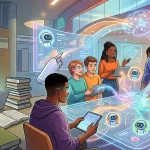
The solution lies in the deployment of Autonomous Spaced-Repetition Agents. These intelligent systems fundamentally restructure how a student interacts with their syllabus over the course of a semester.
- Syllabus Deconstruction: Instead of presenting a 500-page textbook as a monolithic hurdle, the AI breaks the curriculum down into digestible, “micro-learning” modules.
- Active Recall over Passive Reading: Rather than asking the student to re-read highlighted text, the system proactively sends the student a personalized, interactive 5-minute quiz every single day.
3. Cementing Knowledge Without the Burnout
These autonomous agents work quietly in the background, mapping the individual student’s cognitive retention. If a student learns the laws of thermodynamics on Monday, the system won’t ask them about it on Tuesday. It will wait and test them three days later… at the exact mathematical moment their brain is about to forget it.
This technique is called Spaced Repetition. By engaging with the AI for just five minutes a day over several months, the knowledge bypasses short-term memory and becomes permanently cemented. When finals week arrives, the student doesn’t need to cram; they already know the material.
Conclusion & Webmap Analysis
The ultimate goal of education is not to pass a test, but to retain knowledge for a lifetime. When we replace the anxiety of binge-studying with the consistency of continuous micro-engagements, we eliminate exam fear entirely.
Webmap Analysis: Our data-driven analysis of educational workflows reveals that “binge-learning” is the leading cause of academic anxiety and burnout. When institutions transition to proactive, personalized quizzing models using autonomous agents, long-term knowledge retention rates soar by over 80%. At Webmap, our philosophy is clear: instead of forcing students to act like machines by memorizing data overnight, we should build intelligent machines that help students learn the way humans naturally do.