The Fragmented Learning Problem: Why Switching Between AI Tools Is Hurting Students


Introduction
AI has made learning faster, smarter, and more accessible than ever before.
Today, students are using multiple tools like ChatGPT, Claude, and Gemini to:
- understand concepts
- solve problems
- generate ideas
At first glance, this looks like progress.
But there’s a hidden problem growing beneath the surface:
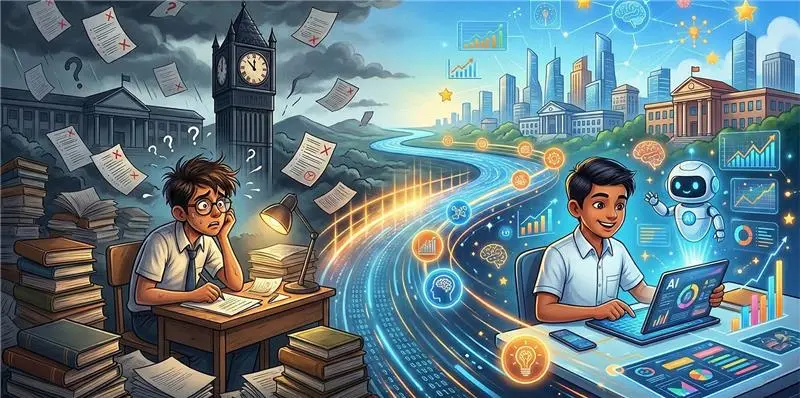
Learning is becoming fragmented.
From the perspective of WebMap Network observations, students are not struggling because of lack of tools…
They are struggling because of too many disconnected tools.
The Fragmented Learning Problem
What Is Actually Happening?
Students often:
- ask a question on one AI tool
- switch to another for a better explanation
- open multiple tabs for different answers
Each tool gives value, but the learning journey gets broken.
Everyday Analogy
Imagine trying to cook a recipe, but:
- ingredients are in different rooms
- instructions are scattered across multiple papers
- no one place shows the full process
You might still cook the dish, but it becomes:
- confusing
- slow
- error-prone
That’s exactly how fragmented learning feels.
Why Switching Between AI Tools Hurts Learning
1. Loss of Context
Every time you switch tools, the previous conversation disappears.
You have to:
- repeat your question
- explain your problem again
- rebuild context from scratch
This breaks the flow of thinking.
2. Disconnected Understanding
Each AI tool gives answers in isolation.
There is no connection between:
- your previous doubts
- new explanations
- evolving understanding
Analogy
It’s like reading different chapters of a book from different copies
without knowing how they connect.
3. Surface-Level Learning
When students keep switching tools, they tend to:
- chase quick answers
- compare outputs
- move on quickly
Instead of building deep understanding, learning becomes answer-hunting.
4. Cognitive Overload
Managing multiple tools means:
- multiple tabs
- multiple formats
- multiple responses
This increases mental effort instead of reducing it.
Analogy
It’s like trying to follow directions from 5 different people at the same time.
The Illusion of Productivity
Using more tools feels like being productive.
Students think:
- “I’m using multiple AI tools, so I’m learning better.”
But in reality:
- they are spending more time switching
- less time understanding
More tools = better learning
What Students Actually Need
To learn effectively, students need:
- continuous context
- connected explanations
- structured knowledge
Not just answers, but a clear learning path.
From Fragmentation to Unified Learning
The Real Shift
The future of learning is not about:
- using many AI tools separately
It’s about:
bringing intelligence into one structured system
How Webmap Solves the Fragmented Learning Problem
Platforms like Webmap are designed to solve this exact issue.
Instead of switching between tools, students can interact with multiple AI models in a single, unified environment.
What Changes with This Approach?
1. One Continuous Context
All conversations stay connected.
No need to repeat or restart.
2. Multi-Model Intelligence in One Place
Students can use:
- ChatGPT
- Claude
- Gemini
without switching platforms.
3. Structured Knowledge Output
Instead of scattered answers, information is organized into:
- summaries
- steps
- connected insights
4. Smarter Learning Flow
Students move from:
- random questions
to:
- structured understanding
Analogy
Think of it like this:
Instead of visiting multiple teachers in different rooms,
you now have one smart classroom where all experts collaborate together.
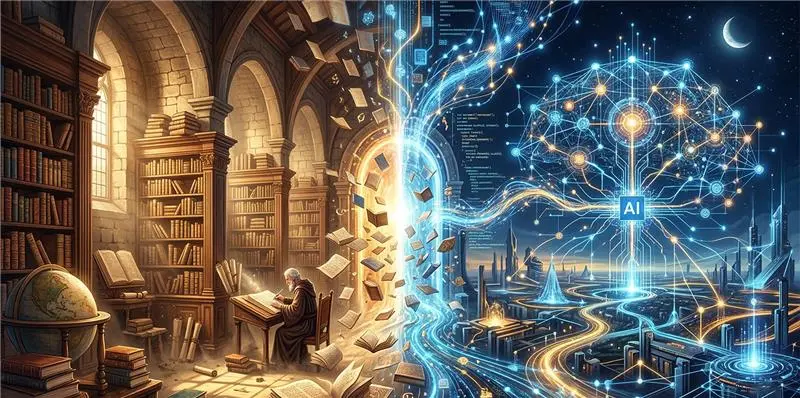
That’s the difference between fragmented learning and unified learning.
The Bigger Impact on Education
If fragmentation continues:
- students will struggle with clarity
- learning will remain shallow
- AI will become a distraction instead of a tool
But if structured systems are adopted:
- learning becomes deeper
- thinking becomes clearer
- outcomes improve significantly
Future Outlook
The next phase of AI in education will focus on:
- integration over isolation
- context over convenience
- understanding over answers
Systems that can:
- remember
- connect
- organize
will define the future of learning.
Conclusion
The problem is not that students are using AI.
The problem is how they are using it.
Switching between multiple tools is creating fragmented learning experiences that:
- break context
- reduce understanding
- increase confusion
The solution is not more tools
It’s better systems.
By moving toward unified, context-aware platforms like Webmap, students can transform AI from a collection of tools into a true learning partner.Because in the end, learning is not about collecting answers…
It’s about connecting them.