
Find Out More :
Explore the Knowledge of "#WebMapNetwork" !
Why URLs Should Be Searchable, Not Just Clickable
Introduction The internet was built around a simple action: click a link and read. For years, this has been the default way we interact with information. You open a URL, scroll through the page, skim headings, and try to find what you’re looking for. But as the volume of information has grown, this method has … Continue reading “Why URLs Should Be Searchable, Not Just Clickable”


Why Context-Controlled AI Is the Future of Learning Platforms
Introduction Learning today is faster than ever. With AI, you can ask questions, get explanations, and explore topics instantly. But despite this speed, one problem still remains: not all answers are reliable. Sometimes AI gives general responses, sometimes it mixes information, and sometimes it ignores the actual learning material you’re using. So the real challenge … Continue reading “Why Context-Controlled AI Is the Future of Learning Platforms”

How AI Turns Your Notes into a Personal Tutor
Introduction Today, information is everywhere. Students and professionals already have access to notes, PDFs, articles, and study material. But despite having all this content, one problem still exists: understanding takes time. You read something once, it feels clear, but when you revisit it later, the clarity is gone. You go back, search again, and try … Continue reading “How AI Turns Your Notes into a Personal Tutor”
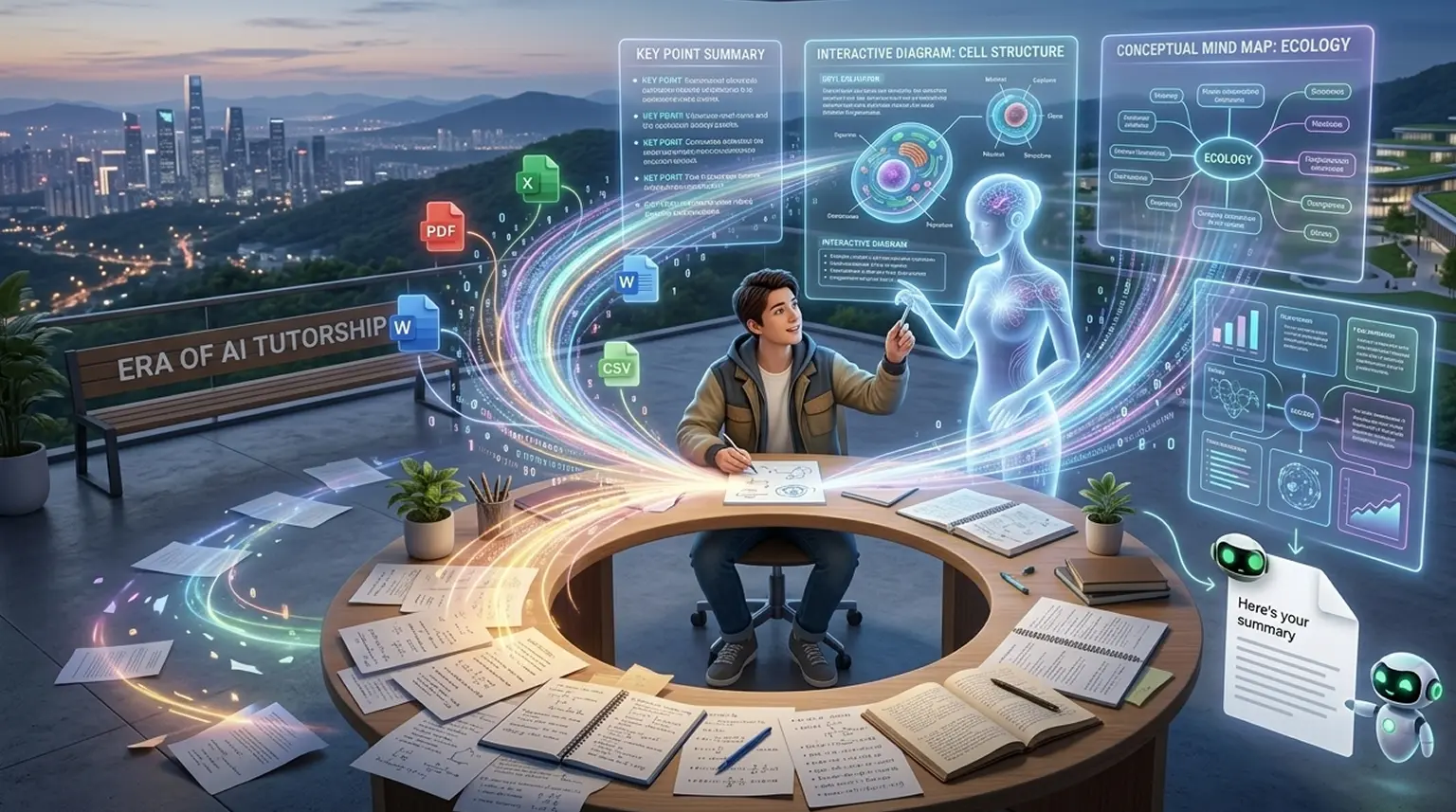
Why Strict AI Is the New Standard for Professional Work
Introduction Today, AI can answer almost anything. You ask a question, and within seconds you get a response. This speed makes AI powerful and easy to use. But in professional environments, speed is not the real challenge. The real challenge is trust. Not every answer generated by AI is accurate, and not every response is … Continue reading “Why Strict AI Is the New Standard for Professional Work”

The End of Copy-Paste Workflows in the AI Era
IntroductionFor years, copy-paste has been the default way of working with information. Whether it was moving data between documents, searching for answers, or collecting insights from multiple sources, the workflow was simple: find, copy, paste, repeat. It worked, but it was never efficient. It broke context, created clutter, and required constant manual effort. Today, AI … Continue reading “The End of Copy-Paste Workflows in the AI Era”

Why Decision-Making Is the Next Big AI Use Case
IntroductionFor the past few years, AI has been mainly used to generate content, answer questions, and automate small tasks. It helped people write faster, search better, and process information quickly. But now, a bigger shift is happening. AI is moving beyond just providing answers… and stepping into something far more important decision-making. Because in the … Continue reading “Why Decision-Making Is the Next Big AI Use Case”

Context vs Internet vs AI: Why Separation Creates Better Answers
Introduction Today, getting answers is easy. You can ask an AI, search on the internet, or refer to your own documents. Within seconds, you get responses, explanations, and insights. But despite this convenience, one problem still exists: not all answers are reliable. Sometimes AI mixes facts, sometimes internet results lack context, and sometimes your own … Continue reading “Context vs Internet vs AI: Why Separation Creates Better Answers”

Chatting with Ghosts … Immortalizing the “Retiring Professor”
Introduction Picture a beloved professor packing up their office after 40 years of tenure. As they place the final textbook into a cardboard box, something profound is lost: their tacit knowledge. The brilliant, unscripted insights shared during office hours, the chaotic but genius diagrams scribbled on whiteboards, and decades of private, handwritten journals leave the … Continue reading “Chatting with Ghosts … Immortalizing the “Retiring Professor””

The End of the Bootlegged Textbook: How AI Interactivity Protects Intellectual Property
Introduction For years, the “bootlegged textbook” has been an open secret in education. A student buys one copy, shares it in a group chat, and within hours, hundreds of people have access to the same file. The shift from physical books to PDFs made this even easier. What once required printing presses and illegal distribution … Continue reading “The End of the Bootlegged Textbook: How AI Interactivity Protects Intellectual Property”

The Premium Knowledge Economy: Turning Proprietary Study Materials into Gated AI Experiences
For high-end tutors, elite coaching institutes, and textbook publishers, the digital age has been a double-edged sword. While distribution has never been easier, intellectual property protection has never been harder. If an institute spends hundreds of hours developing premium, highly specialized study materials for competitive exams… whether that is engineering entrance tests or graduate-level medical … Continue reading “The Premium Knowledge Economy: Turning Proprietary Study Materials into Gated AI Experiences”