Why Decision-Making Is the Next Big AI Use Case


Introduction
For the past few years, AI has been mainly used to generate content, answer questions, and automate small tasks. It helped people write faster, search better, and process information quickly. But now, a bigger shift is happening. AI is moving beyond just providing answers… and stepping into something far more important decision-making.
Because in the real world, getting information is not the hardest part anymore. The real challenge is knowing what to do with it.
1. The Problem with Information Overload
Today, professionals are surrounded by data. Reports, documents, dashboards, emails, research information is everywhere. While this should make decision-making easier, it often does the opposite.
Too much information creates confusion. People spend more time searching, comparing, and validating data than actually making decisions. Even with AI tools, users still need to interpret the answers, verify them, and connect different pieces together.
For example, a business analyst may have access to financial reports, market data, and internal documents. But turning all of this into a clear decision still requires time and effort. The problem is not the lack of data, it is the lack of clarity.
2. From Answers to Decisions
Traditional AI focuses on answering questions. You ask something, and it gives you a response. While this is useful, it is only one step in the process.
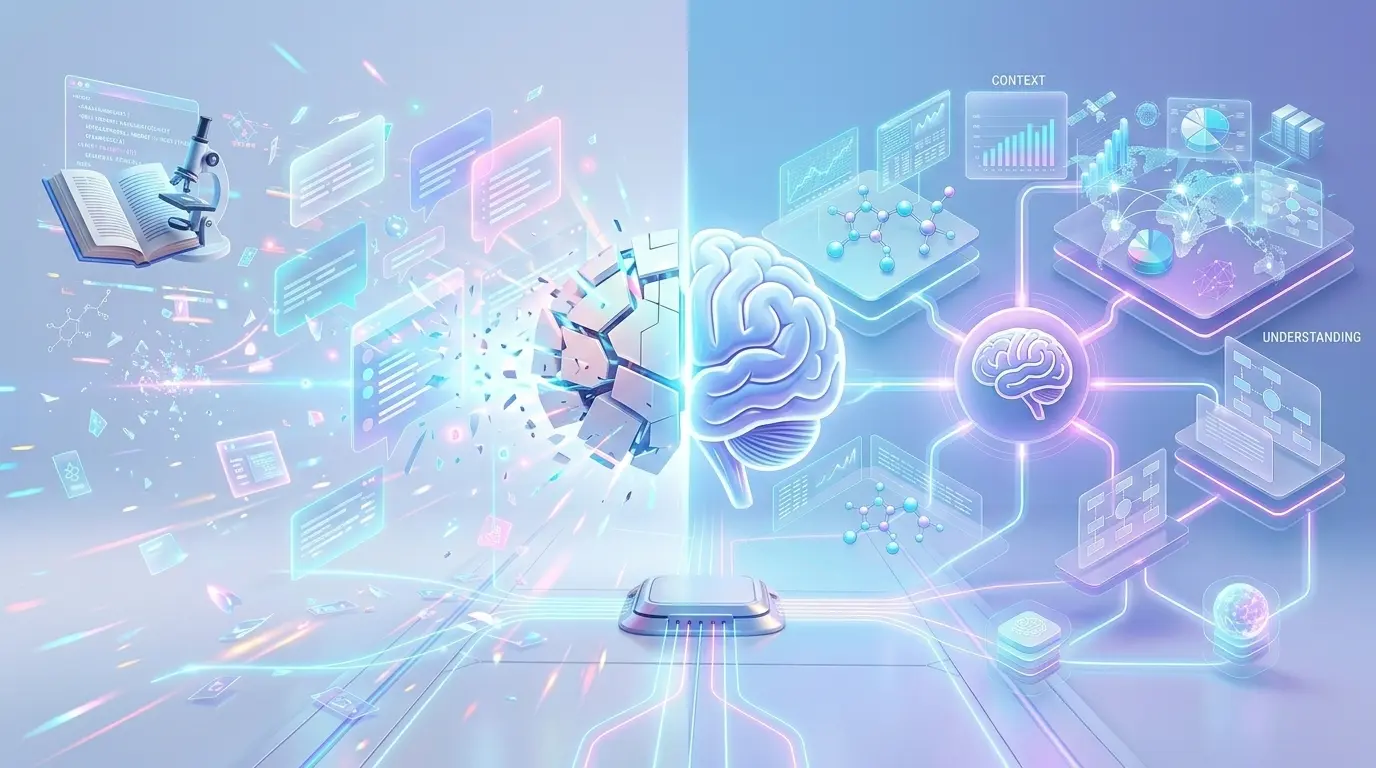
Decision-making requires more than answers. It requires understanding context, comparing options, identifying patterns, and evaluating outcomes. This is where the next evolution of AI begins.
Instead of just answering, AI is starting to assist in decision workflows. It helps users not only understand information but also connect it in a meaningful way. The goal is not to replace human decisions, but to support them with clarity and structure.
In simple terms, AI is moving from “what is the answer?” to “what should I do next?”
3. Why Decision Intelligence Matters
Decision-making is at the core of every professional role. Whether it is choosing a strategy, analyzing a contract, approving a report, or planning next steps every action depends on decisions.
When decisions are slow or unclear, everything else slows down. When decisions are wrong, the impact can be significant. This is why improving decision quality is more valuable than just improving productivity.
AI-powered decision intelligence helps reduce uncertainty. It brings together relevant data, highlights key insights, and presents information in a way that is easier to act on. Instead of working through scattered inputs, users get a more structured view of their situation.
This leads to faster, more confident, and more accurate decisions.
4. A Smarter Workflow: From Data to Action
The future workflow is not about collecting data, it is about moving from data to action seamlessly. Imagine working on a business report. Instead of reading through multiple pages, you ask the system to highlight key insights. Then, you explore trends or patterns behind those insights. Finally, you use that understanding to make a decision.
This creates a natural flow:
Data → Insight → Decision
AI plays a role at each step, helping users move forward without breaking context. Instead of switching between tools or manually connecting information, everything happens within a single system.
This is what makes AI truly valuable not just in providing information, but in guiding decisions.
5. The Role of Structured Systems
For AI to support decision-making effectively, it needs to be built on structured systems. Unstructured or mixed data leads to confusion, which directly affects decision quality.
Modern systems like Webmap, through features like Docsity, are designed to solve this problem. Documents are converted into structured knowledge bases, ensuring that information is organized and easy to access. This allows AI to work with clean, reliable data instead of scattered inputs.
Different AI modes further enhance this process. Users can rely on strict, context-based answers when accuracy is critical, and switch to broader modes when they need explanations or insights. This balance ensures that decisions are both informed and reliable.
Features like Snip & Ask also play a key role. Users can directly interact with specific parts of a document and instantly get relevant insights. This reduces the time spent searching and increases the speed of decision-making.
Conclusion & Webmap Analysis
AI is no longer just a tool for generating answers. It is becoming a system for supporting decisions. As the volume of data continues to grow, the ability to make clear, accurate decisions will become the most valuable skill and the biggest use case for AI.
Webmap Analysis:
Based on current trends, the role of AI is shifting from task automation to decision intelligence. Our analysis shows that when data is structured and AI interaction is controlled, users can move from information to action much faster. Systems like Webmap, with Docsity as a core feature, demonstrate how AI can transform decision-making by providing clarity, reducing uncertainty, and enabling smarter workflows.