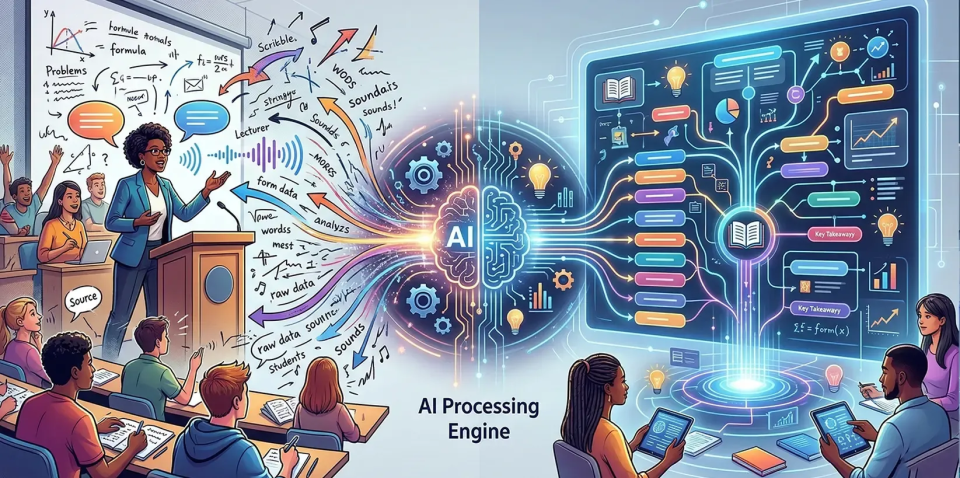
Why Context-Controlled AI Is the Future of Learning Platforms


Introduction
Learning today is faster than ever. With AI, you can ask questions, get explanations, and explore topics instantly. But despite this speed, one problem still remains: not all answers are reliable. Sometimes AI gives general responses, sometimes it mixes information, and sometimes it ignores the actual learning material you’re using.
So the real challenge is not access to AI.
It is control over how AI uses information.
This is where context-controlled AI becomes important.
1. The Problem with Uncontrolled AI
Most AI systems today are designed to be flexible. You can ask anything, and they will generate an answer. While this seems powerful, it often creates confusion in learning environments. Students may upload notes or study from specific material, but the AI still pulls from its general knowledge. The result is an answer that sounds correct but may not match the actual content being studied.
This creates a gap between:
- What the student is learning
- What the AI is explaining
Over time, this reduces trust and makes learning less effective.
2. What Is Context-Controlled AI
Context-controlled AI is built around a simple idea: The user decides what the AI should use to answer.
Instead of mixing everything together, the system allows control over context. This means the AI can be guided to respond based only on specific information, such as your notes, documents, or selected material. This brings clarity to learning because you always know where the answer is coming from.
3. Why Context Matters in Learning
Learning is not just about getting answers. It is about getting the right answers from the right source. For example, when studying for an exam, your notes and textbooks are your primary sources. If AI introduces external or unrelated information, it can create confusion instead of clarity.
Context-controlled AI ensures that:
- Answers stay aligned with your material
- Information remains relevant
- Learning becomes more focused
This improves both understanding and retention.
4. From Mixed Answers to Structured Understanding
Traditional AI systems often combine different types of intelligence:
- Your data
- General AI knowledge
- Internet information
While this may seem helpful, it often leads to mixed responses.
Context-controlled systems separate these layers. They allow users to choose whether they want:
- Answers strictly from their content
- Explanations with added understanding
- Broader insights from external knowledge
This structured approach ensures that learning remains clear and controlled.
5. The Role of AI Modes
One of the key features of context-controlled AI is the ability to switch between different modes.
For example:
- Strict Mode → Answers only from your material
- Context Mode → Explains based on your content
- Freedom Mode → Expands using general AI knowledge
This flexibility allows learners to move between accuracy, understanding, and exploration without losing control.
6. Better Learning Through Control
When users control how AI responds, their learning experience improves significantly.
They can:
- Focus on precise answers when needed
- Explore concepts in depth
- Avoid confusion from mixed information
Instead of relying on one type of response, they can adapt AI to their learning needs.
This creates a more personalized and effective learning process.
7. Building Trust in AI Systems
Trust is one of the most important factors in learning platforms. If users are unsure about where answers are coming from, they hesitate to rely on them.
Context-controlled AI builds trust by:
- Making sources clear
- Keeping responses consistent
- Reducing hallucinations
When learners trust the system, they engage more and learn better.
Conclusion & Webmap Analysis
The future of learning platforms is not just about using AI. It is about controlling AI. Without control, AI can create confusion. With control, it becomes a powerful learning partner.
Webmap Analysis: As learning systems evolve, the need for structured and context-aware AI is becoming critical. Platforms that separate different intelligence layers and allow users to control context are proving to be more reliable and effective. Webmap, through Docsity, demonstrates how context-controlled AI can transform learning from passive reading into an interactive and trustworthy experience.In the end, learning should not depend on guessing where answers come from.
It should be clear, controlled, and built around your context.