



Find Out More :
Explore the Knowledge of "#knowledgebase" !
The “Micro-Credential” AI Portfolio – Grading the Process, Not the Degree
Introduction A standard university degree tells a modern employer surprisingly little about a graduate’s actual capacity for critical thinking. A diploma and a final GPA effectively prove only two things: that the student attended classes and was adept at passing standardized memory-based tests. However, in an era where generative AI can produce standard answers in … Continue reading “The “Micro-Credential” AI Portfolio – Grading the Process, Not the Degree”


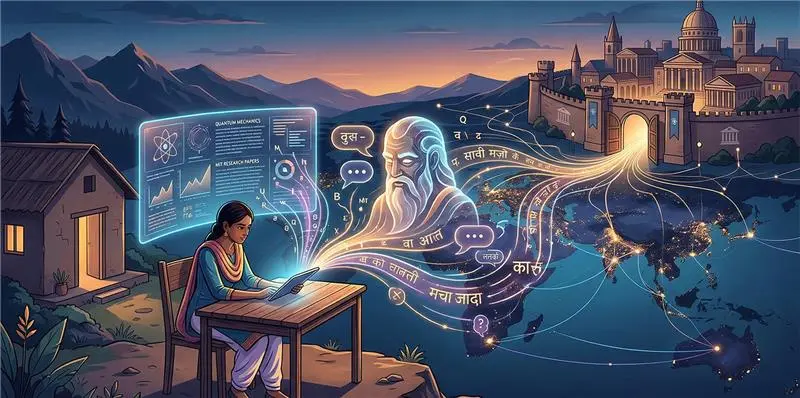
The End of the “English-Only” Elite… Democratizing Global Research
Introduction For decades, the world’s most advanced scientific discoveries, medical breakthroughs, and technological innovations have been locked behind a towering linguistic wall. Today, over 80% of top-tier academic journals are published exclusively in English. This creates a severe bottleneck for global innovation. If a brilliant student does not speak fluent academic English, their access to … Continue reading “The End of the “English-Only” Elite… Democratizing Global Research”
Embeddings in Cultural Heritage AI Beyond Sanskrit: Preserving Living Knowledge Systems
When AI and cultural heritage are discussed in India, the conversation often gravitates toward Sanskrit texts and classical literature. While these are undeniably valuable, India’s cultural intelligence extends far beyond any single language or script. From oral tribal traditions and regional dialects to folk music, rituals, craftsmanship, and indigenous knowledge systems much of India’s heritage … Continue reading “Embeddings in Cultural Heritage AI Beyond Sanskrit: Preserving Living Knowledge Systems”
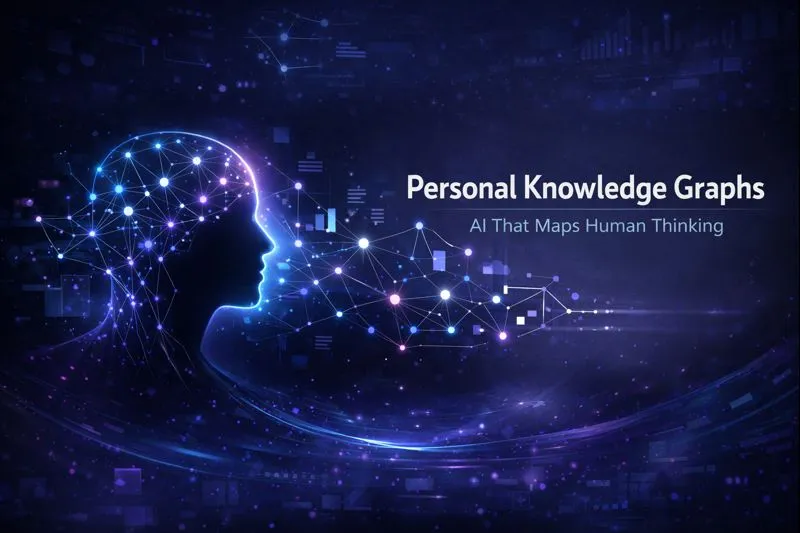
Personal Knowledge Graphs: AI That Maps Human Thinking
In an increasingly data-rich world, the ability to manage, connect, and derive insights from personal information is paramount. Personal Knowledge Graphs (PKGs) are emerging as transformative technology, providing an AI-powered approach to organize individual knowledge akin to human thought processes. These systems create a dynamic, interconnected web of ideas that enhances understanding, boosts creativity, and … Continue reading “Personal Knowledge Graphs: AI That Maps Human Thinking”
Embeddings Are the Geometry of Meaning
The way machines understand, and process human language has moved from brittle, rule-based systems to sophisticated models that grasp the nuances of meaning. At the heart of this revolution are “embeddings,” a powerful concept that translates complex data, such as words, sentences, images, and documents, into a numerical format that machine learning algorithms can interpret. … Continue reading “Embeddings Are the Geometry of Meaning”

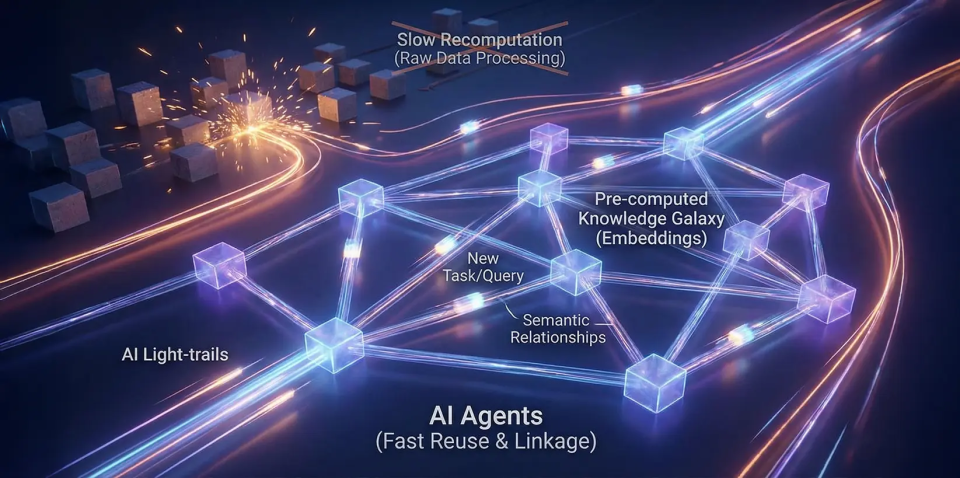
Why Embeddings Let AI Reuse Knowledge Instead of Recomputing It
Artificial intelligence models leverage “embeddings” to store and reuse knowledge in a semantically rich format, significantly reducing the need to recompute understanding from scratch for every new task. This fundamental shift enhances AI’s capabilities, making models more efficient, scalable, and versatile. 1. What are Embeddings? Embeddings are numerical representations of real-world objects or concepts, such … Continue reading “Why Embeddings Let AI Reuse Knowledge Instead of Recomputing It”
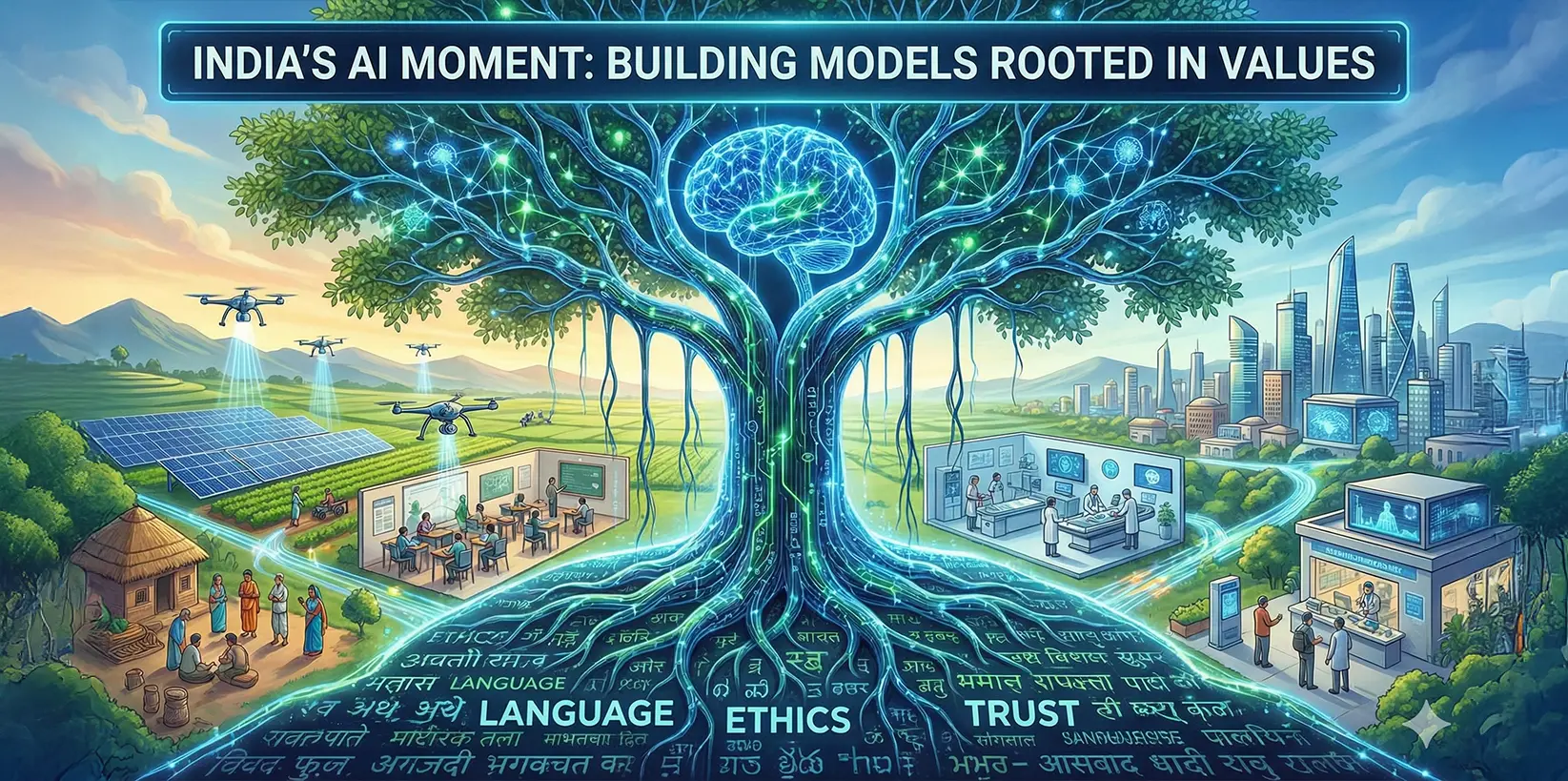
PM Modi and India’s AI Moment… Building Models Rooted in Language, Ethics, and Trust
India’s AI journey entered a defining chapter when Prime Minister Narendra Modi met with 12 Indian AI startups, reinforcing a clear national vision. AI built in India must represent India… its languages, its people, and its values. At Webmap, we see this interaction not as a symbolic meeting, but as a strategic signal. India’s leadership … Continue reading “PM Modi and India’s AI Moment… Building Models Rooted in Language, Ethics, and Trust”
How Embeddings Teach AI the Concept of “Close Enough”
Artificial intelligence faces the challenge of bridging human concepts like similarity with machine-readable data. Embeddings serve as a powerful mechanism to teach AI the concept of “close enough” by transforming complex data into a measurable, semantic space. 1. The Challenge of Discrete Data Before embeddings, methods like one-hot encoding were used to represent categorical data. … Continue reading “How Embeddings Teach AI the Concept of “Close Enough””

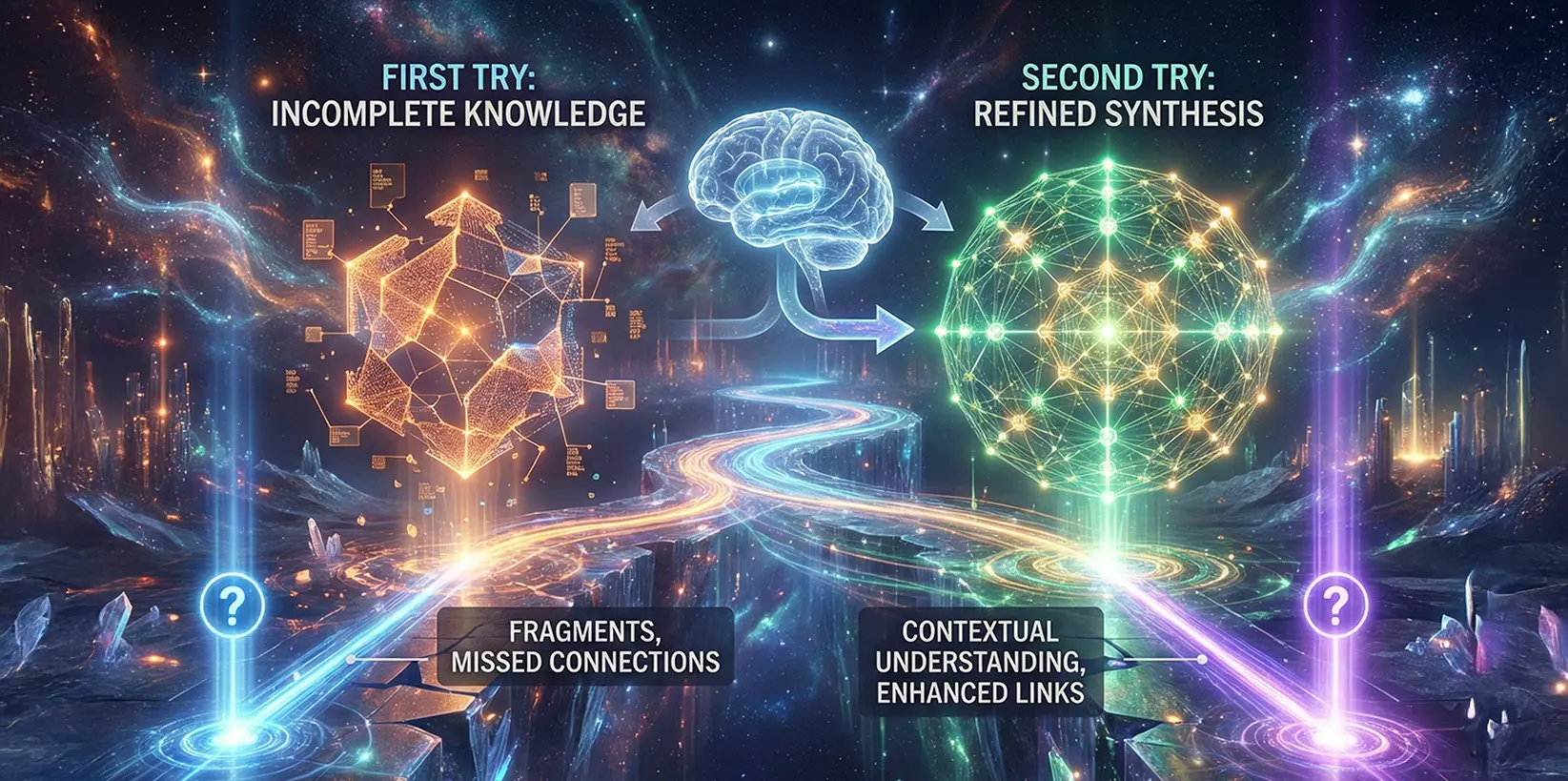
Why Asking AI the Same Question Twice Can Give a Better Answer the Second Time (and Why That’s a Good Thing!)
1. Introduction As someone who frequently interacts with AI, I’ve found that asking the same question twice often yields surprising and more refined responses. You might wonder why this is the case. Isn’t the first answer enough? The reality is, in the world of AI, there’s value in repetition and refinement. This blog will explore … Continue reading “Why Asking AI the Same Question Twice Can Give a Better Answer the Second Time (and Why That’s a Good Thing!)”
From Static Vectors to Living Knowledge: The Evolution of Embeddings
Embeddings are fundamental to modern artificial intelligence (AI), acting as the bridge between human-understandable data and machine-processable numerical representations. These numerical snapshots capture not just the presence of data, but its intrinsic meaning, relationships, and context. Their evolution has transformed AI systems, enabling them to move from rudimentary text processing to understanding complex language, images, … Continue reading “From Static Vectors to Living Knowledge: The Evolution of Embeddings”
