No Enterprise Actually Wants to Use 5 AI Models… They Just Have To

1. The Problem in the Market
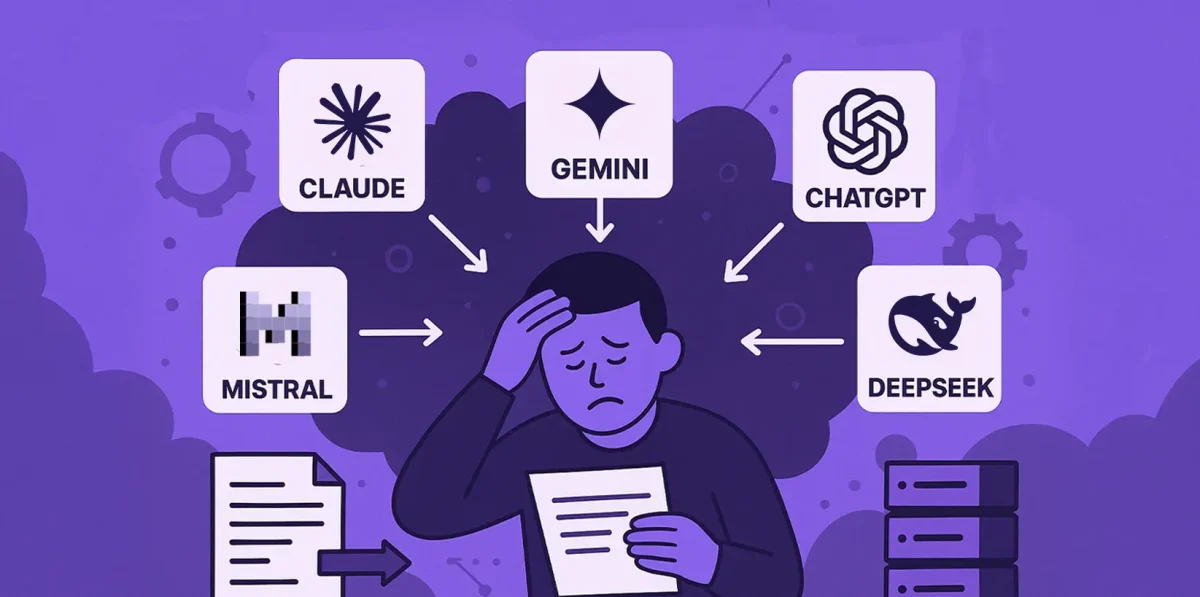
Every major LLM today has evolved into a specialist:
- Claude: strongest logical reasoning
- Gemini: connected to live data and Google ecosystem
- ChatGPT: best at structured writing and creativity
- Mistral: lightweight, fast, and flexible for local deployments
- DeepSeek: powerful analytic performance at extremely low cost
Because no single LLM dominates every area, enterprises end up running multi-model workflows… often all at once.
But the real problem:
These models don’t share memory, context, or knowledge with one another.
Every time you switch models, you must:
- Copy the output
- Paste it elsewhere
- Rewrite instructions
- Reintroduce objectives
- Compare results manually
Every handoff introduces loss of accuracy, consistency, and time.
A fintech insights team uses:
- Gemini to pull recent market news
- DeepSeek for numerical and logical breakdown
- Claude to analyze outcomes and possible market impact
- ChatGPT to produce the final investment brief
In theory, that’s powerful.
In practice…
- Gemini’s output must be manually copied into DeepSeek
- DeepSeek’s reasoning must be re-prompted into Claude
- Claude’s structured output is pasted into ChatGPT for formatting
- No system remembers the reasoning trail
- If the client asks for changes, the entire cycle repeats
It’s sophisticated but exhaustingly manual.
2. Who Suffers From This?
- Analysts
They deal with:
- Dozens of disconnected AI chats
- Continuous manual context switching
- Lost insights across conversations
Ironically…
Analysts spend more time managing AI than analyzing data.
- Engineering & Ops Teams
They’re stuck maintaining:
- Multiple APIs
- Different output structures
- Vector DBs
- Prompts for each model
- Separate access controls, monitoring, billing, and logging
Each new model increases technical complexity.
- Decision Makers & Enterprise Leaders
They face:
- Rising hidden costs
- Inconsistent AI output across business units
- No single source of truth
- Reduced repeatability and auditability
What was supposed to increase efficiency
ends up creating operational overhead.
3. How People Are Failing to Solve It
Most enterprises try to “fix” the situation through three patterns:
A. Bigger prompts and longer instructions
Users write context-heavy prompts like:
“Continue from our last conversation where we discussed X, Y, and Z…”
That’s duct tape.
Because:
- If the chat session resets, everything is lost
- If the user switches LLMs, the history disappears
- If the output becomes long-term research, manual transfer is unavoidable
Prompt engineering becomes the new manual labor.
B. API Frankenstein Systems
Companies attempt to stitch models together with:
- Complex orchestration pipelines
- Multi-layer routing logic
- Memory handling with vector databases
- External knowledge systems
Over time, the architecture starts resembling:
Gemini → Data fetch
↓
DeepSeek → Numeric reasoning
↓
Claude → Scenario analysis
↓
ChatGPT → Final formatting
Looks impressive.
But maintaining this pipeline over months becomes a nightmare.
It takes:
- Specialized engineers
- Expensive infra
- Continuous monitoring
- Constant debugging
The system becomes more expensive than the value it produces.
C. Relying on humans as the “integration layer”
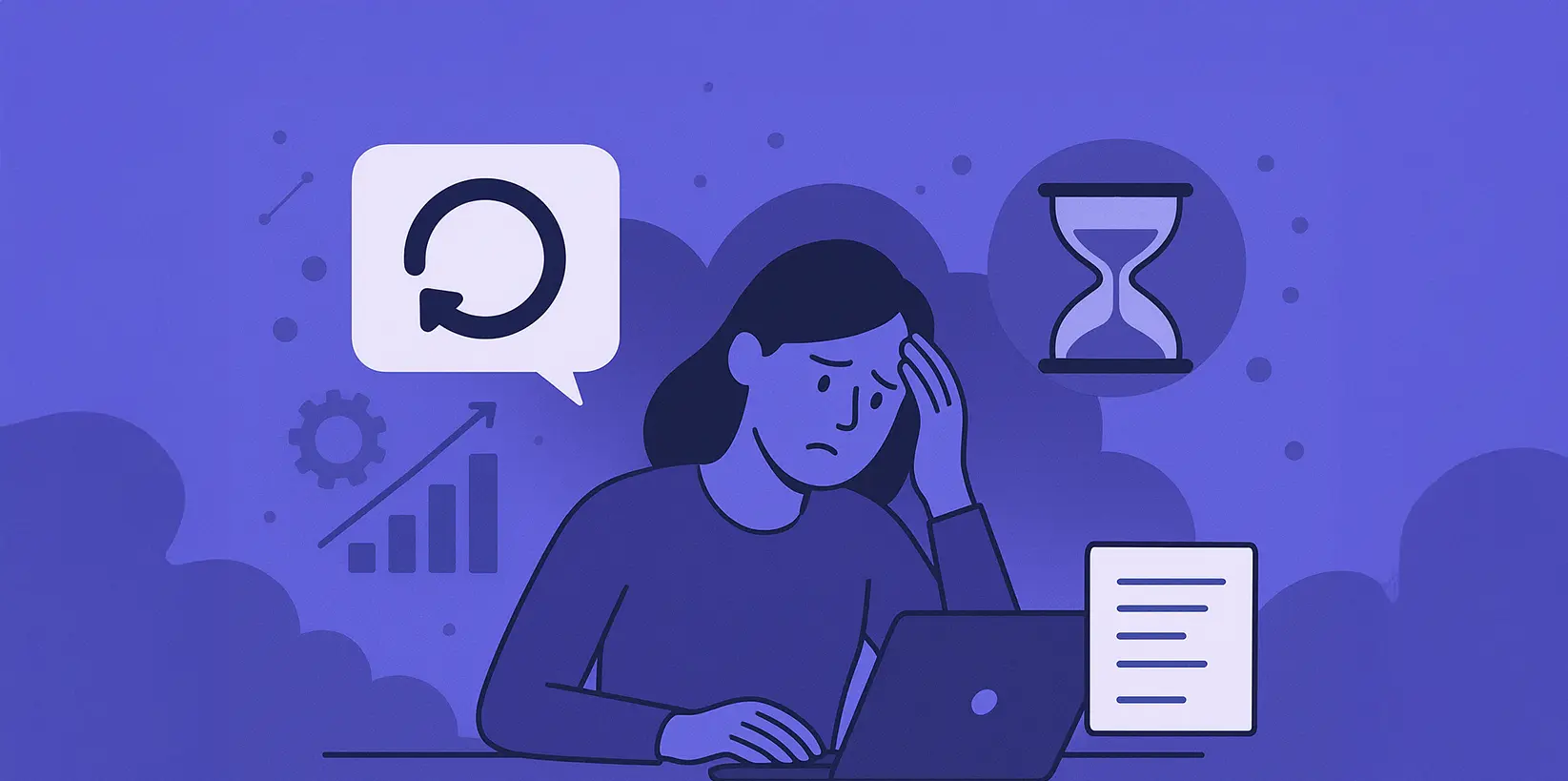
In most enterprises today…
The real middleware is the employee.
They:
- Switch tabs
- Copy/paste context
- Rewrite prompts
- Track outputs
- Compare reasoning manually
AI is powerful —
but humans are still the glue holding the workflow together.
That’s not automation.
That’s micro-outsourcing work to employees.
4. Why the System Needs a New Approach
The model → model → model → human → model loop is broken for one simple reason:
Real work is long-term.
Research, product development, competitive analysis, audits, risk projections — these are not single-session tasks.
They require:
- Memory
- State
- Consistency
- Continuing understanding
- The ability to build on past reasoning
Current LLMs are designed like calculators:
“Give me input → I give output → we start over.”
That doesn’t scale to enterprise knowledge work.
Second AI needs to behave like a team, not separate apps.
Imagine:
- Gemini fetches financial data
- DeepSeek performs quantitative and logical interpretation
- Claude provides structured reasoning
- ChatGPT produces human-ready communication
- Mistral runs quick auxiliary checks
But instead of users mediating the process…
The system should coordinate these models automatically.
Third – long-term memory is the missing piece
Not:
- “Paste the last message again.”
But:
- Understanding of ongoing projects
- Stored research
- Awareness of constraints and business goals
- Multi-session continuity
- Shared understanding across models
Until this exists, LLMs can never feel like a real knowledge partner.
They will always behave like intelligent – but forgetful – calculators.
5. A New Direction
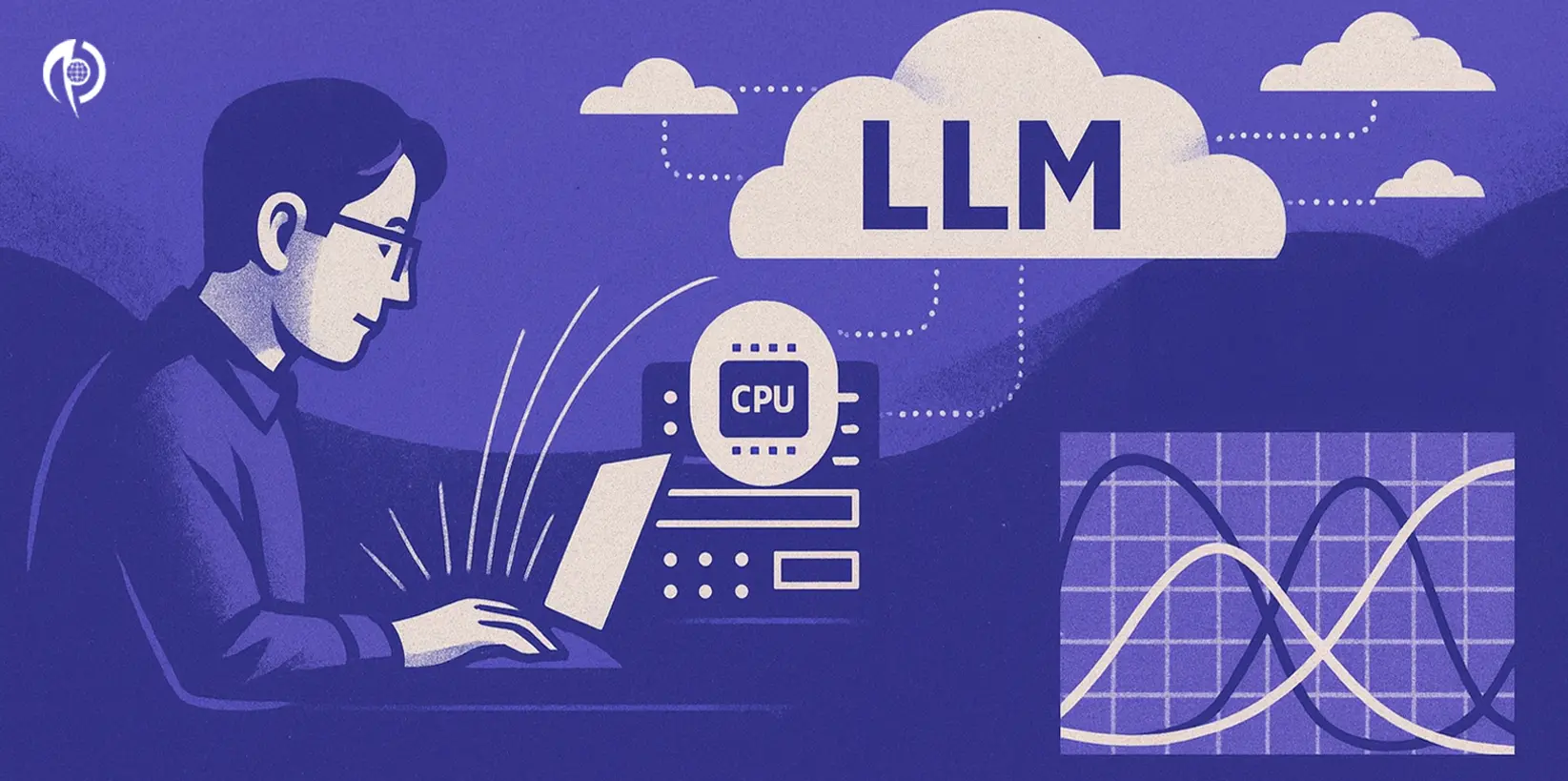
A new class of AI platforms is emerging that doesn’t replace LLMs — instead, it sits above them and provides:
- Shared memory
- Semantic understanding
- Automated context retrieval
- Task routing across models
- Answer merging and conflict resolution
- Long-term workspace continuity
Instead of humans acting as the “API middleware,”
the system itself becomes intelligent enough to manage collaboration between:
- ChatGPT
- Claude
- Gemini
- DeepSeek
- Mistral
Platforms like Webmap Modality follow this philosophy:
Not “one AI to replace the rest,”
but one intelligent layer that makes multiple AIs work together like one unified brain.
That is the real unlock.
Conclusion
Enterprises never wanted:
- 5 different AI tools
- 50 active chat sessions
- 200 copy-paste cycles
- 15 different prompt templates
- Human operators acting as workflow glue
They just needed:
- DeepSeek-level logic
- Claude-level reasoning
- Gemini-level data access
- ChatGPT-level communication
- Mistral-level speed and flexibility
So they ended up stacking more AI instead of getting better AI.
The next leap in enterprise productivity won’t come from “the next giant model.”
It will come from:
A system that can remember, route, reason, and orchestrate multiple AIs — as if they were one.