Research Teams Waste 40% of Their Time Repeating Prompts (Here’s Why)

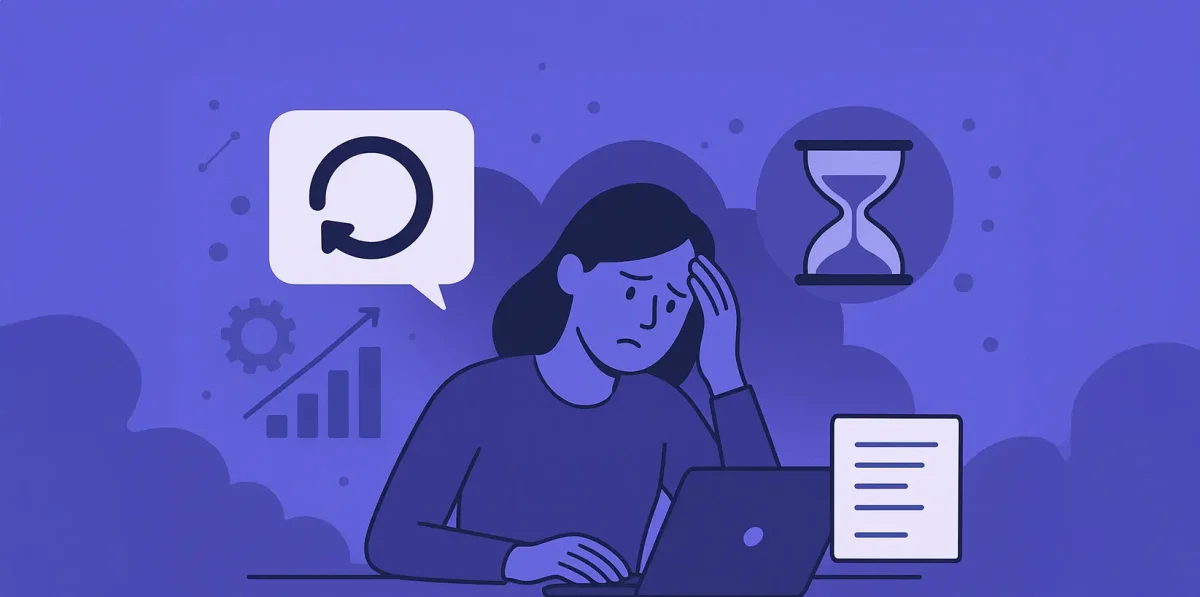
Across modern research teams, one quiet problem drains time, budget, and momentum every single day.
People rewrite the same prompts, restate the same context, and rebuild the same reasoning again and again.
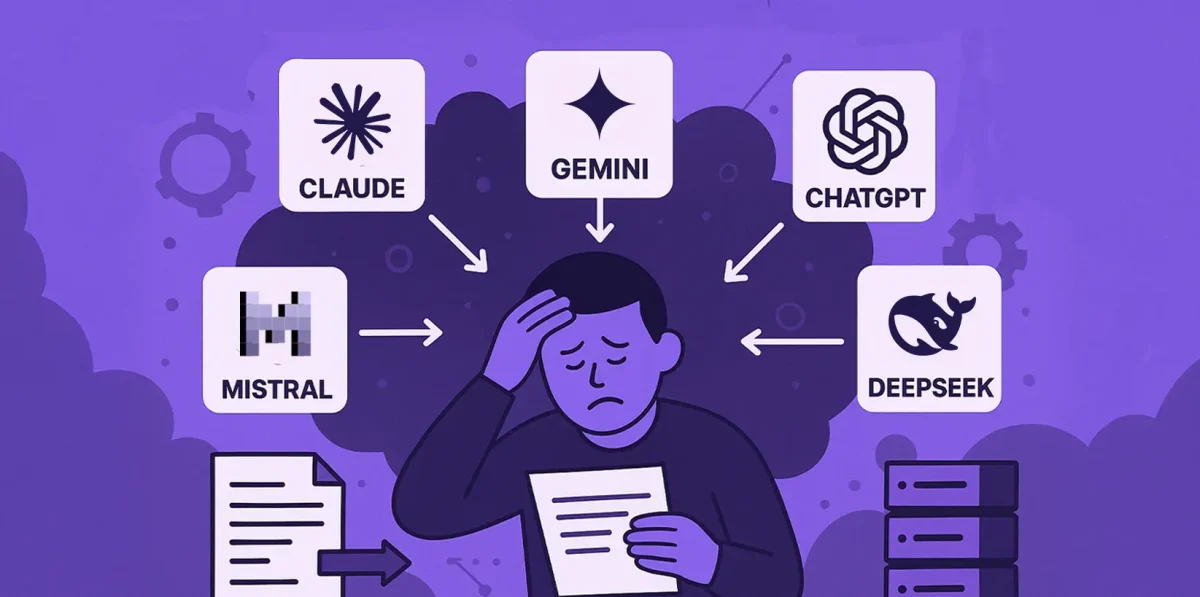
At first it feels normal: jumping between ChatGPT, Claude, Gemini, DeepSeek, or scrolling through old chats just to copy something you already said.
But when you zoom out, the pattern becomes impossible to ignore:
Nearly 40% of research time is wasted recreating context the model already knew.
And this isn’t just inefficiency, it’s a fundamental flaw in how today’s AI tools are designed.
The Core Problem: AI Models Forget Everything
LLMs are powerful, but they all share the same limitation:
They do not remember anything unless you tell them again.
Switch models, open a new tab, start a new workflow and the system resets fully.
It behaves like a researcher with amnesia, starting a project from the beginning every time.
Reasoning, documents, insights, conclusions all wiped.|
This leads to three major breakdowns inside research workflows.
1. Compounding Token Costs Every Time Everything Restarts
When the model forgets, teams are forced to rebuild context:
- Re-explain the project
- Re-attach documents
- Rephrase the same instructions
- Re-feed the same information
All this does one thing:
It doubles token consumption with every restart without improving research at all.
Over weeks and months, enterprises see thousands of unnecessary tokens and surprisingly high AI bills.
It’s not the research that’s expensive, it’s the forgetting.
2. Late Insights Because Models Re-Evaluate Everything From Zero
Most LLMs process each new prompt in isolation.
Without context, the model cannot build on previous reasoning.
It is forced to re-think the entire chain of logic.
This creates:
- slower insight generation
- repetitive back-and-forth
- delayed conclusions
- inconsistent reasoning across prompts
Researchers unknowingly push the model into constant re-analysis, not cumulative thinking.
Projects stretch longer, outputs vary in quality, and decisions get pushed back simply because the model had to “catch up” again.
3. Fragmented Knowledge Across ChatGPT, Claude, Gemini, Docs & More
The biggest hidden cost is fragmentation.
Insights get split across:
- ChatGPT conversations
- Claude reasoning threads
- Gemini searches
- DeepSeek analysis
- internal documents and notes
No single system holds the entire picture.
Teams repeat work without realizing it redoing research, verifying facts again, rewriting analysis simply because the insight exists elsewhere and the model can’t see it.
This leads to:
- duplicated work
- conflicting conclusions
- zero cumulative intelligence
Organizations lose the compounding effect that true long-term memory could create.
Why the Industry Fails to Solve This
Most existing solutions attempt to patch the problem with:
- manual knowledge bases
- copy-paste workflows
- prompt templates
- chat “project threads”
But these are temporary fixes.
They never solve the root cause:
LLMs do not have memory.
Traditional LLM APIs were not built for:
- long-term memory
- persistent context
- multi-model coordination
- unified research reasoning
No matter how advanced the model is, it restarts from zero unless the underlying system is fundamentally different.
Why AI Research Needs a New Approach
The future of research cannot depend on models that forget everything.
To break the loop of 40% time loss, teams need an AI system that can:
✔ remember past conversations
✔ store insights permanently
✔ unify all knowledge in one place
✔ coordinate multiple models without losing context
✔ accelerate research instead of restarting it
This requires more than a better model — it requires a new framework that finally connects memory, reasoning, and multi-model intelligence.
Conclusion (Soft Hint): Why Webmap Modality Changes Everything
This exact gap is where traditional AI tools fall short and where Webmap Modality introduces a fundamentally different approach.
Instead of forcing researchers to repeat prompts, Modality delivers:
- persistent long-term memory (up to 1B tokens)
- embedded conversation history
- a unified intelligence layer across ChatGPT, Claude, Gemini, DeepSeek & more
- automatic context retrieval
- multi-model orchestration without losing progress
The impact is immediate:
Teams stop rebooting.
They stop rewriting the same prompts.
They stop scattering knowledge across tools.
With Modality, insights compound.
Every interaction strengthens the next.
And the 40% time loss finally disappears.