Fast Learning vs Deep Learning: Can AI Help Students Achieve Both?


Introduction
One of the biggest challenges in education today is balancing speed and depth.
Students often face tight deadlines, multiple assignments, and large volumes of material to study. As a result, they look for ways to learn faster. Artificial intelligence has become a powerful tool in this process.
However, a common concern is emerging:
Does learning faster mean understanding less?
From the perspective of WebMap Network observations, the real opportunity is not choosing between fast learning and deep learning. The goal is to combine both, allowing students to move quickly through information while still building strong conceptual understanding.
AI, when used correctly, can make this possible.
The Difference Between Fast Learning and Deep Learning
What Is Fast Learning?
Fast learning focuses on speed and efficiency.
Students using fast learning techniques often:
- summarize large texts quickly
- review key points instead of reading everything
- gather quick explanations of difficult topics
AI tools like ChatGPT, Claude, and Gemini are excellent at helping students process information quickly.
Everyday Analogy
Fast learning is similar to reading the highlights of a book instead of the entire story.
You understand the main idea quickly, but some deeper details may be missed.
What Is Deep Learning?
Deep learning focuses on true understanding.
Students practicing deep learning:
- explore the reasoning behind ideas
- connect concepts together
- ask follow-up questions
- apply knowledge in new situations
Deep learning takes more time, but it builds long-term knowledge and critical thinking.
Analogy
Deep learning is like learning to cook a recipe step by step, understanding why each ingredient matters.
Fast learning is like watching a quick cooking video and remembering the final result.
Both approaches are useful, but they serve different purposes.
The Problem Students Face Today
Too Much Information, Too Little Time
Modern education requires students to handle large amounts of information.
A single subject may involve:
- lectures
- research papers
- textbooks
- assignments
Trying to deeply analyze every piece of information is often unrealistic.
This is why many students rely heavily on fast learning techniques.
But when fast learning is used alone, understanding can become shallow.
How AI Is Changing the Learning Process
Artificial intelligence has introduced a new way for students to interact with knowledge.
Instead of simply searching for information, students can now:
- ask complex questions
- request simplified explanations
- generate summaries
- explore different perspectives
AI tools like ChatGPT, Claude, and Gemini allow students to move through information much faster than traditional methods.
However, speed alone does not guarantee understanding.
This is where structured AI learning systems become important.
The Key Challenge: Fast Answers vs Real Understanding
AI can provide answers almost instantly.
But if students only collect answers without exploring the reasoning behind them, they may miss the opportunity to build deeper knowledge.
Analogy
Think of AI like a navigation system in a car.
It can guide you to your destination quickly, but if you always follow GPS without paying attention to the route, you may never learn how the roads connect.
To truly learn the route, you need both:
- the directions
- and an understanding of the map.
Learning with AI works the same way.
Multi-Model Intelligence and Better Learning
Different AI systems often provide different strengths.
For example:
- ChatGPT may explain concepts clearly
- Claude may provide detailed reasoning
- Gemini may connect broader ideas
When students explore multiple AI perspectives, they can gain a deeper understanding of the topic.
Analogy
It is similar to asking the same question to three different teachers and comparing their explanations.
Each perspective adds another layer of understanding.
From Fast Learning to Structured Understanding
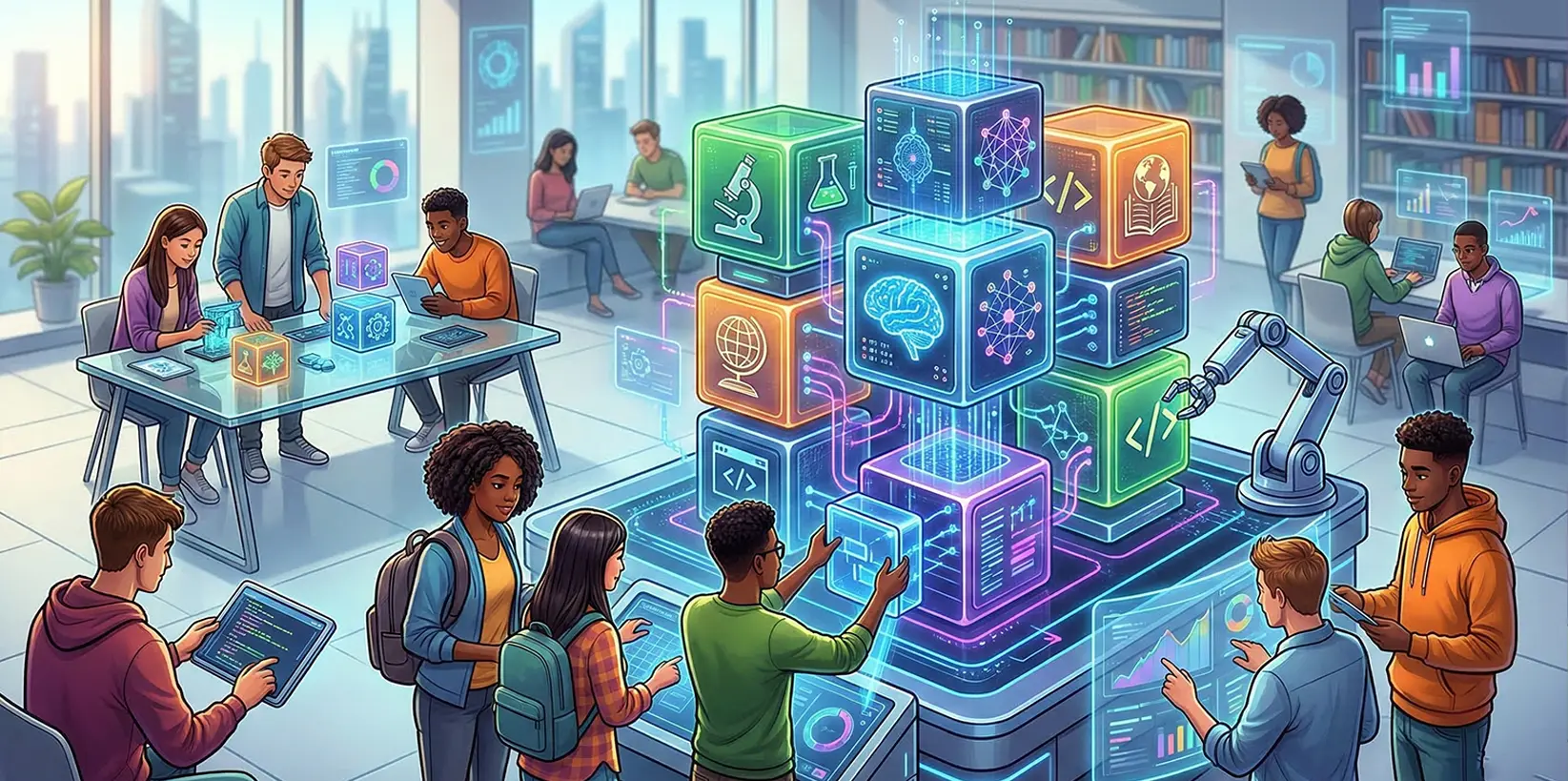
The real advantage of AI appears when learning moves from isolated answers to structured knowledge.
Students should not only ask questions but also:
- connect ideas across subjects
- organize information logically
- revisit explanations over time
This approach transforms fast information retrieval into deep conceptual learning.
How Webmap Helps Combine Speed and Depth
Platforms like Webmap are designed to help students achieve both fast and deep learning.
Instead of treating AI as a simple question-answer tool, Webmap provides a structured environment for knowledge exploration.
Key Advantages
1. Unified AI Access
Students can interact with multiple AI models in a single interface.
2. Context Preservation
Previous conversations and learning progress are maintained, allowing students to build knowledge step by step.
3. Structured Outputs
Information can be organized into summaries, step-by-step flows, or connected knowledge structures.
4. Multi-Model Insights
Students can compare responses from different AI systems and understand topics from multiple angles.
This approach reflects the principle of:
“One context, many models.”
The Future of Learning
In the future, education will likely move toward systems that combine:
- the speed of AI-powered information access
- the depth of structured knowledge exploration
Students will no longer need to choose between fast learning and deep learning.
Instead, AI-powered learning environments will guide them through both processes.
They will:
- quickly process large amounts of information
- organize ideas into meaningful frameworks
- explore concepts from multiple perspectives
Conclusion
The debate between fast learning and deep learning does not have to be a trade-off.
With the right AI systems, students can achieve both.
Artificial intelligence can accelerate the process of gathering information, while structured learning environments ensure that knowledge is properly organized and understood.
Platforms like Webmap demonstrate how AI can move beyond simple answers to support continuous, context-aware learning.
In the end, the future of education will not be about learning faster or learning deeper. It will be about learning smarter.