Indian Railways Deploys Face Recognition System

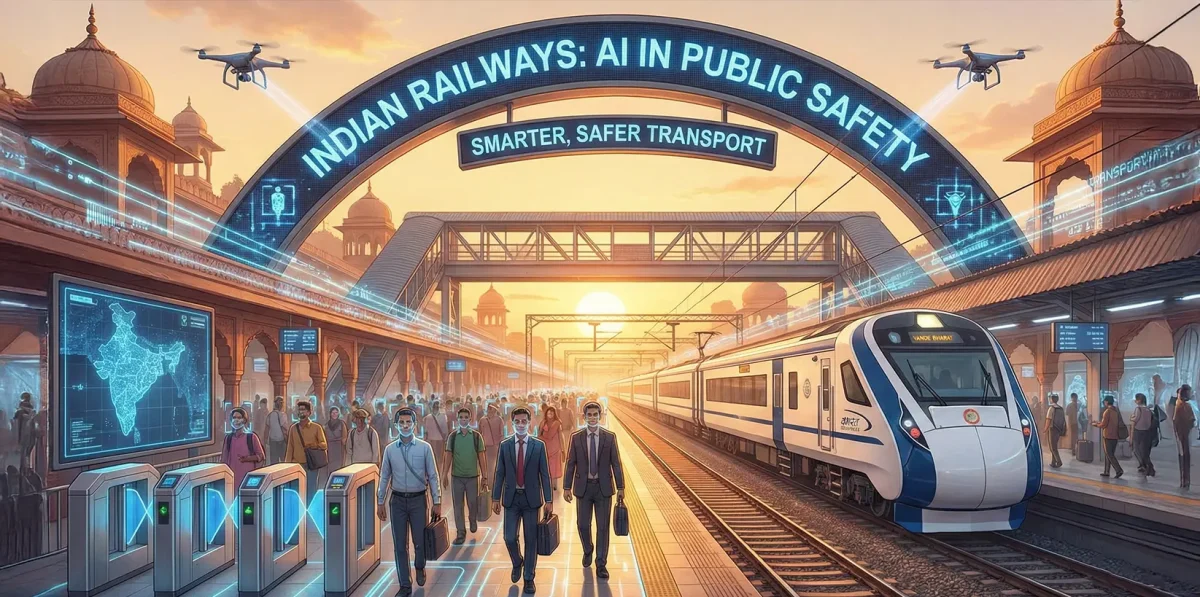
A Major Step Toward Smarter and Safer Transport Infrastructure
At WebMap Network, we closely track how artificial intelligence is being applied beyond enterprises and into critical public infrastructure. One such significant development is Indian Railways deploying an AI-powered Face Recognition System (FRS) at Visakhapatnam railway station, marking a major milestone in public safety and transport security.
This deployment highlights how AI is now being used in real-time environments to enhance passenger safety and proactively prevent crime.
How the AI-Powered FRS Works
The Face Recognition System introduced by Indian Railways uses advanced AI and computer vision to:
- Scan faces in real time through CCTV feeds
- Match facial data against a database of known habitual offenders
- Instantly alert security personnel when a match is detected
- Enable rapid interception without disrupting passenger flow
From what we’ve observed at WebMap Network, this is a clear shift from reactive policing to predictive and preventive security systems.
Why Railways Are a Critical Use Case for AI
Indian Railways is one of the world’s largest transport networks, serving millions of passengers daily. Deploying AI in such environments helps:
- Improve passenger safety at crowded stations
- Reduce crime and repeat offenses
- Support law enforcement with faster decision-making
- Optimize security operations without large manpower increases
This makes railways an ideal testbed for AI-driven public safety solutions.
AI Moving Beyond Pilots to Real-World Deployment
At WebMap Network, we’ve seen many AI projects remain at the pilot stage. What makes this deployment notable is that:
- AI is operating in real time, not just analytics mode
- Decisions are being acted upon immediately
- The system directly supports on-ground security teams
This reflects a broader trend where AI in India is moving from experimentation to operational impact.
Balancing Security and Responsible AI
While AI-powered surveillance improves safety, it also raises important considerations around:
- Data privacy and consent
- Accuracy and bias in facial recognition models
- Transparency in AI usage
From our perspective, responsible governance and clear operational guidelines will be critical to ensure that such systems remain ethical, fair, and trusted by the public.
What This Signals for the Future
The deployment at Visakhapatnam station may be an early indicator of wider adoption across:
- Other major railway stations
- Metro and urban transport systems
- Airports and public venues
At WebMap Network, we see this as part of India’s broader move toward AI-enabled smart infrastructure.
Conclusion (WebMap Network Perspective)
The use of AI-powered Face Recognition Systems by Indian Railways demonstrates how artificial intelligence can deliver real, measurable value in public safety. It shows that AI is no longer limited to labs or boardrooms it is now actively protecting citizens in everyday spaces. As India continues to scale AI across public services, the focus must remain on effectiveness, accountability, and responsible deployment. For discussions, insights, and collaboration on AI, public safety, and emerging technologies, connect with us at connect@webmap.network.