Find Out More :
Explore the Knowledge of "#DataScience" !
The Job-Market Sync: Automating the Alignment of Syllabi with Industry Needs
Introduction A growing disconnect exists between what universities teach and what employers actually require. Higher education institutions are increasingly asking themselves a critical question… how do we know if we are teaching outdated skills? From the perspective of WebMap Network observations, this matters right now because student ROI and graduate employability are under intense scrutiny. … Continue reading “The Job-Market Sync: Automating the Alignment of Syllabi with Industry Needs”
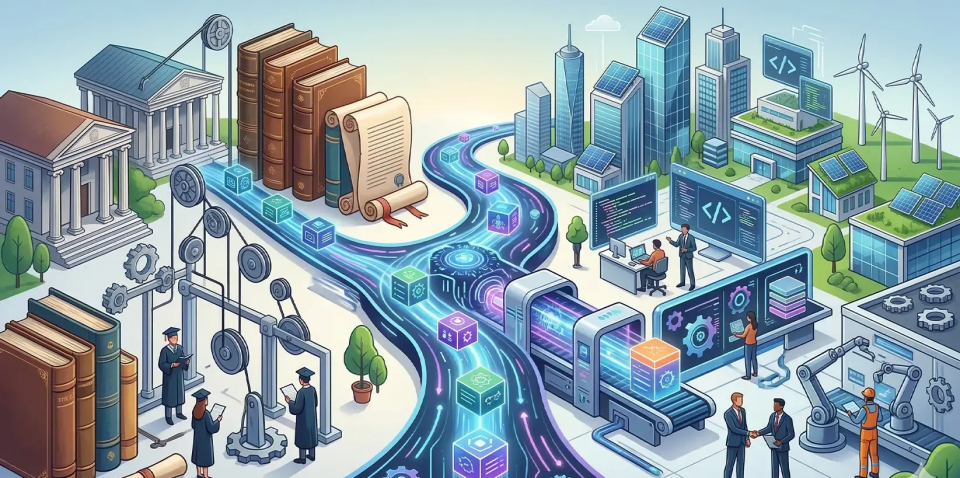

The Embedding-Ready Campus and the Future of University Infrastructure
Introduction Higher education institutions are sitting on a goldmine of information. For decades, universities have accumulated research papers, syllabi, administrative policies, and historical archives. However, this wealth of knowledge is largely trapped in static formats like isolated PDFs and disconnected web portals. From the perspective of WebMap Network observations, this matters right now because the … Continue reading “The Embedding-Ready Campus and the Future of University Infrastructure”

Why One AI Model Is Not Enough for Higher Education: The Case for Multi-LLM Orchestration
Introduction A significant realization is taking hold across university campuses and research institutions: standardizing on a single Artificial Intelligence provider is fundamentally limiting. The academic world is moving away from a “one-size-fits-all” approach toward ecosystems that support multiple Large Language Models simultaneously. From the perspective of WebMap Network observations, this development matters right now because … Continue reading “Why One AI Model Is Not Enough for Higher Education: The Case for Multi-LLM Orchestration”
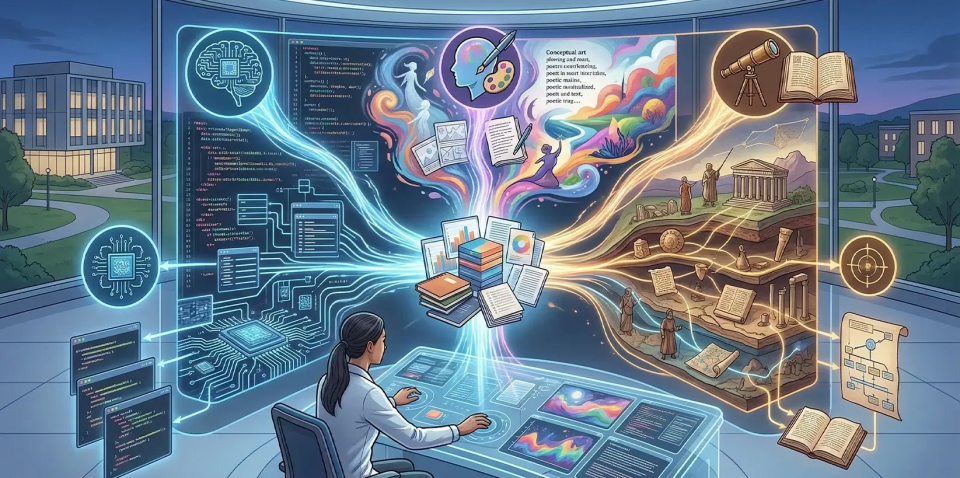
Mapping the AI Mind: How Semantic Geodesics Are Redefining Machine Reasoning
Introduction The way artificial intelligence understands the world is undergoing a fascinating re-evaluation. Researchers and engineers are moving beyond the idea of flat data storage to map the actual “currents” of meaning inside AI embedding spaces. This concept, known as semantic geodesics, explores the non-linear pathfinding models use to connect entirely unrelated concepts. From the … Continue reading “Mapping the AI Mind: How Semantic Geodesics Are Redefining Machine Reasoning”
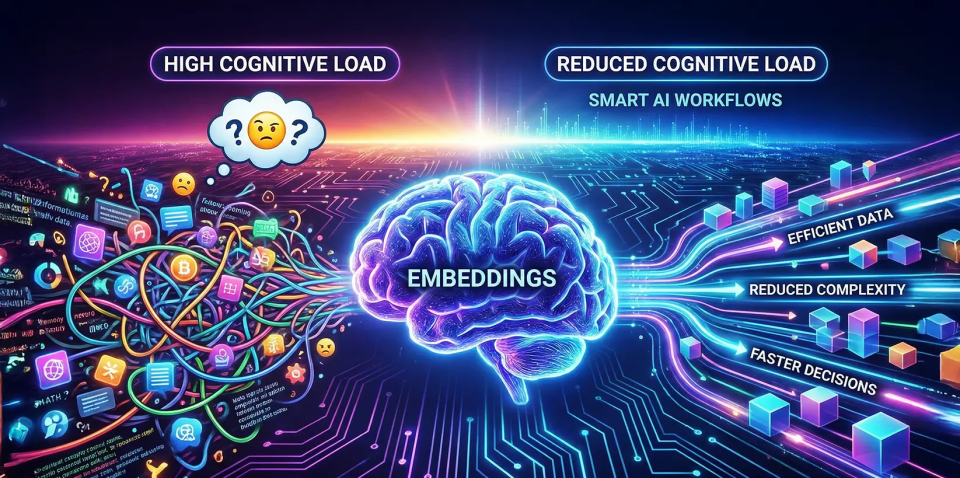
How Embeddings Reduce Cognitive Load in AI Workflows
In the rapidly evolving landscape of Artificial Intelligence, managing complex, high-dimensional data presents a significant challenge. This complexity can lead to increased cognitive load for both AI models and human developers. Embeddings, a fundamental concept in modern AI, emerge as a powerful solution by transforming intricate data into a more digestible and semantically rich format, … Continue reading “How Embeddings Reduce Cognitive Load in AI Workflows”
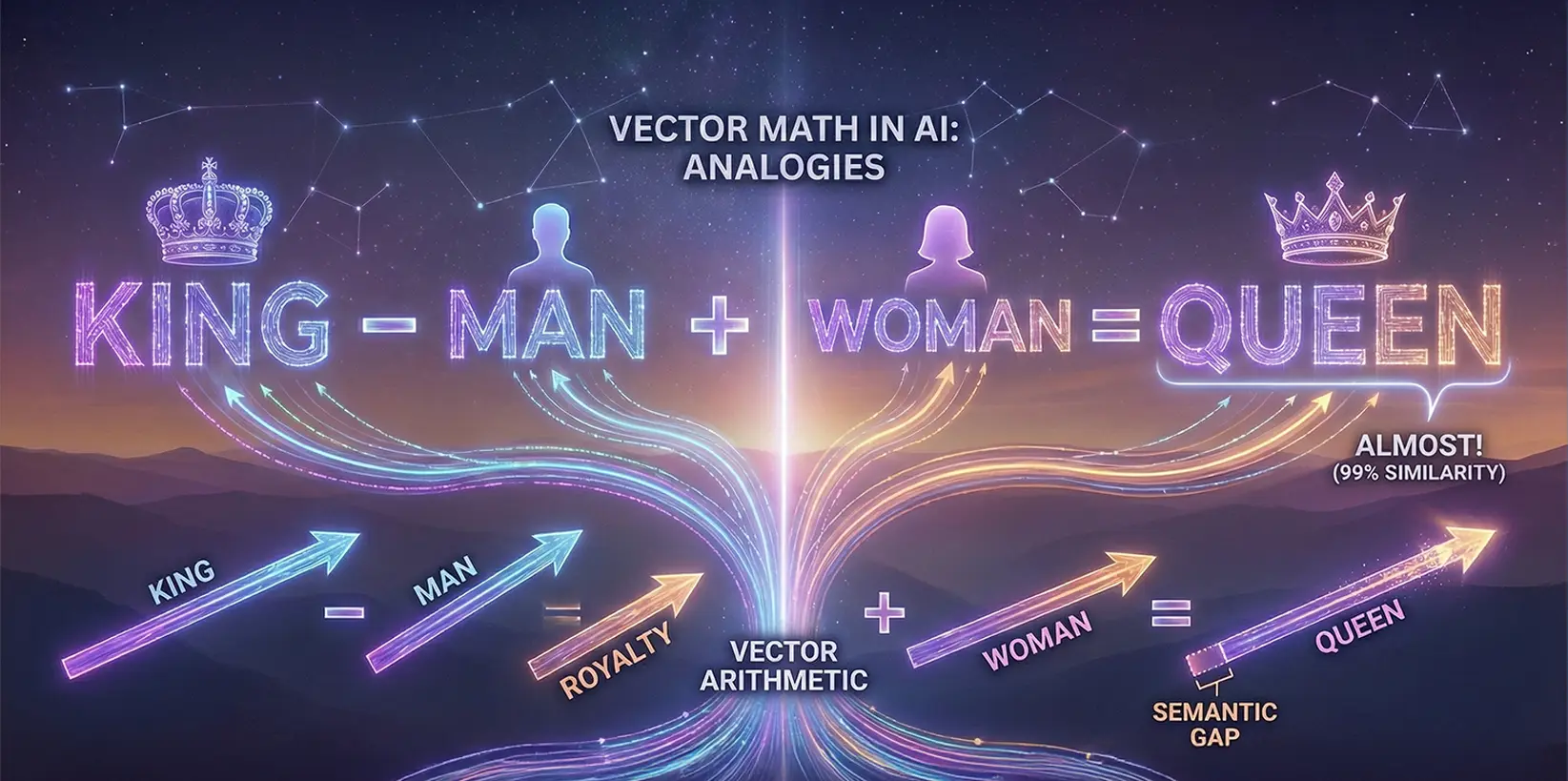
Why ‘King’ – ‘Man’ + ‘Woman’ = ‘Queen’ (Almost!): Demystifying Vector Math in AI
The Magic Trick of AI Imagine asking a computer to complete the analogy “man is to king as woman is to.” For decades, this was a profound challenge. Today, advanced AI models can answer it instantly. This capability stems from representing words not as text, but as points in a multidimensional space a concept central … Continue reading “Why ‘King’ – ‘Man’ + ‘Woman’ = ‘Queen’ (Almost!): Demystifying Vector Math in AI”