The Job-Market Sync: Automating the Alignment of Syllabi with Industry Needs

Introduction
A growing disconnect exists between what universities teach and what employers actually require. Higher education institutions are increasingly asking themselves a critical question… how do we know if we are teaching outdated skills?
From the perspective of WebMap Network observations, this matters right now because student ROI and graduate employability are under intense scrutiny. The traditional curriculum review process takes years, while industry software and methodologies change in months. We are observing a shift toward automated syllabus alignment, ensuring that the academic world moves at the exact speed of the modern job market.
What the Development Is
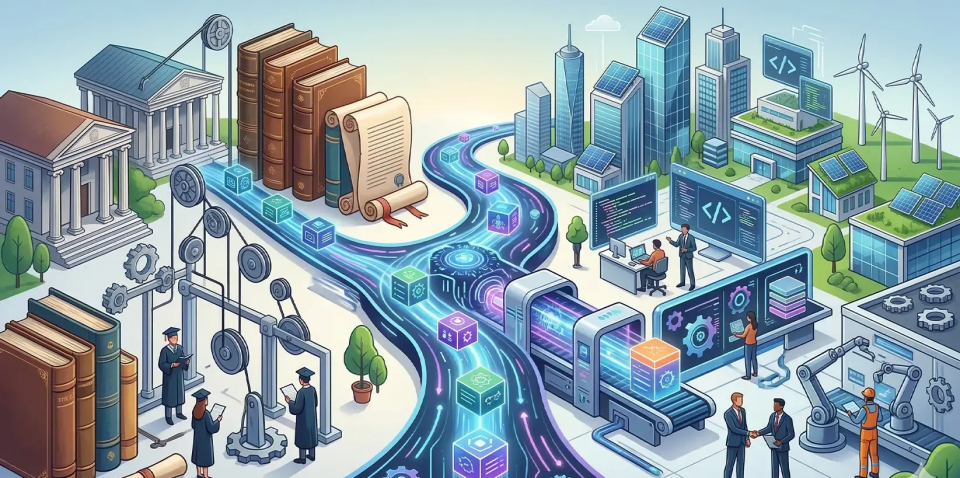
The technological leap is the automation of curriculum audits using intelligent data ingestion. Instead of relying on manual reviews by academic committees, universities are deploying engines to ingest massive amounts of real-time industry job descriptions. This live data is then cross-referenced against the university’s own structured syllabi database. By matching the extracted skills from the job market against the learning outcomes of the courses, the system instantly identifies curriculum gaps.
Why It Is Important
This system is vital because it shifts universities from reactive to proactive. If 10,000 new job postings for data analysts suddenly require a specific programming framework, the university is instantly alerted that their current computer science syllabus is deficient. It allows academic departments to pivot and integrate micro-credentials or module updates immediately, rather than waiting for a five-year accreditation cycle.
Industry or Market Impact
The EdTech industry is pivoting heavily toward employability metrics. Software that simply manages learning is being replaced by platforms that prove market readiness. For employers, this means a pipeline of graduates who possess the exact technical skills required on day one, drastically reducing corporate training costs.
India and Global Implications
In massive, fast-growing economies like India, bridging the skills gap is a national priority. With millions of students entering the workforce annually, universities that can dynamically sync their syllabi with the demands of global tech, manufacturing, and finance sectors will emerge as the premier institutions. This technology democratizes access to highly relevant education, regardless of geographic location.
Future Outlook
In the near future, the static degree will be obsolete. We will see the rise of dynamic degrees, where course materials automatically update based on real-world industry shifts. The university will function as a real-time reflection of the global economy.
Analysis Section
WebMap Network Insights
At WebMap Network, our analysis indicates that this synchronization is only possible if the university’s data is first transformed into structured intelligence. You cannot cross-reference a live job board against a folder of unstructured PDF syllabi. The institution must first ingest and structure its own knowledge base. Once the curriculum is embedded and readable by AI, mapping it against external market data becomes a seamless, automated workflow.
Trends and Long-Term Meaning
The long-term meaning of this trend is the complete integration of academia and industry. Universities that adopt this automated alignment will boast near-perfect graduate placement rates, turning employability from a marketing promise into a data-driven guarantee.
Conclusion
By ingesting real-time job market data and mapping it against structured course catalogs, universities can instantly identify curriculum gaps. This automated alignment ensures that academic institutions are no longer guessing what the future requires… they are dynamically building it.