Embeddings in Cultural Heritage AI Beyond Sanskrit: Preserving Living Knowledge Systems

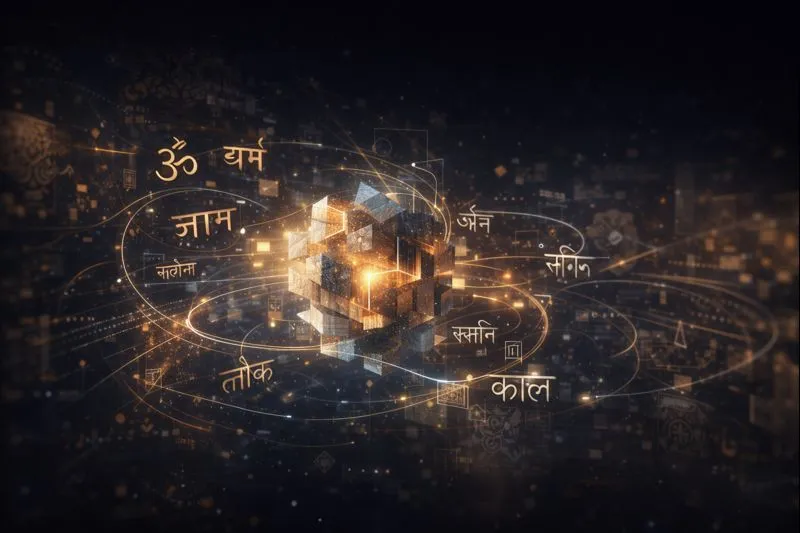
When AI and cultural heritage are discussed in India, the conversation often gravitates toward Sanskrit texts and classical literature. While these are undeniably valuable, India’s cultural intelligence extends far beyond any single language or script. From oral tribal traditions and regional dialects to folk music, rituals, craftsmanship, and indigenous knowledge systems much of India’s heritage remains underrepresented in AI systems.
Embeddings offer a powerful way to change this. By encoding meaning rather than just words, embeddings enable AI to understand, preserve, and connect diverse cultural expressions that were previously invisible to digital systems.
Why Cultural Heritage AI Must Go Beyond Text
Cultural heritage is multimodal by nature. It exists not only in written manuscripts but in:
- Oral storytelling
- Music and rhythm
- Visual art and symbolism
- Gestures, rituals, and practices
- Local metaphors and idioms
Traditional NLP systems struggle with this diversity because they rely heavily on standardized text data. Embedding-based systems, however, allow meaning to be represented across forms, not just languages.
Limitations of Text-Only Cultural AI
| Challenge | Impact |
|---|---|
| Script dependency | Excludes oral and unwritten traditions |
| Language dominance | Marginalizes regional dialects |
| Literal translation | Loses cultural nuance |
| Fragmented datasets | Breaks cultural continuity |
Embeddings shift the focus from translation to understanding.
What Are Cultural Embeddings?
Cultural embeddings are vector representations that capture context, symbolism, relationships, and usage within cultural data. Instead of treating culture as static content, embeddings allow AI to model it as a living, interconnected system.
They can represent:
- Concepts shared across cultures
- Local variations of similar traditions
- Symbolic meaning in art, music, and rituals
- Knowledge passed orally across generations
Beyond Sanskrit: Diverse Cultural Domains Embeddings Can Preserve
1. Regional Languages & Dialects
India has hundreds of living languages and dialects that lack large digital corpora.
| Example | Embedding Advantage |
|---|---|
| Bhojpuri, Tulu, Gondi | Meaning captured without full standardization |
| Code-mixed speech | Context preserved across languages |
| Folk idioms | Semantic intent retained |
Embeddings reduce the dependency on formal grammar and standardized spelling.
2. Oral Traditions & Tribal Knowledge
Many communities transmit knowledge orally about agriculture, medicine, ecology, and social structure.
| Knowledge Type | Embedding Use |
|---|---|
| Folk medicine | Connect remedies across regions |
| Oral epics | Preserve narrative structure |
| Ecological wisdom | Map seasonal and environmental patterns |
Here, meaning matters more than exact wording a natural fit for embeddings.
3. Music, Dance, and Performance Arts
Cultural expression is often rhythmic, visual, and performative.
| Medium | Embedding Application |
|---|---|
| Folk music | Capture emotional tone & patterns |
| Dance forms | Relate gestures to narratives |
| Performance rituals | Link symbolism across regions |
Multimodal embeddings allow AI to understand how culture feels, not just how it reads.
4. Crafts, Symbols, and Visual Heritage
Indian heritage is rich in visual semiotics motifs, patterns, and symbolism.
| Cultural Element | What Embeddings Capture |
|---|---|
| Textile motifs | Regional symbolism |
| Temple architecture | Functional + spiritual meaning |
| Folk art | Narrative encoded in visuals |
Embeddings allow AI to recognize shared meaning across different visual forms.
Cultural Continuity Through Embedding-Based Memory
One of the biggest risks in cultural AI is fragmentation isolated datasets that lose context over time. Embedding-powered memory systems enable:
- Long-term preservation of cultural relationships
- Cross-generational knowledge linking
- Context-aware retrieval instead of keyword search
Cultural AI Without vs With Embedding Memory
| Without Memory | With Embedding Memory |
|---|---|
| Static archives | Living knowledge graphs |
| Isolated records | Interconnected traditions |
| Loss of context | Cultural continuity preserved |
This transforms cultural AI from an archive into an intelligent cultural companion.
Ethical Dimensions of Cultural Embeddings
Encoding culture into AI also carries responsibility.
| Ethical Concern | Mitigation Approach |
|---|---|
| Cultural appropriation | Community-led data governance |
| Misrepresentation | Context-rich embeddings |
| Knowledge ownership | Consent-driven datasets |
| Bias | Diverse, region-specific training |
Cultural embeddings must be built with communities, not just about them.
Why This Matters in 2026 and Beyond
As India and the world invest in AI-driven education, tourism, heritage preservation, and digital governance, cultural intelligence will become as important as technical intelligence.
Embedding-based cultural AI enables:
- Inclusive digital heritage platforms
- Local-language AI assistants
- Smarter cultural discovery tools
- Preservation of endangered knowledge systems
This is not about digitizing the past it is about future-proofing cultural memory.
Conclusion
Embeddings allow AI to move beyond dominant languages and written traditions, enabling a deeper understanding of cultural heritage in all its forms. By representing meaning across languages, media, and memory, embedding-driven systems can preserve living cultures without flattening their diversity. For countries like India, this marks a shift from selective preservation to inclusive cultural intelligence at scale.
Connect with WebmapNetwork to explore how embedding-powered memory systems and multimodal AI architectures can help preserve, connect, and responsibly scale cultural heritage intelligence.
We work at the intersection of meaning, memory, and AI helping organizations build systems that understand culture, not just content. Email us at: connect@webmap.network