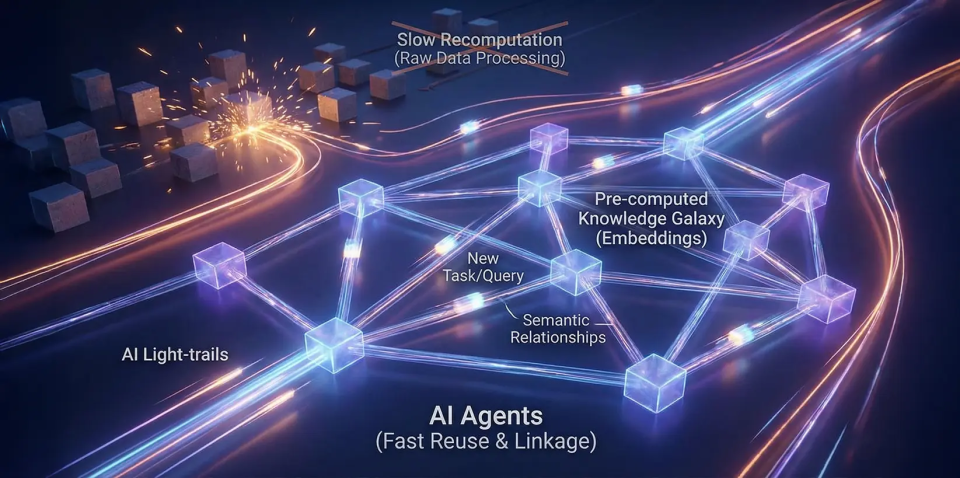
The Embedding Layer Behind Real-Time Personalized Healthcare

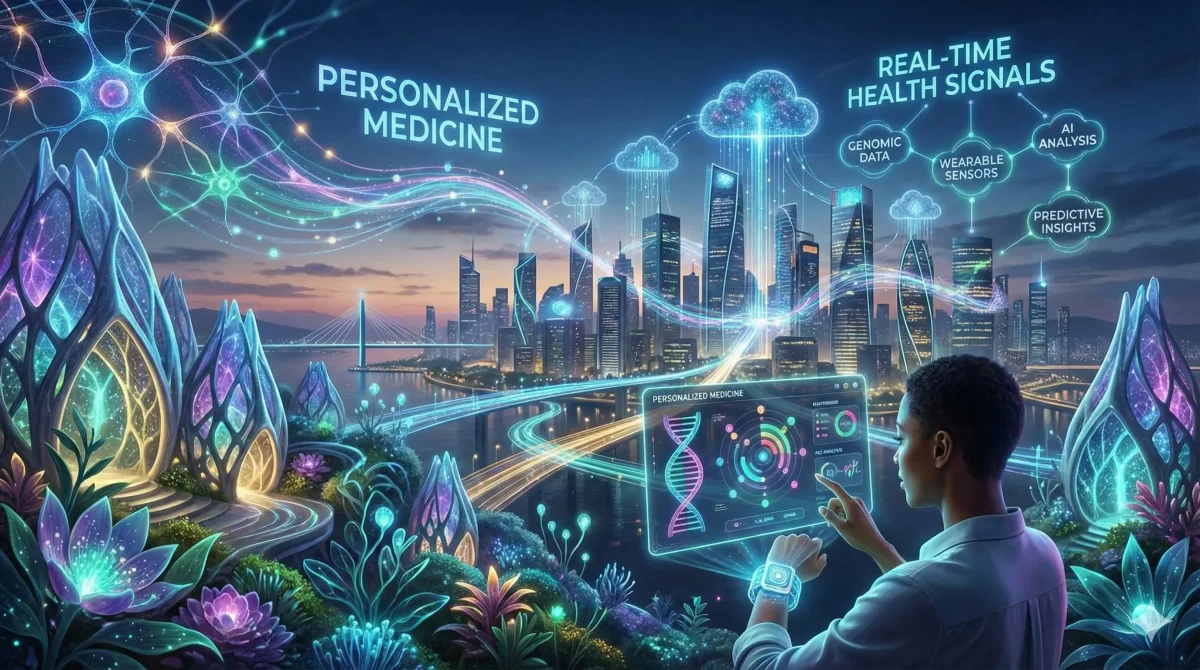
How AI Turns Everyday Health Data Into Timely, Personalized Care
Healthcare is shifting from reactive treatment to predictive and personalized care. Instead of waiting for symptoms to become serious, modern systems aim to detect subtle changes early and recommend interventions tailored to each individual.
At the center of this transformation are embeddings a powerful AI technique that helps systems understand complex health data in a structured and meaningful way.
Let’s break this down in simple terms.
What Are Embeddings? (A Simple Analogy)
Imagine your health data is like a giant grocery store.
- Blood test results are in one aisle.
- Heart rate data from your smartwatch is in another.
- Medical history sits in the storage room.
- Doctor’s notes are scattered across shelves.
Without organization, finding meaningful connections is hard.
Embeddings act like a smart labeling and positioning system.
They arrange all this information so that related items are placed close together making it easier for AI to understand patterns and relationships.
Think of embeddings as turning messy shelves into a neatly organized store where similar items are grouped logically.
Why Personalized Medicine Needs Embeddings
Traditional healthcare often follows a “one-size-fits-all” approach:
- Same medication for everyone with the same condition
- Standard treatment protocols
- Fixed dosage patterns
But no two bodies are identical.
Personalized medicine aims to tailor treatments based on:
- Genetics
- Lifestyle
- Medical history
- Real-time health signals
- Environmental factors
Embeddings help combine all these signals into a single, structured understanding of the patient.
From Raw Signals to Meaningful Insights
Modern health systems collect data from multiple sources:
- Wearables (heart rate, sleep patterns)
- Lab tests
- Medical imaging
- Genomic sequencing
- Electronic Health Records (EHRs)
- Patient-reported symptoms
Each source speaks a different “language.” Embeddings convert them into a common numerical representation that AI models can analyze together.
Simple Analogy
Think of different health data sources like people speaking different languages English, Spanish, Mandarin.
Embeddings act like a universal translator that allows all of them to communicate in one common format.
Real-Time Health Signals: Why Timing Matters
Health changes often start subtly.
- A small increase in resting heart rate
- Slightly reduced sleep quality
- Minor inflammation markers
- Small glucose fluctuations
Individually, these may seem insignificant.
Together, they could indicate early signs of:
- Infection
- Stress overload
- Chronic disease progression
- Medication side effects
Embeddings help detect relationships between these small signals even when they come from different data streams.
How Embeddings Enable Personalized Care
Let’s look at how embeddings support real-world healthcare improvements:
| Health Scenario | How Embeddings Help |
|---|---|
| Chronic Disease Monitoring | Detect patterns across vitals, labs, and history to predict flare-ups |
| Cancer Treatment Planning | Match genetic markers with treatment response patterns |
| Diabetes Management | Connect diet, glucose levels, and activity data for precise recommendations |
| Cardiac Risk Prediction | Combine ECG data, cholesterol levels, and lifestyle patterns |
Instead of looking at isolated numbers, embeddings allow systems to see the whole picture.
Understanding Similarity in Healthcare
One of the most powerful features of embeddings is similarity detection.
Everyday Example
If you shop online, recommendation systems suggest products similar to what you viewed.
That happens because products are grouped by similarity in embedding space.
In healthcare, this works similarly:
- Patients with similar symptom patterns can be grouped together.
- Treatment responses can be compared.
- Early warning signs can be identified by comparing to previous cases.
For example:
If a patient’s real-time signals begin to resemble patterns previously linked to cardiac stress, the system can flag it early even before symptoms are noticeable.
Real-Time Monitoring with Embeddings
Wearables and remote monitoring devices generate continuous data streams.
Embeddings allow systems to:
- Continuously update patient profiles
- Compare new signals with historical baselines
- Detect anomalies quickly
- Trigger alerts with contextual understanding
Think of It Like This:
Your health baseline is like your normal walking speed.
If you suddenly start limping slightly, it may not be dramatic but compared to your normal pattern, it’s meaningful.
Embeddings help AI understand what is “normal for you,” not just what is average for everyone.
From Prediction to Prevention
The true power of embedding lies in preventive healthcare.
Instead of reacting to disease, systems can:
- Predict complications
- Adjust medication dosage dynamically
- Recommend lifestyle changes
- Suggest early clinical intervention
This is similar to how weather systems predict storms by detecting early atmospheric changes.
Healthcare systems using embeddings can detect “health storms” before they fully develop.
The Role of Context
Numbers alone don’t tell the full story.
For example:
- A high heart rate during exercise is normal.
- The same heart rate while resting could be concerning.
Embeddings incorporate context, meaning AI understands relationships rather than isolated values.
Context-aware systems are what make personalized medicine truly intelligent.
Privacy and Responsible Use
With powerful health intelligence comes responsibility.
Embedding-powered systems must ensure:
- Strong data encryption
- Strict access control
- Transparent model behavior
- Regulatory compliance (HIPAA, GDPR, etc.)
Responsible AI ensures trust in personalized medicine systems.
The Future of Personalized Healthcare
In the coming years, embedding-based health systems may enable:
- Digital twins of patients for simulation-based treatment planning
- Ultra-early disease detection
- Continuous risk scoring
- Personalized drug discovery
- AI-assisted clinical decision support
Healthcare will shift from episodic check-ups to continuous intelligence.
Conclusion
Personalized medicine and real-time health monitoring demand more than isolated reports and periodic checkups. They require continuous context, pattern recognition, and intelligent interpretation of signals as they evolve. Embeddings are becoming a foundational layer for transforming scattered health data into structured, meaningful insight.
As wearable devices, genomic data, clinical records, and live biometric streams continue to grow, embedding-driven systems will play a critical role in detecting early risks, understanding individual baselines, and enabling truly personalized care. To explore how embedding architectures are shaping the future of personalized medicine and real-time health intelligence, visit WebmapNetwork or continue the discussion with us at connect @webmap.network.