How AI Turns Your Notes into a Personal Tutor


Introduction
Today, information is everywhere. Students and professionals already have access to notes, PDFs, articles, and study material. But despite having all this content, one problem still exists: understanding takes time. You read something once, it feels clear, but when you revisit it later, the clarity is gone. You go back, search again, and try to reconnect ideas. This process is repetitive and inefficient.
So the real problem is not access to information. It is the lack of interaction with it.
1. The Problem with Static Notes
Traditional notes are passive. They are designed to be read, not interacted with. They don’t respond, they don’t guide, and they don’t adapt to your thinking.
Because of this, the entire effort of learning falls on the user. You have to search for the right section, interpret the meaning, and connect different ideas manually. This slows down the learning process and often creates confusion.
In reality, learning is not just about reading. It is about asking questions, understanding concepts, and exploring connections. Static notes are not built for that.
2. From Reading to Interaction
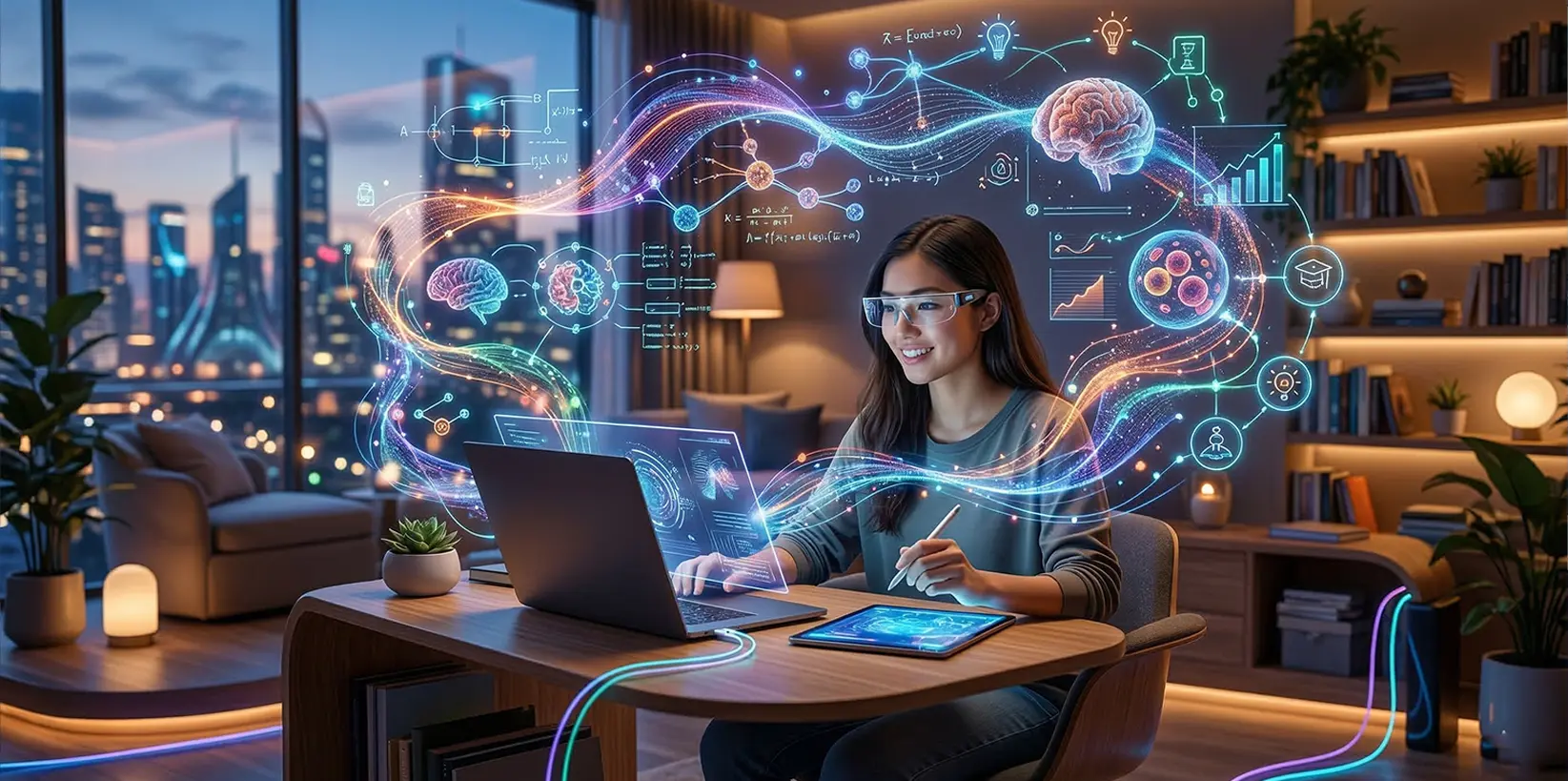
AI introduces a fundamental shift in how we use notes. Instead of treating them as something to read, they become something you can interact with. You no longer need to search through pages or guess where information is located. You can directly ask questions, get explanations, and explore ideas instantly.
This transforms the experience from:
Reading → Searching → Guessing
To:
Asking → Understanding → Learning
This shift reduces effort and improves clarity.
3. Turning Notes into a Personal Tutor
When AI works on top of your notes, they begin to function like a personal tutor. But unlike generic AI tools, this tutor is built on your own data.
It understands your material, answers your questions based on your notes, and helps you move forward step by step. You are no longer relying on external explanations that may not match your content. Instead, you are learning directly from what you already have.
This creates a more personalized and relevant learning experience.
4. The Role of Structured Knowledge
The real advantage comes when notes are transformed into a structured system. Instead of being raw text, they become organized, searchable, and connected.
This allows users to:
- Access information instantly
- Understand relationships between concepts
- Explore ideas without losing context
Systems like Docsity are built on this principle. They convert documents into structured knowledge bases, making it easier to interact with information rather than just read it.
5. Removing Friction from Learning
One of the biggest challenges in modern learning is friction. Switching between notes and AI tools, copying content, and re-explaining context breaks focus. With AI integrated directly into your notes, this friction disappears. You stay in the same environment, your context remains intact, and your workflow becomes smoother.
This leads to faster and more efficient learning.
6. Better Questions, Better Understanding
When your notes become interactive, your approach to learning changes. You stop focusing on finding information and start focusing on understanding it. Instead of asking where something is written, you begin to ask why it works, how it connects, and what it means. This shift leads to deeper learning and better retention.
A personal tutor does not just provide answers; it improves the way you think. AI brings this capability into everyday learning.
7. Control Over Learning
Different situations require different types of answers. Sometimes you need precise information, and sometimes you need broader explanations. Modern AI systems allow users to control this through different modes. Whether it is strict answers based only on your notes or expanded explanations using AI knowledge, the control remains with the user.
This flexibility makes learning more adaptive and effective.
Conclusion & Webmap Analysis
The future of learning is not just about having more information. It is about interacting with information in a smarter way. Static notes limit understanding because they require manual effort. Interactive systems enhance learning by making information responsive and accessible.
Webmap Analysis: Based on current learning patterns, the shift from passive content to interactive knowledge systems is becoming essential. When notes are structured and combined with controlled AI interaction, users move from simply consuming information to actively understanding it. Webmap, through Docsity, demonstrates how personal data can be transformed into a responsive learning environment where users can ask, explore, and learn in real time.
In the end, the goal is simple. Learning should not feel like searching. It should feel like understanding.