The Embedding-Ready Campus and the Future of University Infrastructure


Introduction
Higher education institutions are sitting on a goldmine of information. For decades, universities have accumulated research papers, syllabi, administrative policies, and historical archives. However, this wealth of knowledge is largely trapped in static formats like isolated PDFs and disconnected web portals.
From the perspective of WebMap Network observations, this matters right now because the AI revolution requires a fundamentally different type of data architecture. The bottleneck for campus innovation is no longer a lack of advanced AI models; it is the state of institutional data. To leverage the next decade of technology, universities must stop merely storing information and start structuring it. This is the dawn of the “embedding-ready” campus.
The Shift from Static Storage to Structured Intelligence
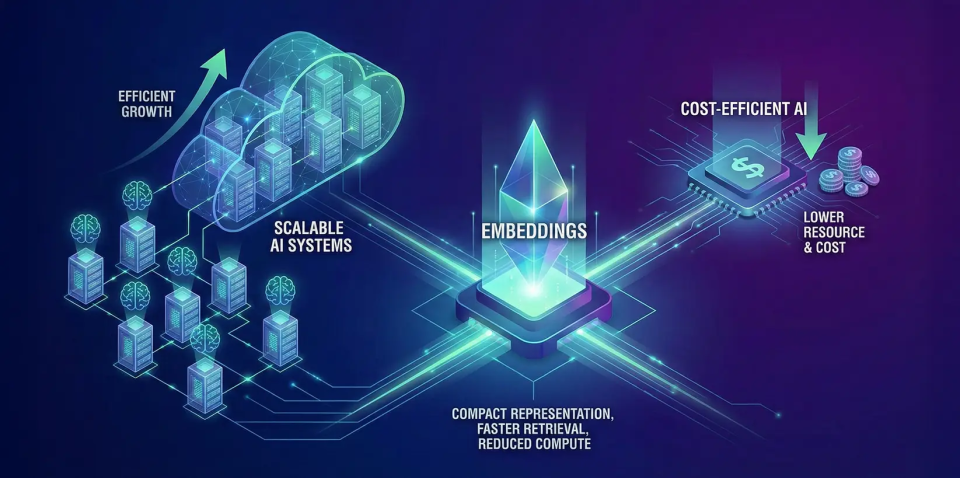
What the Development Is The traditional approach to campus IT has been archival… saving files into massive, hierarchical folder systems. The new development is the transformation of these static files into “embedding-ready” datasets. In technical terms, an embedding translates human language into mathematical vectors that an AI can natively understand and compare.
To achieve this, institutions are deploying intelligent ingestion engines to automatically capture data from multiple formats and convert them into a unified, context-aware layer. It is the process of turning a passive library into an active, conversational intelligence.
Why It Is Important: The Rise of RAG This structuring is the mandatory first step for implementing Retrieval-Augmented Generation (RAG). RAG is the new standard for digital transformation. Instead of relying on a generalized AI model that might hallucinate or provide outdated information, a RAG system retrieves facts directly from the university’s proprietary, embedded data before generating an answer.
If a student asks about graduation requirements, an AI powered by RAG does not guess; it pulls the exact, up-to-date policy from the structured university handbook. Without embedding-ready data, accurate RAG is impossible.
Industry or Market Impact The EdTech market is pivoting rapidly from basic Learning Management Systems (LMS) to dynamic knowledge environments. Tools that simply host files are becoming obsolete. The new market leaders are platforms that interlink concepts, allowing users to navigate institutional knowledge non-linearly. This reduces the administrative burden on faculty and staff, as intelligent agents can handle thousands of routine queries with precise, cited answers.
India and Global Implications For massive educational ecosystems, particularly in India where legacy universities handle enormous student populations and multilingual administrative data, the embedding-ready approach levels the playing field. By systematically ingesting and structuring decades of fragmented records, these historic institutions can instantly modernize. They can deploy AI agents that operate with the speed of a modern tech startup while leveraging the deep, institutional trust they have built over centuries.
Future Outlook Within the next few years, the standard interface for navigating a university will not be a search bar that returns a list of blue links. It will be an interactive, multi-modal layer. Students will prompt their campus ecosystem to synthesize complex research, while administrators will use it to instantly audit compliance across thousands of documents.
Analysis Section
WebMap Network Insights At WebMap Network, our analysis indicates that the phrase “garbage in, garbage out” has never been more relevant. A university can license the most powerful Large Language Models in the world, but if their internal data is unstructured, the AI will fail to deliver value. The essential bridge is the ingestion and structuring phase.
Trends and Long-Term Meaning We are observing a long-term trend where data structuring is treated as core infrastructure, much like campus Wi-Fi. The shift from keyword search to semantic synthesis means that the underlying architecture must understand the meaning of a document, not just its text. By building an embedding-ready campus today, universities are future-proofing themselves, ensuring they can seamlessly integrate whatever new AI models emerge tomorrow.
Conclusion
The true digital transformation of higher education is not about replacing human educators; it is about building an intelligent infrastructure that supports them. By transitioning from static file storage to an embedding-ready, RAG-optimized environment, universities can unlock the full potential of their institutional knowledge for the next generation.