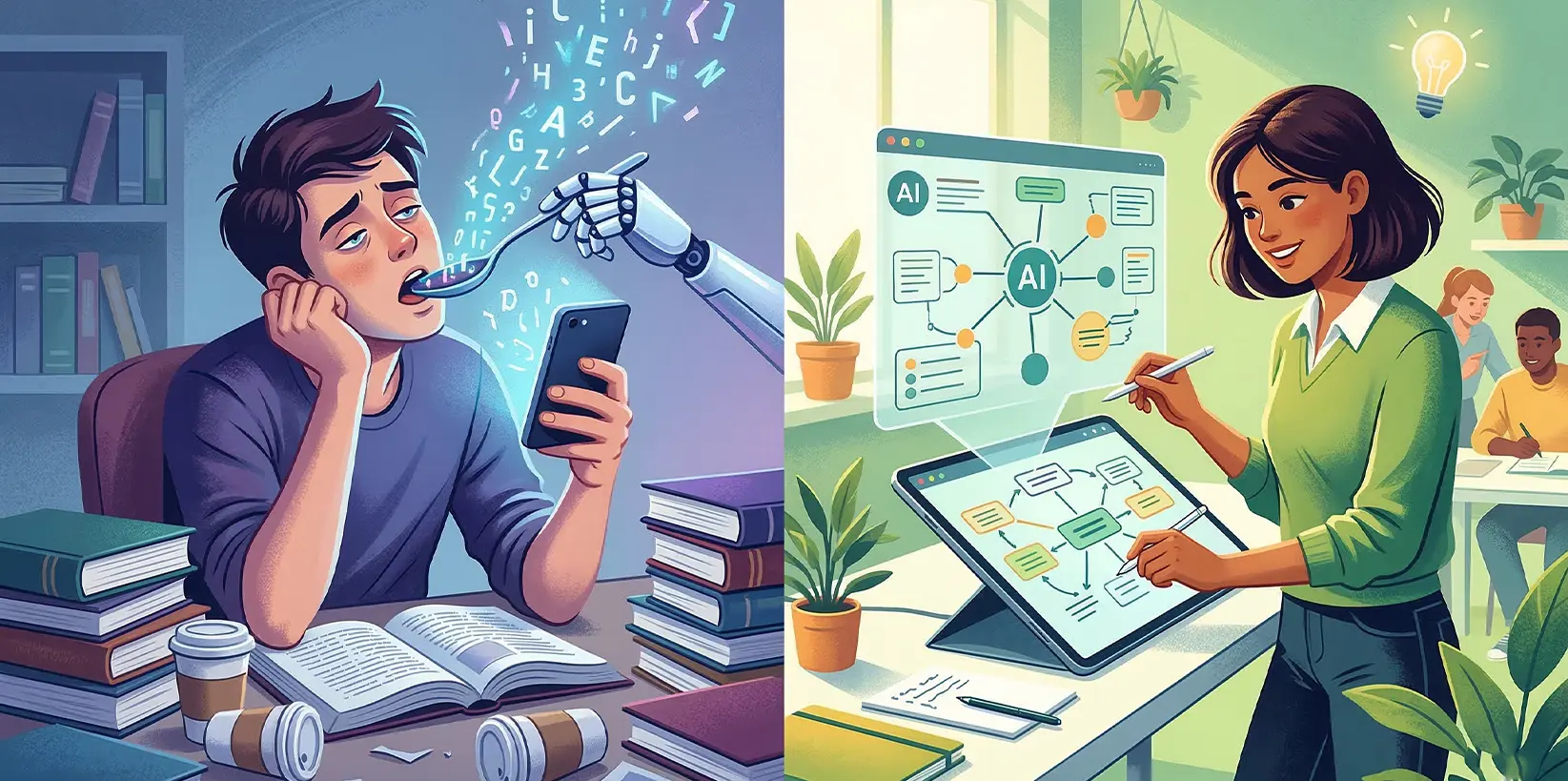
AI as a Learning Partner: The Future of Human + Machine Intelligence in Schools

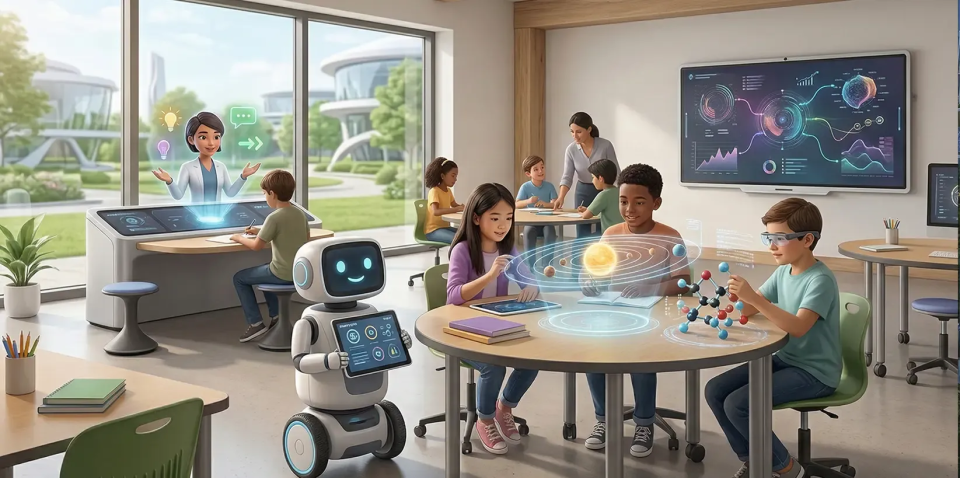
For a long time, schools have focused on one main idea: teachers teach and students absorb information.
Classrooms, textbooks, and lectures were designed around delivering knowledge from one source to many learners at the same time. This model worked well when information was limited and difficult to access.
But today, students live in a completely different world.
Knowledge is everywhere online courses, digital libraries, research databases, and intelligent tools. The challenge is no longer finding information, but understanding and using it effectively.
This is where artificial intelligence is starting to play a new role in education.
Instead of acting only as a tool, AI is beginning to function as a learning partner something that helps students think, explore ideas, and build deeper understanding.
Learning Is More Like Practicing a Sport
Think about learning a new sport, like playing basketball.
Reading a book about basketball rules might help you understand the basics, but it will not make you a good player. What really helps is practice, feedback, and guidance.
A coach watches how you play, points out mistakes, and suggests ways to improve.
Learning in schools works the same way. Students do not just need information they need guidance, feedback, and exploration.
AI systems can assist in this process by acting like a digital coach that helps students refine their understanding as they learn.
Instead of simply presenting facts, AI can interact with students, challenge their thinking, and help them improve step by step.
Turning Questions Into Conversations
Traditional learning systems often treat questions as one-time requests.
A student asks something, receives an answer, and then the interaction ends.
But real learning rarely happens in a single step.
Imagine assembling a piece of furniture at home.
You might read the instruction manual, but sometimes the instructions raise new questions:
- “Did I attach this part correctly?”
- “Why is this screw different from the others?”
- “What happens if I skip this step?”
Learning becomes easier when someone is available to guide the process and answer follow-up questions.
AI learning partners allow students to turn simple questions into ongoing conversations, where ideas can be explored from different angles.
This makes learning feel less like memorizing instructions and more like figuring things out together.
Helping Students Organize Their Thinking
One of the biggest difficulties students face is organizing information.
When studying a topic, learners often collect notes, articles, and ideas from many sources. Over time, this information can become messy and difficult to manage.
Think of it like a kitchen during a busy cooking session.
If ingredients, utensils, and tools are scattered everywhere, cooking becomes stressful. But when everything is organized properly, the process becomes smoother and more enjoyable.
AI systems can help students organize their learning materials by:
- grouping related ideas
- summarizing complex readings
- highlighting key points
- structuring notes into clear sections
This allows students to focus less on managing information and more on understanding it.
Encouraging Curiosity Instead of Memorization
Many education systems still place strong emphasis on memorizing facts.
But in the real world, success often depends more on asking good questions than remembering information.
Imagine two students learning about space.
One student memorizes the names of planets.
Another student begins asking questions like:
- “Why do planets orbit the sun?”
- “How do scientists measure distances in space?”
- “What would happen if gravity suddenly disappeared?”
The second student is not just learning facts, they are developing curiosity.
AI learning partners can encourage this kind of curiosity by allowing students to explore ideas freely. Instead of stopping at the first answer, students can continue asking “why” and “how.”
Over time, this process helps develop analytical thinking skills.
AI as a Classroom Support System
Teachers already manage many responsibilities:
- delivering lessons
- grading assignments
- preparing materials
- supporting students individually
This can sometimes make it difficult to provide personalized attention to every learner.
AI systems can help by acting as a support system in the classroom.
For example, AI tools can assist students by:
- generating practice questions for difficult topics
- explaining lessons in alternative ways
- helping students review key concepts before exams
This allows teachers to spend more time on the parts of education that matter most mentoring, inspiring, and guiding students.
Learning From Multiple AI Perspectives
Different AI systems are designed with different strengths.
Some models are particularly good at explaining complex ideas, while others excel at summarizing large documents or generating structured insights.
Modern AI environments now allow students to interact with multiple models such as ChatGPT, Claude, and Gemini to explore different viewpoints and explanations.
This is similar to asking several teachers the same question.
Each one may explain the concept in a slightly different way, which often leads to a better understanding.
Platforms like Webmap are experimenting with ways to bring multiple AI systems together into a single learning environment, helping students compare insights without constantly switching between tools.
Building Confidence Through Interactive Learning
Many students hesitate to ask questions in class because they worry about making mistakes.
AI learning partners can help reduce this hesitation.
Students can experiment with ideas, ask basic questions, or explore difficult topics without feeling judged.
Think of it like practicing a musical instrument.
Before performing in front of an audience, musicians spend many hours practicing privately. This safe environment allows them to experiment, make mistakes, and improve.
AI systems can create a similar space for students and an environment where they can learn through experimentation and feedback.
Preparing Students for the Future Workplace
The workplaces of the future will likely involve close collaboration between humans and intelligent machines.
Engineers, researchers, designers, and analysts are already using AI to help them:
- analyze large datasets
- generate ideas
- simulate scenarios
- explore complex problems
Schools that introduce students to AI as a collaborative partner can better prepare them for these environments.
Instead of fearing technology, students will learn how to use it creatively and responsibly.
A New Learning Ecosystem
The idea of AI as a learning partner represents a shift in how we think about education.
Rather than replacing teachers or traditional methods, AI can become part of a broader learning ecosystem that includes:
- teachers
- students
- digital tools
- intelligent systems
Together, these elements can create learning environments that are more flexible, interactive, and supportive.
Students will no longer rely on a single source of knowledge. Instead, they will engage with a network of insights and guidance that helps them explore ideas more deeply.
Conclusion
Education has always evolved alongside technology.
Books transformed learning centuries ago.
Computers expanded access to knowledge.
The internet connected classrooms to the world.
Artificial intelligence represents the next stage in this evolution.
By acting as a learning partner rather than just a tool, AI can help students organize knowledge, explore ideas, and develop stronger problem-solving skills.
When combined with the guidance of teachers and the curiosity of students, AI has the potential to create a future where learning becomes more interactive, more personalized, and more engaging than ever before.
The most powerful classrooms of the future may not rely on human intelligence or machine intelligence alone but on the collaboration between both.