India Is Not Just Talking Policy… It’s Building AI


For years, the global AI conversation positioned India as a policy observer or talent provider. In 2026, that narrative no longer holds true. What we’re seeing now is a decisive shift from frameworks to functional systems. India is building AI tools at population scale, grounded in language diversity, safety, and real-world deployment.
At Webmap Network, we see this as one of the most important AI transitions globally. India is not copying Western AI models. It is designing AI for its own linguistic, cultural, and infrastructural realities.
From Policy Documents to Production Systems
India’s AI journey initially focused on governance, ethics, and public infrastructure. Today, those foundations are materializing into working platforms used across education, governance, healthcare, and commerce.
This ecosystem is not centered on a single model or company. It is diversified by design, with multiple organizations solving for language, reasoning, voice, safety, and accessibility.
Bhashini… Language as Infrastructure
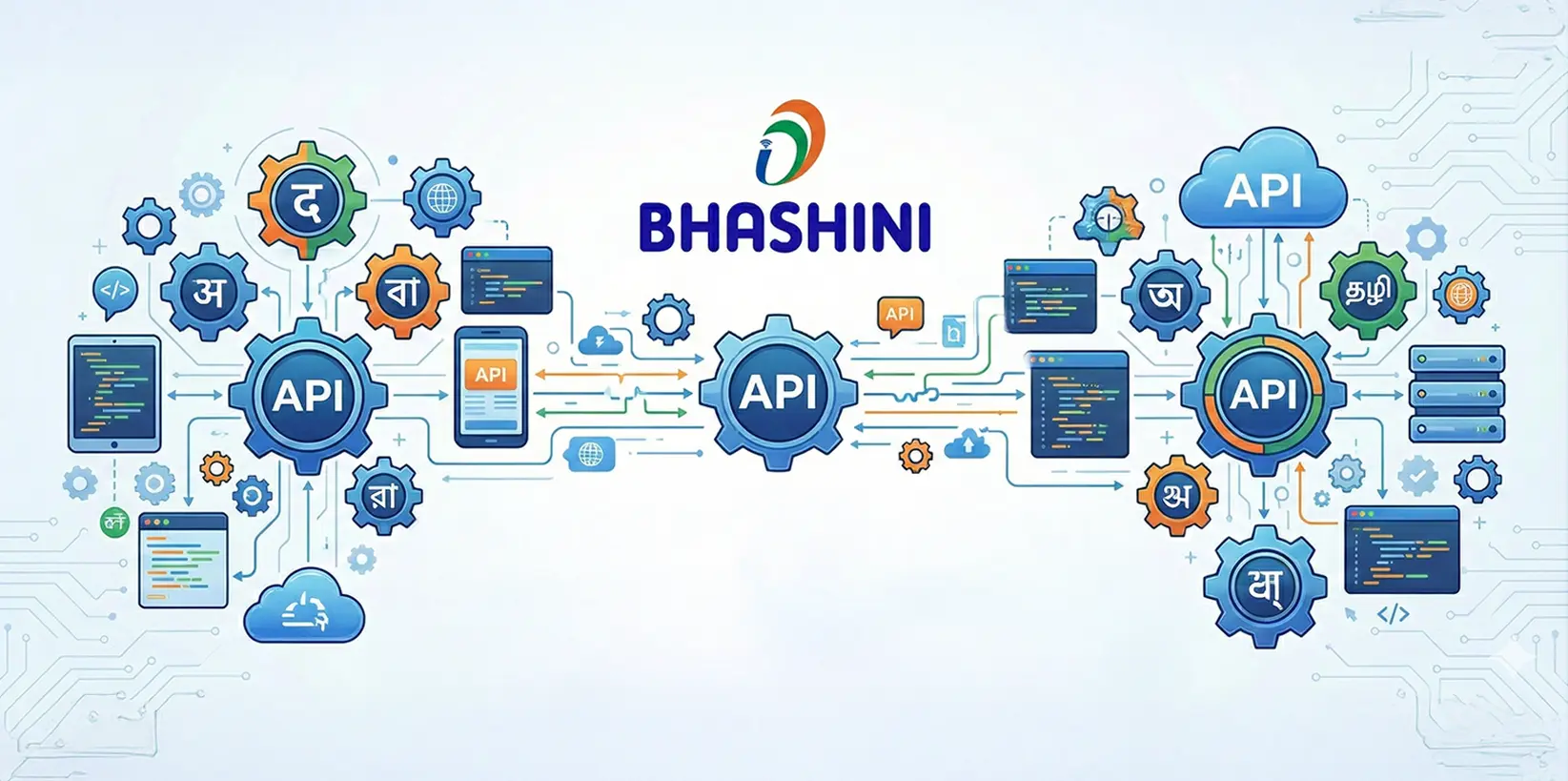
Bhashini represents one of the most ambitious multilingual AI initiatives globally. Rather than treating language as an afterthought, it treats it as core infrastructure. By enabling translation, speech recognition, and text generation across Indian languages, Bhashini lowers the barrier to digital participation for millions.
This approach reframes AI not as a premium feature but as a public utility.
BharatGen… Foundation Models for India
BharatGen focuses on building large-scale generative AI models tailored to Indian contexts. These models are trained on local data, cultural nuances, and regional usage patterns.
What stands out to us is the intent. BharatGen is not optimized for global benchmarks alone. It’s optimized for relevance, governance compatibility, and long-term national deployment.
Sarvam-1 and Sarvam-M… Reasoning in Indian Languages
Sarvam’s models represent a major step forward for multilingual reasoning. These models are not just translating English outputs. They are trained to think, reason, and generate responses natively across Indian languages.
This distinction matters. Reasoning quality determines whether AI can support governance, law, education, and enterprise workflows at scale.
Adi Vaani and Kruti… Voice-First AI for India
India is a voice-first country, and products like Adi Vaani and Kruti reflect that reality. These systems focus on conversational AI, speech understanding, and local language interaction rather than text-heavy interfaces.
Voice AI plays a critical role in accessibility, especially across rural and semi-urban regions. In many cases, voice becomes the primary interface between citizens and digital services.
Safety and Trust as First-Class Features
What differentiates India’s AI ecosystem is the emphasis on safety and alignment from the beginning. Several Indian AI initiatives are investing in voice safety, misuse prevention, bias mitigation, and responsible deployment.
This is not an afterthought. In a country operating at massive scale, trust becomes infrastructure.
A Diversified AI Stack… Not a Monolith
India’s AI ecosystem in 2026 is not built around a single dominant model. Instead, it resembles a layered stack.
Public language infrastructure
Foundation and reasoning models
Voice and multimodal interfaces
Safety and governance layers
Domain-specific AI applications
This modular approach makes the ecosystem resilient, adaptable, and scalable.
How This Connects to Webmap
At Webmap,
We believe AI agents, multilingual models, and voice systems are only as powerful as the knowledge structures behind them. Whether it’s documents, government portals, enterprise knowledge bases, or sitemaps, AI systems need structured, source-grounded data to operate reliably.
As India builds AI for scale and diversity, sitemap intelligence, document understanding, multimodal search, and source-based retrieval become foundational. These are the layers that allow AI to move from experimentation to trustable deployment.
If you’re building or deploying AI systems that need structured knowledge, verifiable sources, or multilingual intelligence, you can connect with us at connect@webmap.network.