Students Are Ahead of Universities: The Growing Gap AI Is Creating in Education


Introduction
A quiet shift is happening in education.
Students are rapidly adopting artificial intelligence to study, research, and complete assignments. At the same time, many universities are still figuring out how to respond to AI.
This has created a new kind of gap not in knowledge, but in adaptation.
Students are moving faster than institutions.
From the perspective of WebMap Network observations, this gap is not just about technology. It is about how learning itself is evolving from static systems to dynamic, AI-powered knowledge environments.
The New Reality: Students Are Already Using AI
Learning Has Already Changed
Today’s students are not waiting for official guidelines to start using AI.
They are already using tools like:
- ChatGPT
- Claude
- Gemini
to:
- understand complex topics
- summarize lectures
- generate ideas for assignments
- explore research topics
Everyday Analogy
Think of students as drivers who have already started using GPS navigation, while universities are still teaching how to read paper maps.
Both methods work but one is clearly faster, smarter, and more adaptive.
Where Universities Are Falling Behind
Slow Systems vs Fast Technology
Universities operate through structured systems:
- fixed curriculum
- standard teaching methods
- long approval processes
While these systems ensure stability, they often struggle to keep up with rapid technological change.
AI evolves in months.
Educational systems evolve in years.
The Result
This creates a mismatch:
- Students use advanced tools daily
- Universities are still discussing policies
The AI Usage Gap
Students Experiment, Institutions Regulate
Students are exploring AI freely:
- trying different tools
- comparing outputs
- using AI for research and learning
Universities, on the other hand, are focused on:
- preventing misuse
- defining rules
- maintaining academic integrity
The Problem
The focus on restriction instead of integration creates a gap.
Instead of guiding students on how to use AI effectively, institutions often limit its use without providing better alternatives.
The Hidden Issue: Unstructured AI Usage
More Tools, Less Direction
While students are ahead in adoption, there is still a challenge.
Most students are using AI in a fragmented way:
- switching between tools
- losing context
- focusing on answers instead of understanding
Analogy
Imagine learning from multiple teachers, but none of them know what the others have already taught you.
You get information but not a clear learning path.
This shows that being ahead in usage does not always mean being ahead in learning efficiency.
The Missing Bridge: Structured AI Systems
From Tools to Learning Systems
The real gap is not just between students and universities.
It is between:
AI tools and
AI-powered learning systems
Students have access to tools.
What they need is structure.
Multi-Model Intelligence: A New Learning Approach
One Question, Many Perspectives
Different AI models offer different strengths:
- ChatGPT for clear explanations
- Claude for deeper reasoning
- Gemini for broader context
Students are already experimenting with this.
But without a unified system, it becomes:
- repetitive
- disconnected
- inefficient
Analogy
It’s like consulting multiple experts but writing notes on separate pages without ever combining them.
How Webmap Bridges the Gap
Platforms like Webmap are designed to solve this exact problem.
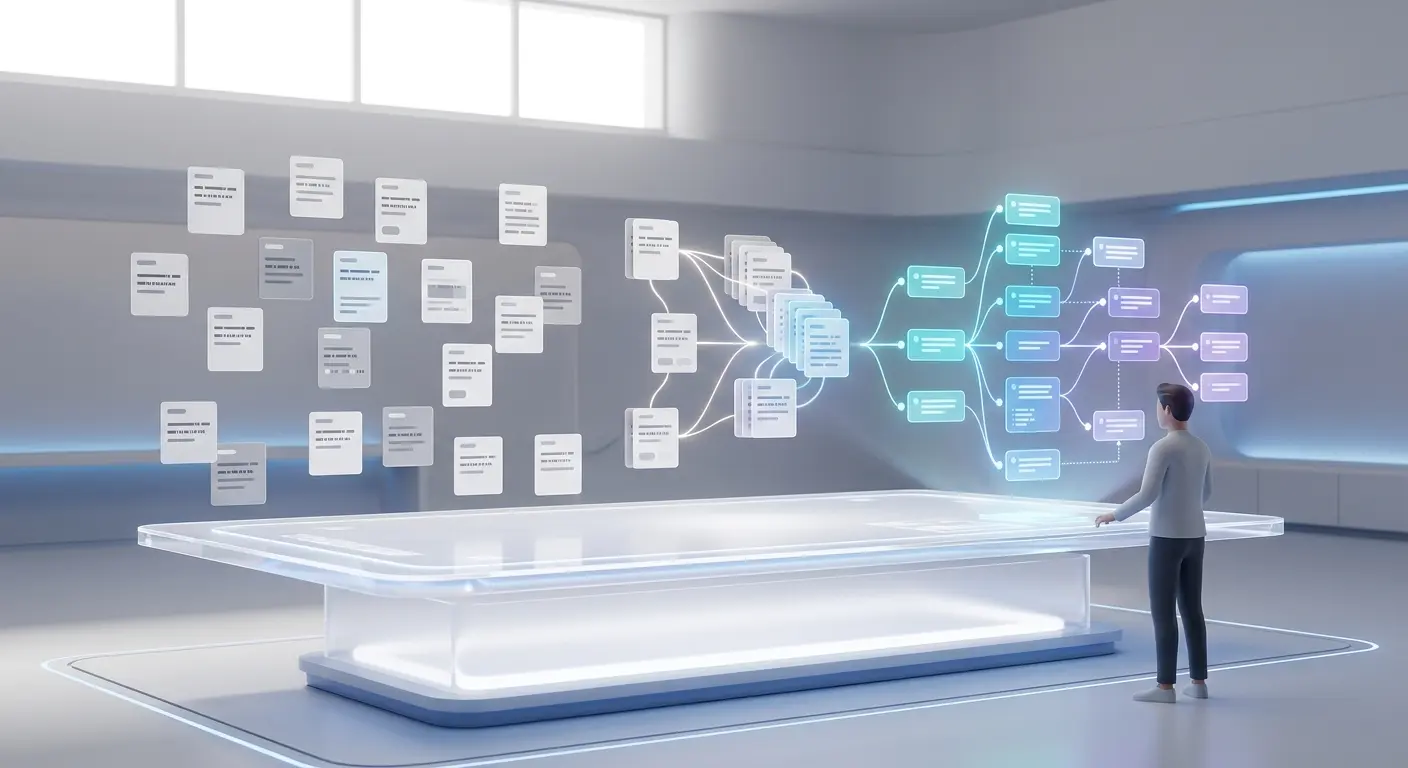
Instead of treating AI as separate tools, Webmap creates a unified interaction layer where learning becomes structured and continuous.
What This Enables
1. Unified AI Experience
Students can access multiple AI models in one place.
2. Continuous Context
No need to repeat prompts — learning builds over time.
3. Structured Knowledge
Information is organized into:
- summaries
- steps
- connected insights
4. Better Learning Outcomes
Students move from:
using AI for answers
to
using AI for understanding
This aligns with the core idea:
“One context, many models”
What Universities Need to Do
Shift From Control to Guidance
Instead of resisting AI, universities need to:
- teach students how to use AI effectively
- integrate AI into curriculum
- focus on critical thinking alongside AI usage
- adopt systems that support structured learning
Analogy
Banning AI in education is like banning calculators in math.
The better approach is to teach students how to use them correctly.
Future Outlook
If the gap continues, students will increasingly rely on external AI systems rather than institutional learning methods.
However, if universities adapt, we may see:
- AI-integrated classrooms
- structured research systems
- personalized learning environments
- multi-model academic workflows
Platforms like Webmap show how institutions can move toward this future by combining AI access, context, and structured knowledge systems.
Conclusion
The growing gap between students and universities is not a failure, it is a signal.
A signal that learning is evolving faster than traditional systems.
Students are already exploring the potential of AI.
Now, institutions must catch up by providing the right structure, guidance, and systems.
Because the future of education will not belong to those who resist AI…
It will belong to those who learn how to use it intelligently.