The “Map of Everything”: A Layman’s Guide to Embeddings

Imagine you walk into a giant invisible warehouse.
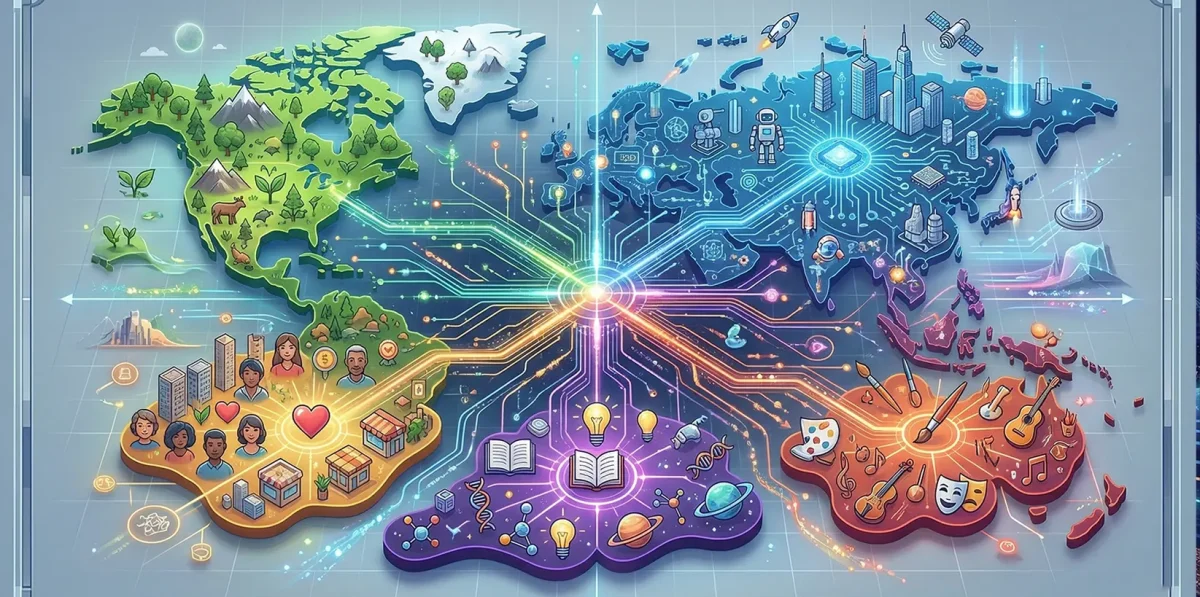
This warehouse is enormous. Inside it, every idea, word, image, concept, emotion, object, and memory exists as a tiny floating spark of light.
There is a spark for:
- Dog
- Cat
- Pizza
- Car
- Happiness
- Mathematics
- Mountains
Every concept you can think of has its own spark somewhere in this space.
But the real magic isn’t the sparks.
It’s the map that tells us where they are.
That map is called an embedding.
The Magic Map
Think of an embedding as GPS coordinates for ideas.
Just like your phone can find a restaurant using latitude and longitude, AI systems use embeddings to find concepts inside this giant warehouse.
For example, the word “Dog” might have coordinates like:
[0.27, -0.84, 1.12, 0.43, …]
These numbers may look meaningless to us, but to an AI system they are precise directions.
It’s like saying:
Warehouse → 3rd floor → Row 12 → Shelf 5
That’s exactly where the spark for “Dog” lives.
This numerical location is what we call an embedding vector.
The Warehouse Is Organized by Meaning
Here’s the fascinating part.
The warehouse is not organized alphabetically.
Instead, it is organized by meaning and similarity.
That means similar ideas naturally float close together.
Imagine walking through one section of the warehouse:
- Dog
- Golden Retriever
- Puppy
- Wolf
- Fox
All these sparks are floating near each other.
Why?
Because they share similar meaning.
But if you walk far across the warehouse, you might find sparks like:
- Toaster
- Microwave
- Kitchen
- Bread
These ideas belong to a completely different neighborhood.
So instead of a dictionary, the warehouse looks more like a city where related things live in the same area.
Distance = Similarity
In embedding space, distance has meaning.
Think of it like neighborhoods in a city.
Close distance means similar ideas.
Far distance means very different ideas.
For example:
| Word | Nearby Concepts |
|---|---|
| Dog | Puppy, Wolf, Retriever |
| Apple | Fruit, Banana, Orange |
| Car | Vehicle, Truck, Engine |
But something like Dog and Toaster would be extremely far apart.
This distance measurement is how AI determines similarity.
Why Context Changes Everything
Now comes the really interesting part.
Some words have multiple meanings.
Take the word:
Bank
It could mean:
- A financial institution
- The side of a river
How does AI know which one you mean?
This is where context comes in.
Context Is Like a Magnet
Imagine context as a magnet inside the warehouse.
When you say:
“Bank”
The spark floats somewhere in the middle.
But when you say:
“River Bank”
A magnet pulls the spark toward the nature section of the warehouse.
Nearby sparks might include:
- Water
- River
- Shore
- Fishing
But if you say:
“Bank Loan”
Now the magnet pulls the spark toward the finance section.
Nearby sparks might be:
- Money
- Investment
- Credit
- Interest
So the same word moves depending on the context magnet around it.
The Warehouse Is Becoming Smarter
Early AI systems had very simple warehouses.
They placed words on the map but didn’t fully understand relationships.
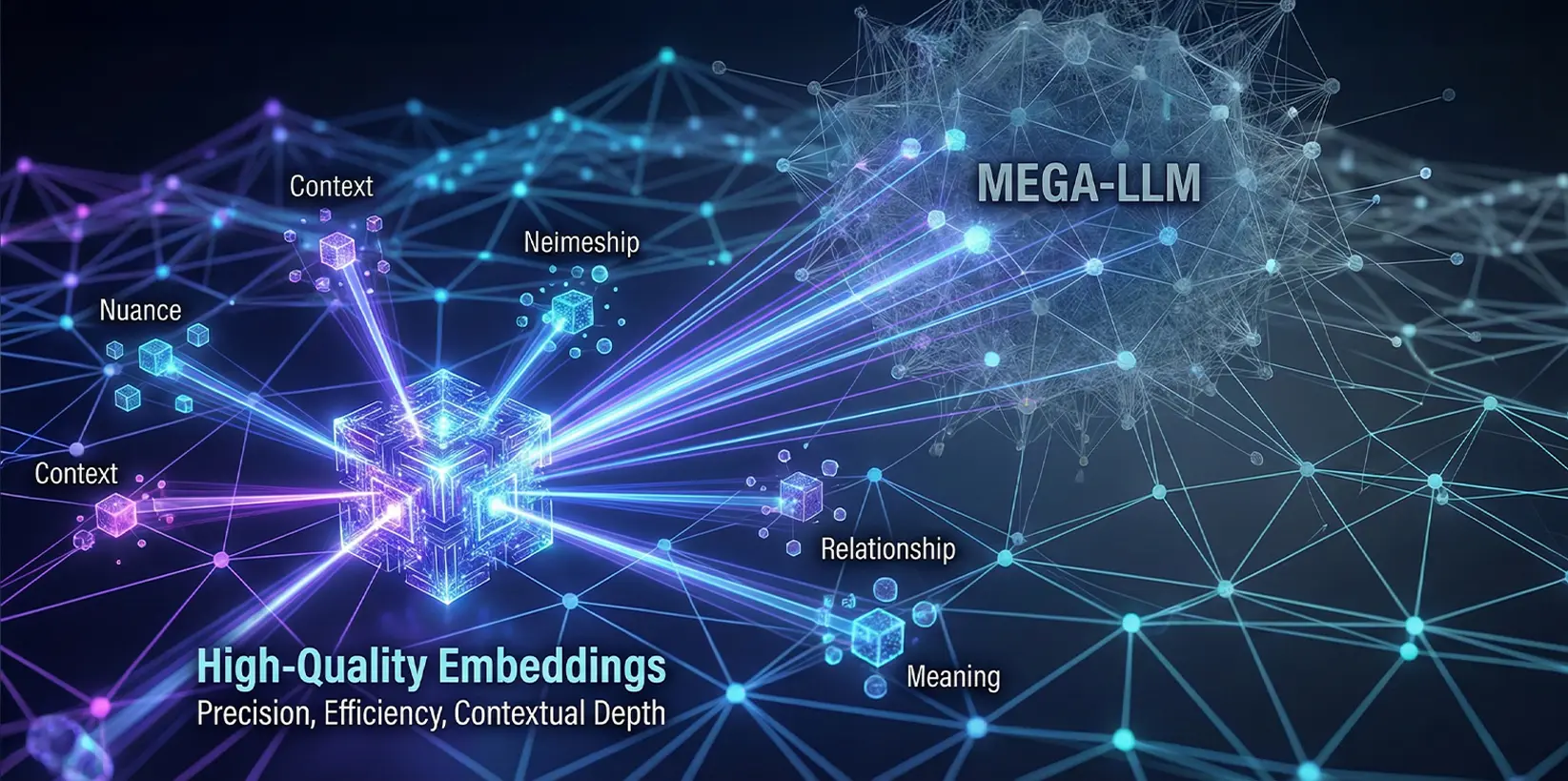
But modern AI models have built massive intelligent warehouses where:
- Billions of concepts exist
- Words, images, and ideas share space
- Context constantly reshapes positions
Even more interesting:
The warehouse itself can stretch, bend, and reorganize.
Imagine shelves that move automatically so similar ideas get closer together.
That’s what modern embedding systems do.
Embeddings Are the Secret Behind AI “Understanding”
When you ask an AI a question, something surprising happens.
The AI doesn’t actually know English the way humans do.
Instead, it does something more mathematical.
Step by step, it:
- Converts your words into embedding coordinates
- Finds the location in the warehouse
- Looks at nearby sparks (similar ideas)
- Uses those neighbors to build a response
It’s like asking someone:
“Find the kitchen section and tell me what’s nearby.”
The answer will likely include:
- Stove
- Refrigerator
- Cooking
- Food
Because those sparks are all close together.
A Simple Everyday Analogy
Think about shopping in a supermarket.
Everything is grouped logically:
| Section | Items |
|---|---|
| Dairy | Milk, Butter, Cheese |
| Fruits | Apples, Bananas, Oranges |
| Bakery | Bread, Cakes |
You don’t find toothpaste next to bananas.
The store layout helps you find related items quickly.
Embeddings do the exact same thing for ideas.
They organize the universe of knowledge so AI can navigate meaning efficiently.
Why Better Embeddings Make AI Feel Smarter
When people say:
“AI is getting more intelligent.”
What they often mean is:
The warehouse map is getting better.
Better embeddings mean:
- More accurate concept placement
- Better understanding of relationships
- Stronger context awareness
This is why modern AI feels more natural and human-like.
The map has become incredibly detailed.
The Future: A Map of Everything
Researchers today are working on embeddings that map:
- Text
- Images
- Videos
- Audio
- Scientific data
- Knowledge graphs
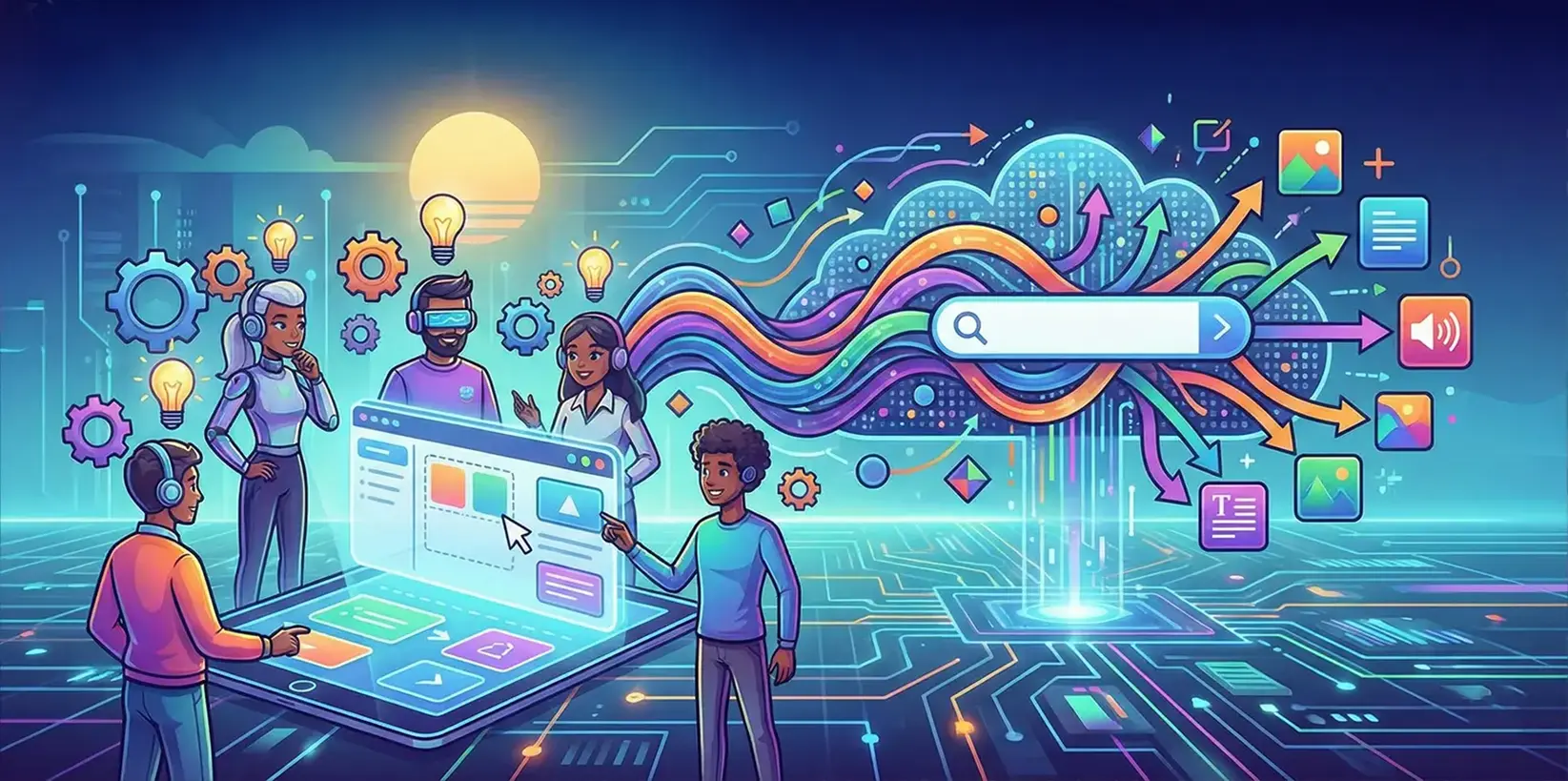
Imagine one giant universal warehouse where:
- A picture of a dog
- The word “dog”
- The sound of barking
all live in the same neighborhood.
That’s the vision of the future:
A unified map of everything.
Final Thought
AI doesn’t understand language the way humans do.
Instead, it navigates a massive invisible warehouse of ideas using mathematical coordinates.
Embeddings are the map that makes this possible.
The smarter the map becomes, the more naturally AI can move between ideas, concepts, and meanings.
And that’s why improving embeddings is one of the most important areas in modern AI research.
Because when the map improves, the entire AI world becomes easier to navigate.
visit WebmapNetwork or continue the discussion with us at connect@webmap.network.