AI Coworkers & Connected Intelligence in 2026… From Tools to Digital Teammates

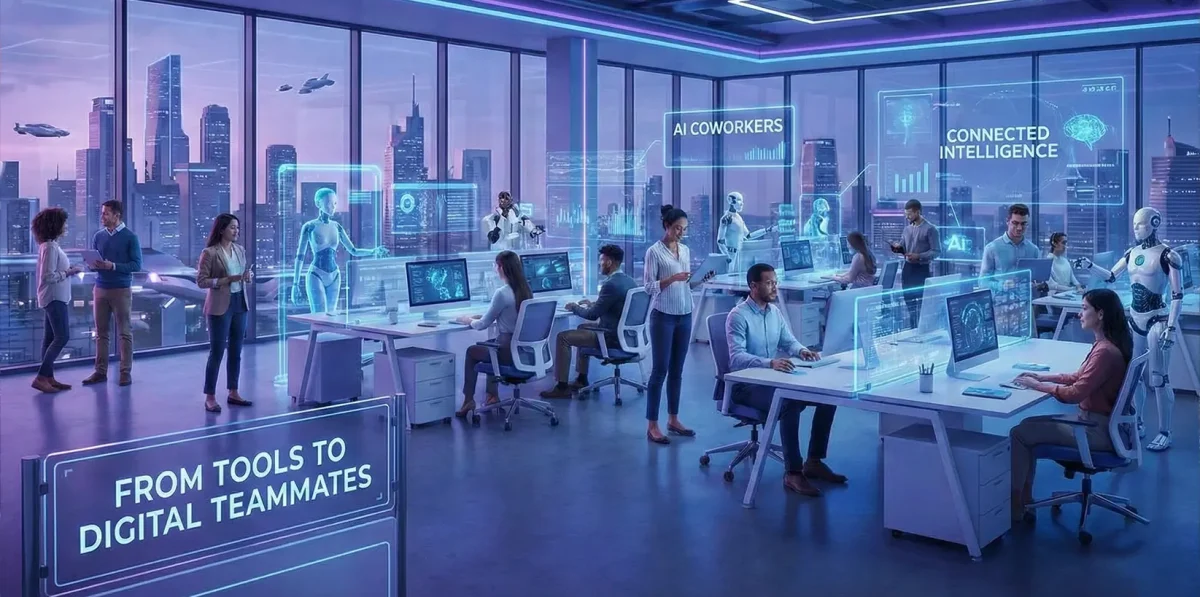
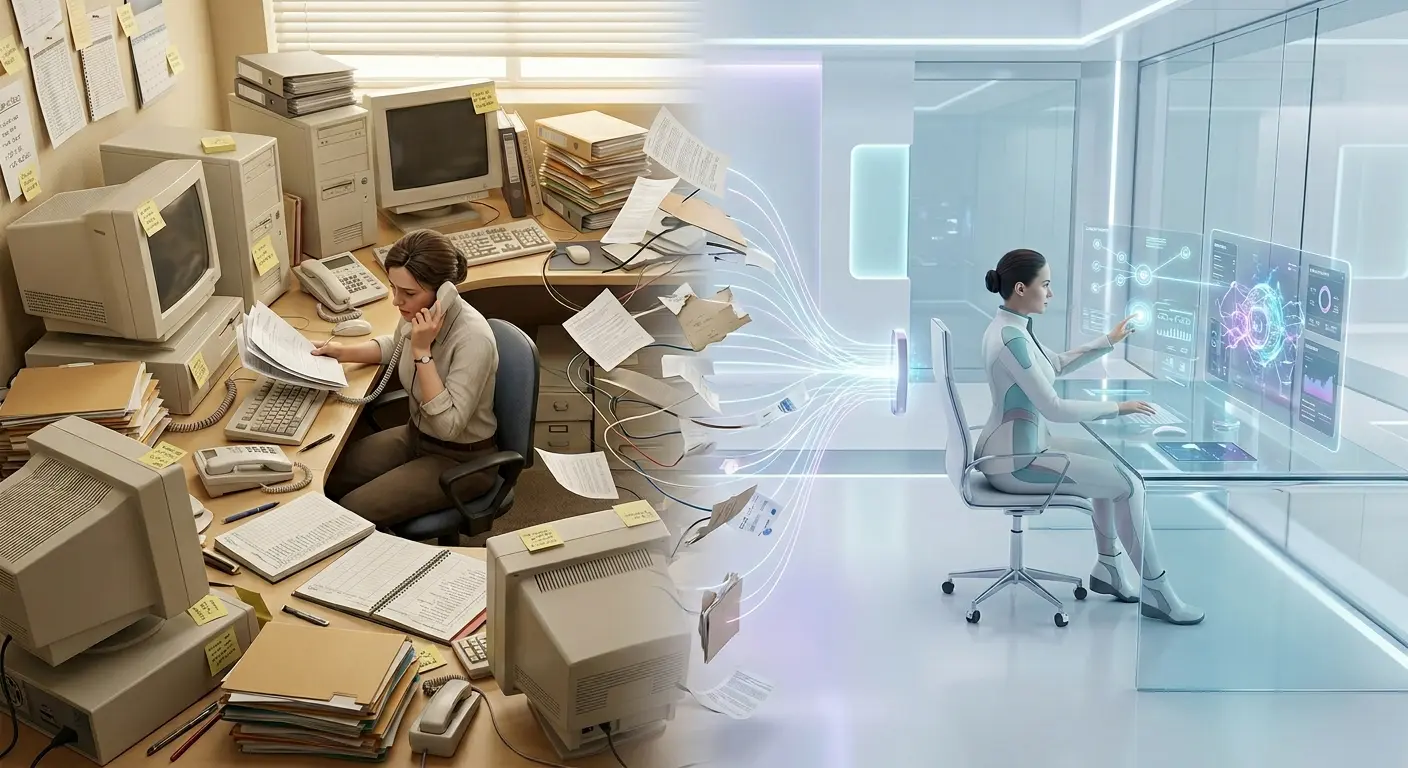
As we step into 2026, one thing is becoming abundantly clear to us at Webmap Network … AI is no longer just a tool. It’s becoming a coworker. Artificial intelligence has moved far beyond isolated automation or simple task support. What we’re witnessing now, especially across enterprises, is connected intelligence, where AI agents powered by embeddings and real-time reasoning integrate seamlessly into workflows and business logic.
From Solo Tools to Connected Agents
We’ve been closely tracking this shift, and the narrative has changed dramatically. Earlier generations of AI primarily assisted users by summarizing text, suggesting actions, or answering direct questions. In 2026, however, AI agents are collaborating, coordinating, and autonomously executing multi-step business processes.
These agents don’t just respond to prompts… they act. Whether it’s Salesforce and Google Cloud enabling Agent2Agent communication across platforms or AI systems embedded deep within enterprise data pipelines, this generation of AI is about partnership, not just output.
AI Agents in Real Work Scenarios
AI agents today can understand goals, design multi-step plans, and execute actions under human oversight. In real-world enterprise environments, this means AI can plan work, retrieve information, trigger workflows, and deliver outcomes with minimal intervention.
Salesforce is extending this model through cross-platform agent collaboration, allowing multiple agents to work together rather than operate in silos. This transition transforms AI from a reactive assistant into an active participant in business workflows.
At the heart of these systems lie embeddings. Embeddings act as the connective tissue of connected intelligence. They transform documents, web pages, databases, and logs into semantic vectors that agents can reason over. Instead of relying on keywords, agents retrieve information based on meaning, relevance, and context.
Why Embeddings Matter More Than Ever
Embeddings allow AI agents to understand relationships between information. They enable organizations to connect documents, emails, CRM records, PDFs, and sitemaps into a unified semantic space. This is what makes scalable, multi-agent collaboration possible.
In 2026, search is no longer about finding links. It’s about retrieving trusted, contextual answers. Embedding-powered retrieval gives agents memory, continuity, and precision across tasks and workflows.
AI Coworkers Across Industries
We’re already seeing this shift across major technology leaders.
Google Workspace agents support planning, reporting, and coordination.
Salesforce Einstein GPT agents drive decision-making inside CRM workflows.
Lenovo’s Qira AI functions as a hybrid super-agent across devices and contexts.
Microsoft Copilot for Security assists SOC teams by automating alert triage and investigations.
Anthropos’s Claude agents integrate with enterprise systems to surface context-aware insights.
Each of these systems relies on embeddings and agentic reasoning to function as digital teammates rather than static tools.
Final Thoughts… The Era of Connected Intelligence
2026 represents a turning point. AI is no longer a feature added to products. It’s a collaborator embedded into how work gets done. As organizations adopt agentic systems powered by embeddings, the workplace evolves into a human-AI partnership centered on strategy, creativity, and decision-making.
At Webmap Network , we believe this shift highlights an essential truth… AI agents need well-structured, semantically rich knowledge maps to operate effectively. Sitemap scanning, document understanding, multimodal search, and source-grounded retrieval form the foundation agents depend on to reason and act responsibly.
If you’re exploring how AI agents, embeddings, and connected intelligence can reshape your workflows or search systems, feel free to reach out to us at connect@webmap.network.