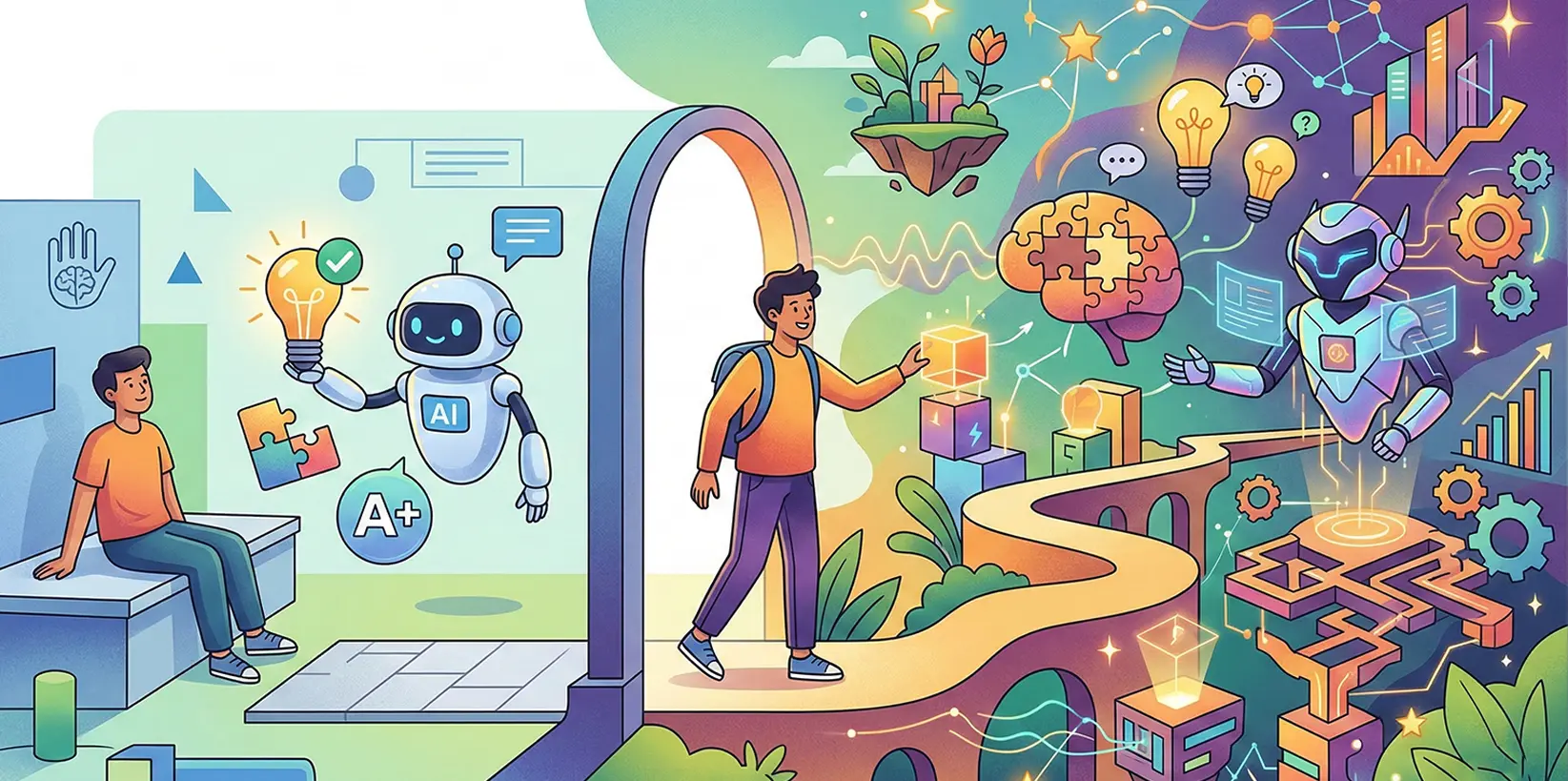
AI Is Moving Beyond Prompts… Enter the Era of Operational Collaboration


Introduction
For the past few years, Artificial Intelligence has largely functioned as a response-driven technology. Users provided prompts, and AI generated answers, content, or suggestions. However, a major shift is now emerging across the AI landscape. At WebMap Network, we observed that AI is transitioning from passive response systems toward operational collaboration… a stage widely described as the rise of Agentic AI.
This evolution represents one of the most important changes in how humans interact with intelligent systems.
From Prompt Response to Action-Oriented AI
Traditional generative AI systems primarily relied on instructions. Whether writing content, generating code, or answering questions, AI waited for human input before producing an output.
Agentic AI changes this model. Instead of responding once, AI systems can now:
- Understand goals instead of single prompts
- Plan multi-step workflows
- Execute actions across tools and platforms
- Adapt decisions based on outcomes
This marks a transition from conversation-based AI to task-oriented intelligence.
What Is Operational Collaboration?
Operational collaboration means AI actively participates in completing real-world work alongside humans. Rather than acting as a digital assistant that answers questions, AI becomes a working partner capable of managing processes.
We are seeing AI systems that can:
- Use applications and software tools autonomously
- Conduct research across multiple sources
- Schedule and organize workflows
- Perform iterative problem-solving
- Monitor progress and adjust strategies
In this model, humans define objectives while AI helps execute them.
The Rise of Agentic AI
Agentic AI refers to AI systems designed with agency… the ability to make structured decisions within defined boundaries to achieve outcomes.
Key characteristics include:
Goal-Based Execution
AI interprets high-level instructions such as completing a project or optimizing a workflow instead of following isolated commands.
Multi-Step Task Completion
AI can break complex work into smaller steps, execute them sequentially, and verify results.
Tool and App Integration
Modern AI agents interact directly with productivity tools, browsers, enterprise software, and APIs.
Continuous Learning Loops
Agents refine outputs based on feedback and evolving context.
At WebMap Network, we observed that this capability is pushing AI closer to real operational environments inside organizations.
Enterprise Impact and Productivity Shift
Businesses are beginning to experiment with AI agents for operational efficiency. Instead of assigning employees repetitive coordination work, AI agents can manage workflows such as:
- Data analysis pipelines
- Customer support automation
- Document processing
- Marketing operations
- Software development assistance
This reduces execution time while allowing human teams to focus on creativity, strategy, and decision-making.
Challenges and Responsible Deployment
While operational AI unlocks significant productivity gains, it also introduces new considerations:
- Governance and oversight requirements
- Ethical decision boundaries
- Data privacy and system security
- Accountability for automated actions
Organizations must design guardrails to ensure AI agents operate safely and transparently.
Future Outlook
The shift toward operational collaboration signals the next phase of AI evolution. AI is no longer limited to generating responses… it is becoming capable of completing work. At WebMap Network, we believe Agentic AI will redefine digital workflows over the next decade, transforming AI from a tool into an active collaborator across industries.