From Containers to Vectors: AI Embeddings Transforming Global Logistics

Why This Matters in 2026
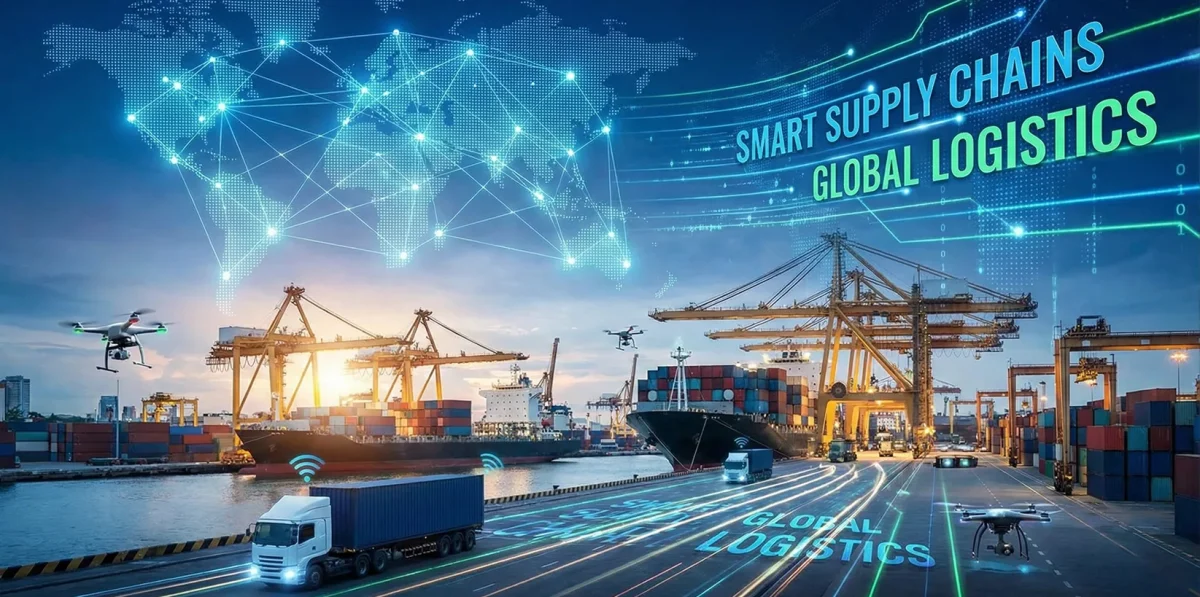
By 2026, global supply chains are no longer just about moving goods from A to B. They are about surviving uncertainty.
From pandemic aftershocks and geopolitical tensions to climate disruptions and port congestion, supply chains now operate in a world where disruption is the default. Traditional rule-based logistics systems struggle because they rely on static assumptions.
This is why AI embeddings are becoming foundational to smart supply chains helping systems understand, predict, and adapt rather than merely react.
1. The Core Problem: Supply Chains Are Too Complex for Rules
Modern logistics involves:
- Thousands of routes
- Millions of shipments
- Constantly changing weather, port conditions, fuel prices, and regulations
Trying to manage this with fixed rules is like planning your daily commute assuming traffic never changes.
Analogy:
Imagine choosing a grocery store every day using a printed map from five years ago.
You’d miss roadblocks, new shortcuts, and traffic patterns.
That’s how traditional logistics systems operate today.
2. What Embeddings Bring to Supply Chains
Embeddings convert complex, multi-dimensional logistics data into risk-aware vectors that AI systems can compare, cluster, and reason over.
Instead of asking:
“Is this route allowed?”
AI now asks:
“How similar is this shipment’s risk profile to past disruptions?”
This is a massive shift from rules to understanding.
3. What Gets Embedded in Smart Logistics Systems
Embeddings allow logistics AI to fuse heterogeneous data into a single semantic space.
Table 1: Supply Chain Data & Embedding Benefits
| Data Source | What It Represents | How Embeddings Help |
|---|---|---|
| Shipment History | Delays, damage, reroutes | Learns hidden risk patterns |
| Routes & Corridors | Sea lanes, rail paths, highways | Encodes route resilience |
| Weather Data | Storms, heatwaves, floods | Predicts disruption similarity |
| Port & Hub Data | Congestion, labor strikes | Anticipates bottlenecks |
| Traffic & Customs | Border delays, inspections | Improves ETA accuracy |
Analogy:
Embeddings act like a memory of past mistakes helping AI avoid repeating them.
4. Predicting Bottlenecks Before They Happen
Instead of waiting for ports to clog or routes to fail, embedding-powered systems identify early warning signals.
For example:
- A shipping lane begins to “look like” routes that failed last year
- Weather patterns resemble pre-disruption conditions
- Port activity matches congestion vectors from past strikes
AI doesn’t need exact matches, “close enough” is enough.
Analogy:
It’s like recognizing that dark clouds, strong winds, and falling pressure usually mean rain even before the first drop falls.
5. Shipment Risk as a Vector, Not a Checkbox
Traditional systems tag shipments as:
- Low risk
- Medium risk
- High risk
Embedding-based systems create continuous risk vectors, capturing nuanced realities.
Table 2: Traditional Risk vs Embedding-Based Risk
| Approach | How Risk Is Handled | Limitation / Advantage |
|---|---|---|
| Rule-Based | Fixed categories | Misses subtle warning signs |
| Embedding-Based | Multi-dimensional vectors | Detects emerging threats early |
This enables:
- Dynamic rerouting
- Proactive insurance adjustments
- Smarter inventory placement
6. Route Resilience: Choosing the “Strongest” Path
Not all routes are equal even if they look efficient on paper.
Embeddings encode:
- Historical reliability
- Climate sensitivity
- Political stability
- Infrastructure health
AI can then select routes that are not just fast, but resilient.
Analogy:
You don’t choose shoes just because they look good, you choose ones that won’t fall apart mid-walk.
7. Decentralized Supply Intelligence
In 2026, supply chains are increasingly decentralized:
- Multiple vendors
- Distributed warehouses
- Cross-border partners
Embeddings act as a shared intelligence layer, allowing systems to collaborate without sharing raw, sensitive data.
This supports:
- Privacy-preserving optimization
- Cross-company coordination
- Faster global trade recovery
8. Why This Is Critical for Global Trade Recovery
As global trade stabilizes post-crisis, speed alone is no longer the goal.
Resilience, adaptability, and foresight matter more.
Embedding-driven logistics systems help organizations:
- Absorb shocks instead of collapsing
- Learn continuously from disruption
- Operate intelligently in uncertainty
This marks the shift from fragile efficiency to adaptive intelligence.
Conclusion
Embeddings are redefining smart supply chains by transforming fragmented logistics data into a unified, predictive intelligence layer. By encoding shipment risks, route resilience, and real-world disruptions into vectors, AI systems can anticipate bottlenecks, adapt routes, and strengthen global logistics networks. In a world shaped by uncertainty, embeddings turn supply chains from reactive pipelines into resilient, learning systems.
WebmapNetwork focuses on understanding and communicating how embedding-driven intelligence can simplify complex systems across logistics, trade, and global operations. If you’re working toward resilient, future-ready supply chains, we’d be happy to discuss how embeddings are shaping the next generation of logistics intelligence. Email us at: connect @webmap.network