AI Literacy Will Be the New English: The Skill Every Student Must Learn

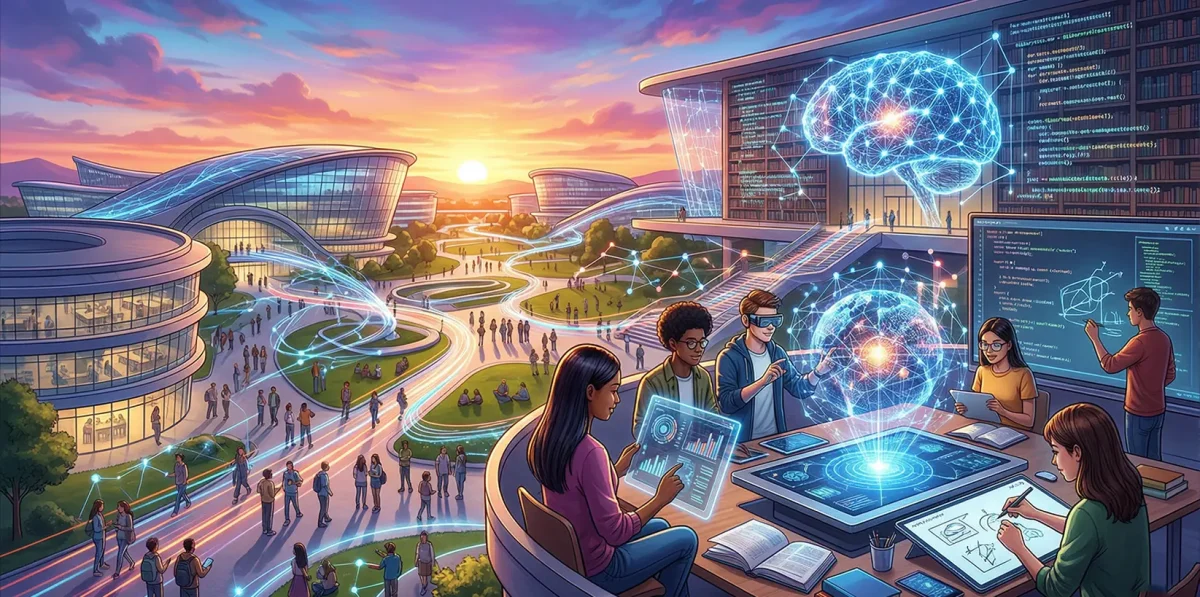
For decades, English has been considered one of the most important skills a student could learn. It became the global language of communication, business, and knowledge. Students who mastered English could access more opportunities, better education, and wider career paths. Today, a similar shift is happening but this time, the new language is not English. It is artificial intelligence. The ability to understand, interact with, and think using AI is quickly becoming one of the most essential skills for students. The question is no longer whether students will use AI, but how well they understand it.
Students are already using tools like ChatGPT, Claude, and Gemini in their daily learning. They use them to solve problems, generate ideas, and understand difficult concepts. But using AI tools is not the same as being AI literate. Many students know how to ask questions, but they do not always know how to evaluate answers, compare perspectives, or build structured knowledge from those responses. It is similar to knowing a few words in a language but not being able to form meaningful sentences or understand deeper conversations. True literacy goes beyond basic usage; it requires understanding, context, and the ability to apply knowledge effectively.
AI literacy means learning how to think with AI, not just use it. It involves asking better questions, analyzing outputs, identifying what is relevant, and connecting ideas across different responses. In a world where AI can generate unlimited information, the real skill is not finding answers, but deciding which answers matter and how they fit together. Imagine walking into a library where every book instantly opens to the exact page you need. While this saves time, you still need to decide which books to trust and how to connect the information. Without that ability, access to information becomes overwhelming instead of helpful.
Another important aspect of AI literacy is understanding that no single AI model is perfect. Different systems like ChatGPT, Claude, and Gemini offer different strengths. Some provide simple explanations, others give deeper reasoning, and some connect broader ideas. Students who are truly AI literate learn how to use multiple models, compare their outputs, and build a more complete understanding. This is similar to learning from multiple teachers instead of relying on just one. Each perspective adds depth, helping students think more critically and make better decisions.
However, most students today use these tools in a fragmented way. They switch between platforms, lose context, and treat each interaction as a separate task. This limits their ability to build continuous understanding. AI literacy is not just about accessing multiple tools it is about using them in a connected and structured way. Without structure, learning becomes scattered, and students focus more on collecting answers than on understanding them.
This is where structured AI systems like Webmap play a crucial role. Instead of treating AI as separate tools, Webmap creates a unified environment where students can interact with multiple AI models within a single context. With the concept of “One context, many models,” students can explore different perspectives without losing their learning flow. Conversations build over time, knowledge gets organized, and insights become connected. This transforms AI from a simple answer generator into a system that supports deeper thinking and structured learning.
With such systems, students begin to move beyond basic AI usage. They start to:
- compare different viewpoints
- question responses
- organize knowledge into meaningful structures
- build long-term understanding
This is what true AI literacy looks like. It is not about speed, but about clarity. It is not about getting answers, but about understanding them.
Looking ahead, AI literacy will become as fundamental as reading and writing. Just as English opened doors to global communication, AI literacy will open doors to intelligent learning, decision-making, and problem-solving. Students who develop this skill will be better equipped to navigate complex information, adapt to new technologies, and succeed in a rapidly changing world. Those who do not may struggle, not because they lack access to AI, but because they lack the ability to use it effectively.
In conclusion, the rise of AI is not just a technological shift, it is a shift in how students learn and think. AI literacy will define the next generation of learners. Systems like Webmap demonstrate how this skill can be developed by providing structured, context-aware learning environments. Because in the future, success will not depend on how many tools you use… it will depend on how well you understand and apply them. AI is becoming the new language of learning and students who master it will lead the future.