Textbooks with a Pulse… The Era of the “Living” Syllabus

Introduction
The moment a traditional textbook goes to the printing press, it has an expiration date. In rapidly evolving fields like Computer Science, Medicine, or Physics, the information bound in those pages is often obsolete before it even reaches a student’s desk. Even our modern solution… the digital PDF… is ultimately just “paper on a screen.” It remains entirely static.
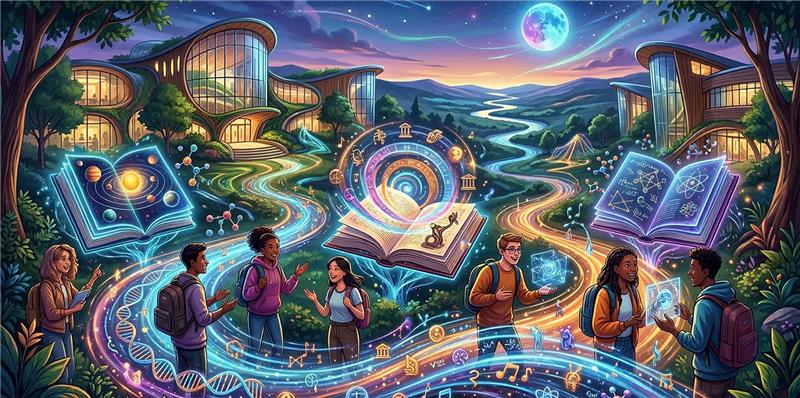
But what if academic material wasn’t static? What if a textbook could wake up in the morning, read the news, and rewrite its own chapters to reflect the latest global discoveries? We are entering the era of the “Living Syllabus.”
1. The Problem with the “Static Archive”
Currently, updating a university curriculum is a monumental task. It requires curriculum committees, peer reviews, and new editions of textbooks… a cycle that often takes two to three years.
This creates a massive disconnect. A student sitting in a cutting-edge genetics class today might be reading a textbook that completely misses a breakthrough gene-editing technique discovered just six months ago. We are teaching tomorrow’s innovators using yesterday’s archives.
2. Enter “Dynamic Content Synthesis Models”
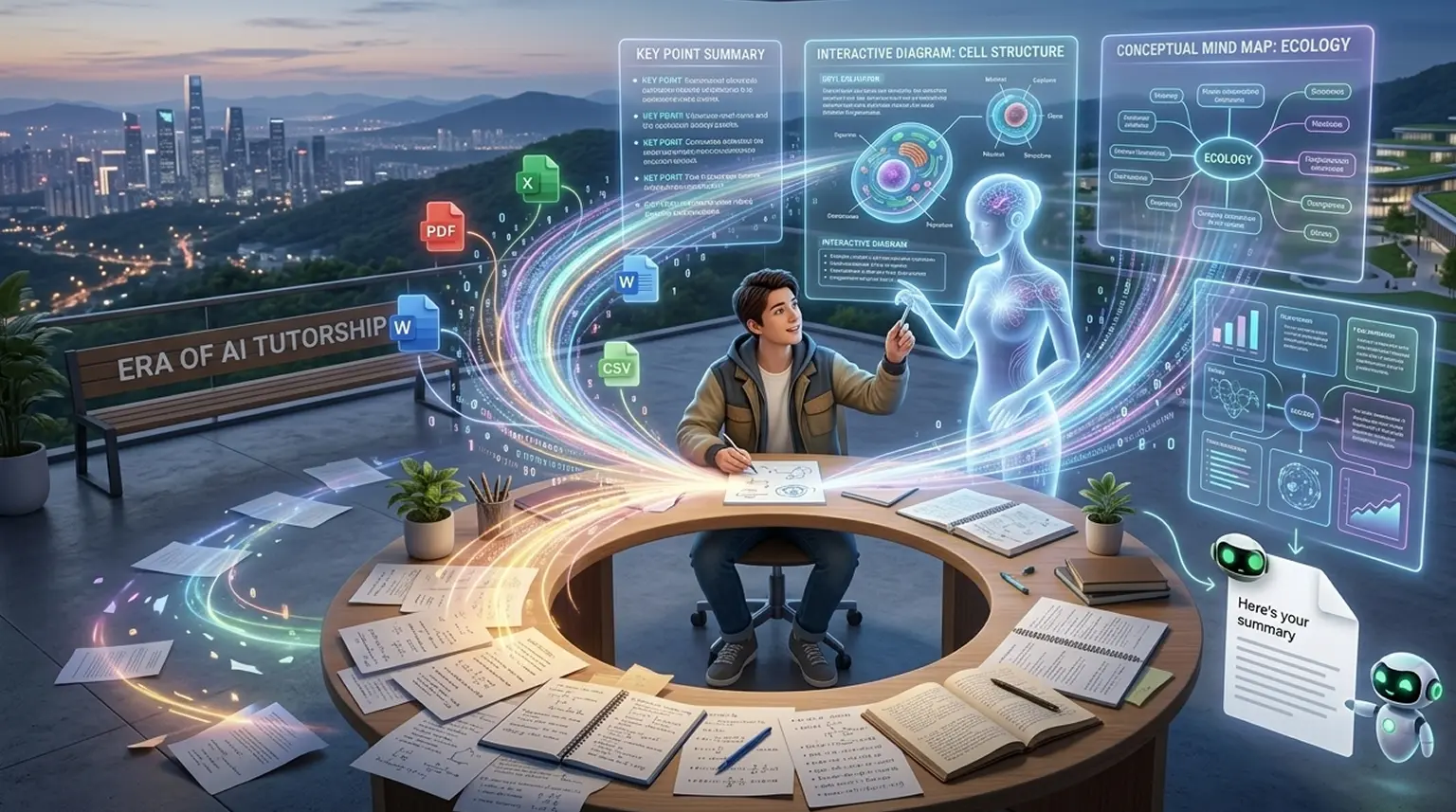
The solution lies in a new class of intelligent architecture known as Dynamic Content Synthesis Models. These are not simple search engines; they are highly specialized, secure AI ecosystems designed exclusively for academia.
Instead of waiting for a human author to write a new edition, these models act as an ever-watchful academic bridge. They can ingest verified, real-time data from trusted global repositories… like newly published peer-reviewed journals, global economic reports, or major scientific announcements… and intelligently weave them into the existing framework of a university’s course material.
3. Overnight Contextualization: The Nobel Prize Example
To understand the power of a Living Syllabus, imagine a second-year Physics class studying quantum mechanics.
Tuesday Morning: The Royal Swedish Academy announces the Nobel Prize in Physics for a groundbreaking discovery in quantum entanglement.
Tuesday Night: A Dynamic Content Synthesis Model ingests the official Nobel press releases and the accompanying open-source research papers.
Wednesday Morning: When students open their digital study environment, the syllabus has updated itself.
The AI hasn’t just pasted a news link; it has contextualized the news. It has generated a new sub-chapter that explains exactly how the foundational equations the students learned in Chapter 3 mathematically connect to yesterday’s Nobel-winning experiment. The textbook now has a pulse.
Conclusion & Webmap Analysis
The future of learning isn’t a destination; it is a continuous, real-time stream. By abandoning the concept of a “final draft,” educational institutions can ensure their students are always learning at the absolute edge of human discovery.
Webmap Analysis: Based on our technological trajectory at Webmap, the shift toward “living” educational databases is inevitable. Our analysis indicates that implementing Dynamic Content Synthesis reduces the traditional curriculum update cycle from an average of 36 months to under 24 hours. When institutions deploy these secure, self-updating knowledge bases, they don’t just provide better information… they fundamentally shift the student mindset from passive absorption of history to active engagement with the present.