Emotion-Aware Smart Cities: AI That Reads Crowd Sentiments

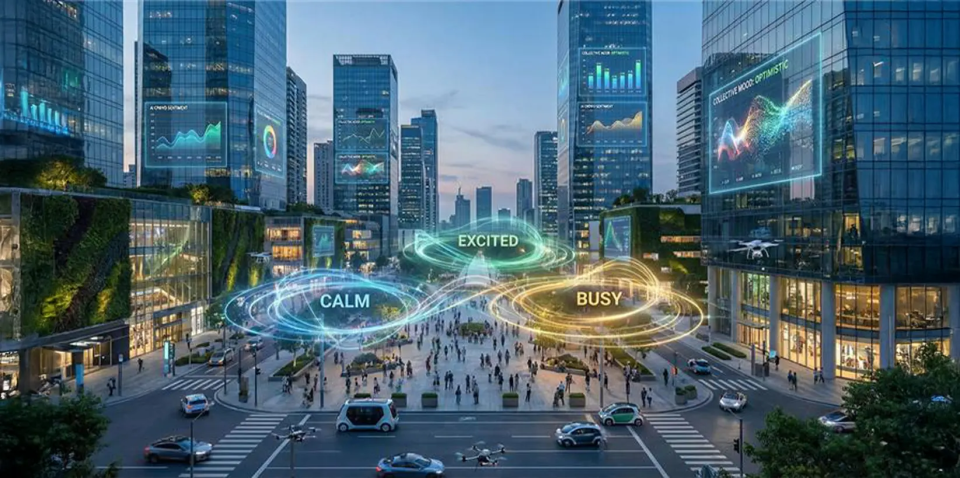
The concept of a “smart city” has evolved to encompass not just technological efficiency but also the well-being and experiences of its inhabitants. A groundbreaking frontier in this evolution is the emergence of Emotion-Aware Smart Cities, where Artificial Intelligence (AI) is deployed to interpret and respond to the collective sentiments of urban crowds. This advanced application of AI, often referred to as affective computing or artificial emotional intelligence, seeks to bridge the gap between purely cognitive AI and a more holistic understanding of human experience, promising to create more responsive, humane, and efficient urban environments.
1. Understanding Emotion-Aware AI
Emotion-aware AI empowers machines to recognize, interpret, simulate, and react to human emotions. It draws on an interdisciplinary foundation, combining insights from computer science, engineering, psychology, neuroscience, and philosophy. The goal is to move beyond mere data collection to understand the emotional pulse of a city, enabling proactive rather than reactive governance and service delivery.
2. Technological Foundations
The ability of AI to discern crowd sentiments relies on sophisticated technological underpinnings:
- Natural Language Processing (NLP): Analyzes text from social media, public forums, and communication channels to extract sentiment and emotional cues.
- Computer Vision (CV): Utilizes cameras and video analytics to interpret facial expressions, body language, and crowd density patterns that may indicate emotional states or moods.
- Speech Signal Processing: Processes vocal tones, pitch, and speech patterns to identify emotions conveyed through spoken language.
- Multimodal Learning Approaches: Combines data from various sources (e.g., text, visual, audio) to create a more comprehensive and robust understanding of emotional states, overcoming the limitations of single modalities. This approach allows the AI to prioritize the most informative signals, even if one modality is obscured (e.g., if facial expressions are hidden, speech and text can still offer emotional cues).
- IoT Sensors: Beyond traditional cameras and microphones, IoT sensors can provide contextual data, such as noise levels, air quality, or traffic flow, which can influence or reflect crowd sentiment.
3. Applications in Smart Cities
Emotion-aware AI has the potential to transform numerous aspects of urban living. By understanding the collective mood, city administrators can make more informed decisions, optimize resource allocation, and enhance public services.
| Application Area | How Emotion-Aware AI Is Used |
|---|---|
| Urban Planning & Development | Assessing public reactions to new infrastructure projects, green spaces, or urban policies by analyzing sentiment in public discourse or observable crowd behavior. This helps in designing spaces that genuinely meet community needs and reduce dissatisfaction. |
| Public Safety & Emergency Response | Identifying areas of unusual crowd agitation, panic, or distress through real-time analysis of visual and audio data. This can alert authorities to potential unrest, stampedes, or emergencies, enabling faster response times and better resource deployment. |
| Transportation Management | Gauging commuter frustration levels in specific transport hubs or routes. High levels of negative sentiment might indicate congestion, delays, or issues with public transport services, prompting immediate interventions or long-term infrastructure adjustments. |
| Commercial & Retail Zones | Analyzing customer sentiment in shopping districts or event venues to understand satisfaction levels, optimize layouts, tailor marketing campaigns, and improve overall visitor experience. This can lead to increased commercial activity and economic growth. |
| Public Services & Engagement | Adapting public service delivery based on citizen sentiment. For example, emotionally intelligent educational software can adjust content based on a learner’s engagement or frustration. Similarly, public health initiatives can be tailored by understanding community feelings about health policies or events. |
| Event Management | Monitoring crowd moods at large gatherings (concerts, festivals) to ensure safety, manage flow, and enhance enjoyment, allowing organizers to respond to discomfort or excitement in real-time. |
4. Benefits of Emotion-Aware AI
The integration of emotion-aware AI into smart cities offers several significant advantages:
- Improved Citizen Well-being: By proactively addressing sources of frustration, stress, or dissatisfaction, cities can foster a more positive and supportive environment for their residents.
- Enhanced Urban Management: Real-time sentiment analysis provides actionable insights, leading to more adaptive and efficient city operations, resource allocation, and policy making.
- Personalized Experiences: From tailored public information to responsive infrastructure, the city can become more attuned to individual and collective needs.
- Proactive Problem Solving: Detecting negative sentiments early can help prevent minor issues from escalating into major crises, improving public safety and satisfaction.
- Better Human-Computer Interactions: As smart city interfaces become more sophisticated, emotion awareness can make interactions with urban technology more intuitive and empathetic.
5. Challenges and Ethical Considerations
Despite its promising benefits, deploying emotion-aware AI in public spaces introduces complex challenges and significant ethical concerns that demand careful consideration.
| Category | Specific Challenges and Concerns |
|---|---|
| Data Privacy & Consent | Emotion recognition systems collect sensitive biometric and behavioral data, raising major privacy concerns. Capturing and analyzing emotional states can intrude on personal autonomy and mental privacy, especially without explicit consent or clear data usage policies. Concerns exist about how personal emotional data will be used, individuals’ control over its use, and the consequences of potential data breaches. The “black box” nature of some AI algorithms can obscure data usage and inferences. |
| Bias, Fairness, & Accuracy | AI models are prone to biases due to limited or unrepresentative training data, leading to unfair or discriminatory outcomes, particularly for marginalized groups. Emotions are complex, context-dependent, and expressed differently across individuals, cultures, genders, and age groups. The scientific claims behind emotion recognition products are disputed, with some companies like Microsoft discontinuing related services due to a lack of consensus on emotion definitions and generalizability across demographics. Misclassification can lead to harmful decisions. |
| Societal Impact & Autonomy | The integration of emotion recognition in public spaces can increase surveillance, leading to pressure to conform and potentially undermining individual autonomy and dignity. There is concern about the normalization of emotional monitoring and its long-term societal effects, including the risk of manipulation. |
| Transparency & Accountability | The lack of transparency regarding data processing and the intended purposes for which emotional data is used raises significant concerns. It can be difficult to determine who is responsible when an emotion-aware AI system makes a flawed or biased decision. |
6. The Road Ahead: Towards Responsible Implementation
The future success of emotion-aware AI in smart cities hinges on building transparent, culturally sensitive, and ethically governed systems. Responsible development mandates robust ethical frameworks, clear data usage policies, and continuous oversight. Interdisciplinary collaboration, involving experts in AI, ethics, social sciences, urban planning, and civil liberties, is crucial to address the complex challenges and ensure that these technologies benefit society responsibly. Prioritizing user rights, ensuring fairness, and fostering public trust will be paramount in shaping emotion-aware smart cities that truly serve their inhabitants.
Conclusion
Emotion-aware smart cities represent a major shift in how urban environments understand and respond to human needs. By interpreting collective sentiment in real time, AI enables cities to move beyond reactive systems toward more empathetic, adaptive, and citizen-centric governance. From public safety and transportation to urban planning and engagement, emotion-aware intelligence has the potential to make cities not just smarter but more humane.
However, realizing this vision requires responsible design, ethical governance, and transparency to ensure trust, fairness, and respect for individual privacy. When implemented thoughtfully, emotion-aware AI can become a powerful foundation for cities that truly listen to their people. Connect with WebmapNetwork to explore how AI-driven intelligence can help shape the next generation of human-centric smart cities. We guide organizations through strategy, solution development, and responsible AI implementation. Email us at: connect@webmap.network