What if your research started with a complete map of any website?

There is one silent problem across researchers, analysts, founders, and students that nobody really talks about, but which everyone feels every day.
People spend an unbelievable amount of time just trying to figure out what exists on a website.
- Not understanding it.
- Not analyzing it.
- Not gaining insights from it.
- Just… finding it.
Opening pages. Clicking menus. Dig into hidden links. Trying to comprehend how the site is structured. Scrolling endlessly because the sitemap is either broken or missing.
If you’ve ever sat there thinking, “Why is something as simple as finding information this hard?”
you are not alone.
And once you notice this pattern, it becomes impossible to unsee: a large amount of research time is wasted mapping the website, not actually researching it. This isn’t a small inefficiency; it’s a foundational flaw in how the web is designed.
The Core Problem: The Internet Doesn’t Show You Its Structure
Websites today hide more than they reveal.
- Pages buried three levels deep.
- Sections no one links to.
- Blogs that aren’t in navigation.
- Resources locked behind weird path structures.
- Sitemaps that are outdated, incomplete, or simply wrong.
You’re left guessing:
- “Am I missing important pages?”
- “Is there another version of this document?”
- “Why can’t I find this section when I know it exists?”
Modern websites are not built for researchers, they’re built for users. And researchers get bogged down performing tasks better left to machines.
How This Breaks Research
1. A Huge Percentage of Time Lost Just Searching for Pages
Before actual research even starts, groups have to:
- Search for URLs manually
- Map the entire structure of the site in their head
- Open dozens of tabs
- Try to comprehend what the website is offering
- Rebuild this understanding every time they revisit the site
This eats hours, sometimes days, without producing a single insight. Teams waste time on induction, not analysis.
2. Critical Information Gets Missed Because Modern Sites Are Fragmented
Most websites today are sprawling, dynamic, deep, messy, and inconsistent. You might find:
- A blog hidden under insights
- Product documentation under resources
- A public tool buried under labs
- Old content you didn’t know existed
- New content that never made it into the sitemap
- Sections accessible only through internal links
Because nobody sees the entire structure, researchers are left with incomplete understanding, missed pages, overlooked insights, fragmented notes, and faulty conclusions not because they are bad researchers, but because the website wasn’t ever meant to be “fully seen.”
3. Every Tool Shows You Data But Not the Website Itself
- SEO tools display keywords.
- Analytics tools display traffic.
- AI tools show summaries.
- Site audit tools show errors.
But none of them answer the simplest question:
“What does this website actually contain?”
Not keywords. Not backlinks. Not metrics.
Pages. Structure. Sections. Topics. Documents. Actual content.
The fundamental layer of the internet “what exists on this site? “is not visible in any tool. Teams remain blind, lost in tabs, recreating the same map again and again.
The Solution
Why Industry Tools Can’t Solve This
Traditional crawlers were built for one purpose: find links and save them. That’s it.
They don’t extract meaning, organize content, categorize sections, or index knowledge in a usable way. Sitemaps are often incomplete. Crawlers miss dynamic routes. Manual mapping is slow and inconsistent. Everyone ends up creating their own “mental map” of the site and losing it the moment they close the browser.
This is not a research problem. It’s a visibility problem. And the only way forward is a system that doesn’t just crawl the site but understands it.
Why Research Needs a New Starting Point
You can’t research anything deeply if you don’t know:
- What is there
- What’s important
- What is connected to what
- What’s hidden
- What’s outdated
- What’s missing
Research cannot start by guessing about the future. It needs a basis for build-up—a map. A system capable of:
✔ Scanning entire domains in seconds
✔ Finding every page
✔ Automatically organizing sections
✔ Indexing content into structured knowledge
✔ Exposing hidden, forgotten, or hard-to-find pages
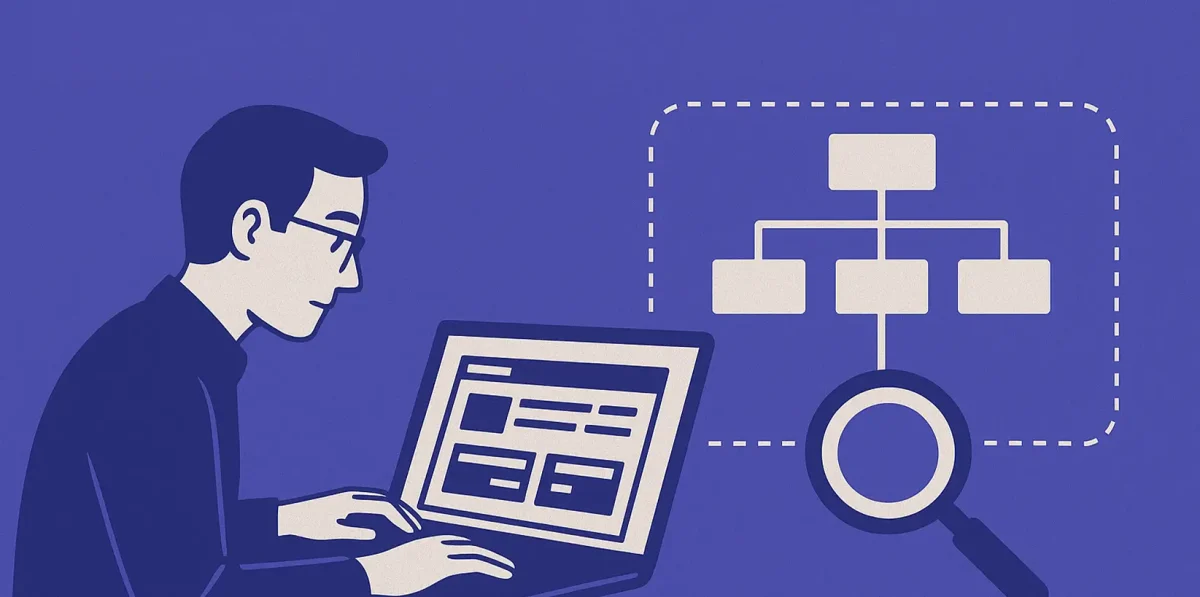
✔ Showing the full website like a blueprint
This is more than crawling. It’s comprehending. And understanding is what converts raw pages of data into usable research.
Conclusion: Soft Hint: Why Webmap Scan Changes the First Step Completely
This gap, the inability to “see the whole website”—is where traditional tools fall apart, and where Webmap Scan introduces a fundamentally different approach.
Webmap Scan doesn’t just crawl. It finds. It structures. It explains. It indexes. It shows every corner of the site, even the ones you didn’t know existed.
The effect is immediate:
- No more hours spent hunting for pages
- No more missed sections
- No more fragmented research
- No more guesswork
- No more incomplete understanding
With Webmap Scan, clarity is the beginning of research. Not confusion.
Your work doesn’t begin with “Where is everything?” It begins with “Now that I can see it all… what do I want to learn?”