The Skill No One Teaches: How Asking Better Questions Will Define Future Students


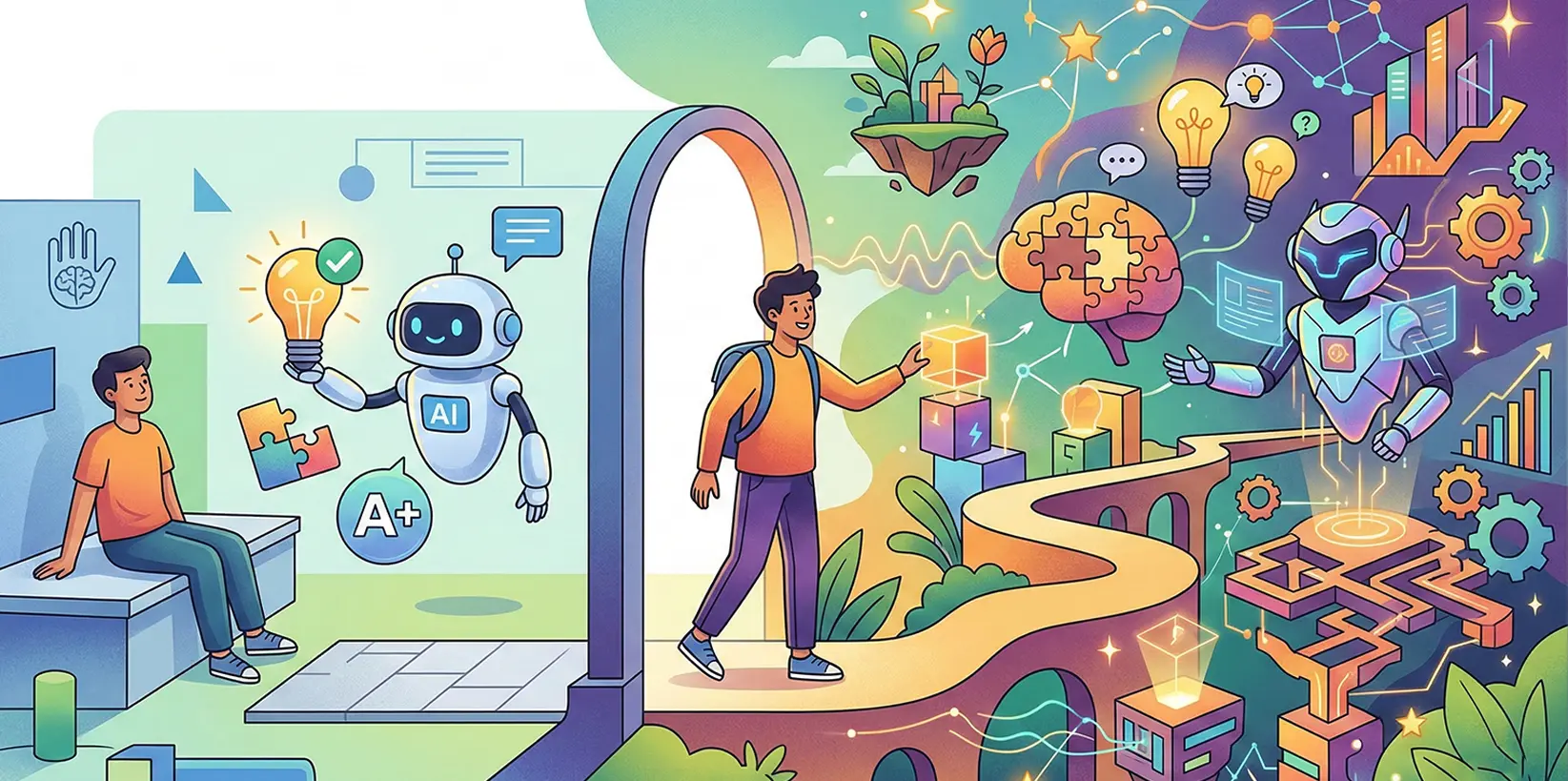
In today’s world, students have more access to information than ever before. With tools like ChatGPT, Claude, and Gemini, answers are available instantly. You no longer need to search through books or spend hours researching; you can simply ask a question and get a response within seconds. While this seems like a major advantage, it has quietly shifted the most important skill in education. The focus is no longer on finding answers. The real skill now is asking the right questions.
Traditionally, education has focused on teaching students what to learn and how to answer. Exams test answers, assignments evaluate solutions, and classrooms often reward correctness. But very few systems teach students how to ask better questions. This was not a major issue in the past because finding information itself required effort. Today, when AI can generate answers instantly, the quality of the output depends directly on the quality of the question. A simple or vague question leads to a basic answer, while a clear and thoughtful question leads to deeper insights. In other words, better questions create better learning.
Think of it like ordering food at a restaurant. If you simply say “bring me something,” you may get anything. But if you clearly explain what you want, your taste, preferences, and expectations you are far more likely to get the right dish. AI works in a similar way. It responds based on what you ask. Students who know how to frame their questions properly get more useful, accurate, and meaningful responses. Those who don’t often receive answers that are correct but not helpful.
The challenge is that most students are not trained to think this way. They use AI tools to get quick answers, but they rarely refine their questions or explore deeper layers of a topic. This leads to surface-level understanding. For example, instead of asking “What is this concept?”, a better question would be “Can you explain this concept with examples, compare it with similar ideas, and show where it is used in real life?” The second approach encourages deeper thinking and creates a stronger understanding. The difference is not in the tool it is in the way the student interacts with it.
Another important aspect of asking better questions is curiosity. Good questions often come from a desire to understand, not just to complete a task. When students begin to ask “why,” “how,” and “what if,” they move beyond memorization and start building real knowledge. This is especially important in an AI-driven world, where simply knowing information is not enough. Students need to explore ideas, challenge assumptions, and connect concepts. Asking better questions becomes the starting point for all of this.
However, there is also a structural challenge. Many students use multiple AI tools like ChatGPT, Claude, and Gemini in isolation. They ask questions, get answers, and move on without connecting their learning. This fragmented approach makes it difficult to refine questions or build deeper understanding over time. Each interaction becomes a one-time activity instead of part of a continuous learning process.
This is where structured systems like Webmap become important. Instead of treating each question as separate, Webmap allows students to build a continuous flow of learning within a single context. With the concept of “One context, many models,” students can ask questions, refine them, compare responses from different AI models, and develop deeper insights without losing track of their thinking. This creates an environment where questioning becomes a process, not just a one-time action.
In such a system, students naturally improve their questioning skills. They begin to see patterns in answers, identify gaps in their understanding, and ask more precise follow-up questions. Over time, this leads to better thinking, clearer understanding, and more meaningful learning outcomes. AI is no longer just a tool for answers, it becomes a platform for exploration and discovery.
Looking ahead, the importance of asking better questions will only increase. In a world where information is abundant, the ability to guide that information becomes a key skill. Students who can ask clear, thoughtful, and structured questions will be able to learn faster, think deeper, and solve more complex problems. Those who rely only on basic questions may struggle to go beyond surface-level knowledge.
In conclusion, the skill that will define future students is not how much they know, but how well they ask. Asking better questions is the foundation of deeper learning, critical thinking, and effective use of AI. Systems like Webmap show how this skill can be developed by creating structured, context-aware learning environments. Because in the future, success will not depend on who gets the fastest answers… it will depend on who knows how to ask the right questions.