AI Can Answer Everything – But Can Students Decide What Matters?


Artificial intelligence has made it incredibly easy for students to access information. With tools like ChatGPT, Claude, and Gemini, students can get answers to almost any question within seconds. Whether it’s solving a problem, understanding a concept, or researching a topic, AI delivers results instantly. On the surface, this feels like a major advantage. But beneath this convenience lies a deeper challenge when everything is available, how do students decide what actually matters?
In traditional learning, the process of finding information was slower. Students had to search through books, read multiple sources, and filter relevant content on their own. This process naturally built decision-making skills. They learned how to identify what is important, what is reliable, and what should be ignored. Today, AI removes that effort by presenting ready-made answers. While this saves time, it also reduces the need to think critically about information. Students are no longer just learners, they are becoming consumers of instant knowledge, often without questioning it.
This creates a new kind of problem. When students receive multiple answers from different AI tools, they may struggle to decide which one is correct, relevant, or useful. More information does not always lead to better understanding. In fact, it can create confusion. Imagine walking into a store where everything is free and available. Without guidance, you may end up picking random items, even if you don’t need them. This is exactly what happens with AI-generated information. Students collect answers, but they don’t always know which ones truly matter.
The real skill that is becoming important is not just asking questions, but making decisions about answers. Students need to learn how to evaluate information, compare perspectives, and choose what is relevant for their learning goals. AI can provide multiple viewpoints, but it cannot fully replace human judgment. Deciding what matters requires context, understanding, and the ability to connect ideas. Without these skills, students risk relying on AI outputs without truly understanding them.
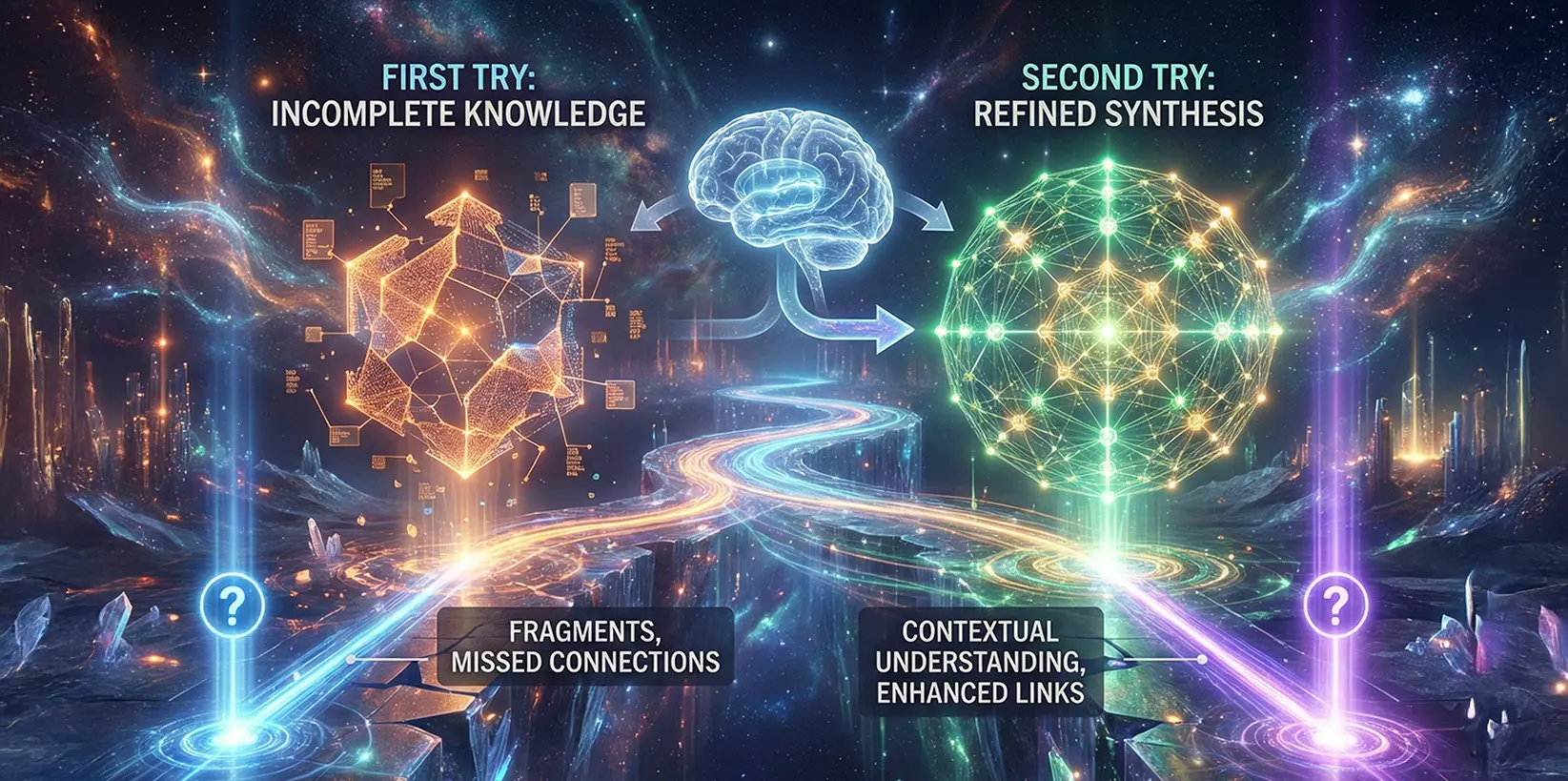
Another challenge is the way students use multiple AI tools. They often switch between platforms like ChatGPT, Claude, and Gemini to get different answers. While this gives them variety, it also creates fragmentation. Each tool provides information independently, without awareness of previous context. This makes it harder for students to compare answers effectively or build a clear understanding. Instead of helping decision-making, it can increase confusion.
To truly benefit from AI, students need more than access to answers they need systems that help them organize, evaluate, and connect information. This is where structured AI platforms like Webmap become important. Instead of switching between tools, students can interact with multiple AI models in one place, maintaining a single context. This allows them to compare responses, identify patterns, and understand differences without losing track of their learning journey. With the concept of “One context, many models,” students are not just collecting answers they are building structured knowledge.
This structured approach helps students make better decisions. Instead of asking “What is the answer?”, they begin to ask “Which answer makes the most sense and why?”. AI becomes a guide that supports thinking, rather than a shortcut that replaces it. Information is no longer scattered across tools; it is organized into meaningful insights that students can analyze and apply. This shift transforms learning from passive consumption to active decision-making.
Looking ahead, the role of students will continue to evolve. In a world where AI can answer almost anything, the real value will lie in judgment, clarity, and focus. Students who can decide what matters will have a clear advantage over those who simply collect information. Education will no longer be about who has access to knowledge, but about who can use it effectively.
In conclusion, AI has solved the problem of access to information, but it has introduced a new challenge: decision-making. Students must move beyond relying on answers and develop the ability to evaluate and prioritize information. Systems like Webmap show how this can be achieved by providing structured, context-aware learning environments that support better thinking. Because in the future, success will not depend on who gets the fastest answer… it will depend on who knows what truly matters.