The AI Skills Gap: Why Students Are Using AI Daily But Still Don’t Know How to Use It Right

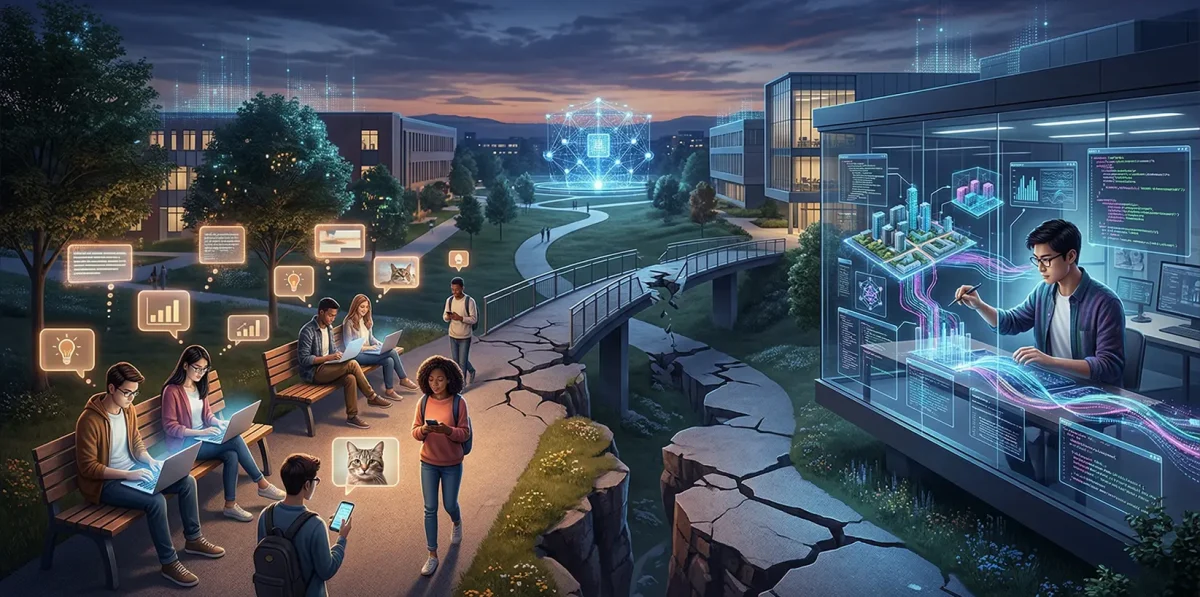
Artificial intelligence has quickly become a daily tool for students. Whether it’s completing assignments, understanding concepts, or generating ideas, tools like ChatGPT, Claude, and Gemini are now part of everyday learning. On the surface, this looks like a major step forward. Students have access to powerful technology that can answer almost any question instantly. But behind this rapid adoption lies a surprising problem: students are using AI every day, yet many still don’t know how to use it effectively.
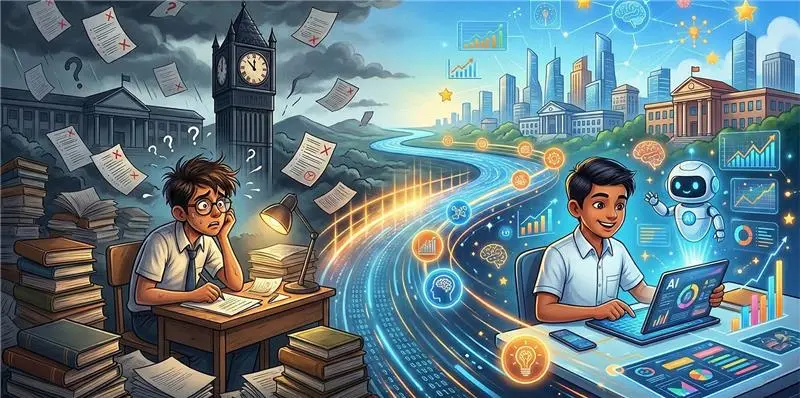
This gap exists because using AI is easy, but using it correctly is a skill. Most students interact with AI in a very basic way. They ask direct questions, get quick answers, and move on. While this helps them complete tasks faster, it does not necessarily help them understand concepts deeply. It’s similar to using a GPS for navigation. You can reach your destination without any problem, but if you rely on it every time, you may never learn the actual route. In the same way, students are reaching answers with AI, but not always learning how those answers are formed or how ideas connect.
One of the biggest reasons for this skills gap is the lack of guidance. Traditional education systems have not fully adapted to teach students how to learn with AI. As a result, students experiment on their own. They try different tools, copy responses, and switch between platforms without a clear method. While this self-learning approach shows curiosity, it often leads to confusion. Students focus on getting results instead of building a structured understanding. The problem is not that they are using AI, the problem is that they are using it without a clear learning strategy.
Another challenge is the way students interact with multiple AI tools. They often use platforms like ChatGPT for quick explanations, Claude for detailed reasoning, and Gemini for broader insights. While each tool adds value, switching between them creates a fragmented experience. Every tool works in isolation, meaning students lose context, repeat questions, and struggle to connect ideas. This makes learning less efficient and more scattered. Instead of building knowledge step by step, they collect disconnected pieces of information.
The real issue here is not access to AI, but the absence of a structured system that supports learning with AI. Students do not just need answers, they need help in organizing, comparing, and understanding those answers. Without structure, AI becomes a shortcut instead of a learning tool. It helps students complete work faster, but it does not always improve their thinking. This is where the difference between AI usage and AI literacy becomes clear. AI usage is about asking questions. AI literacy is about knowing how to ask better questions, evaluate responses, and build knowledge over time.
To bridge this gap, students need systems that go beyond simple question-answer interactions. Platforms like Webmap are designed to provide this missing layer. Instead of treating AI as separate tools, Webmap creates a unified environment where multiple AI models can be used together within a single context. This means students no longer have to switch between platforms or repeat their prompts. They can explore different perspectives, compare answers, and build understanding without losing their flow. With the concept of “One context, many models,” learning becomes continuous and connected rather than fragmented.
This structured approach helps students move from basic AI usage to true AI literacy. Instead of simply accepting answers, they begin to question them, analyze differences, and organize information into meaningful insights. AI becomes more than a helper it becomes a learning partner that supports thinking. Students start to focus on understanding concepts rather than just completing tasks. This shift is essential for long-term learning and skill development.
Looking ahead, the AI skills gap will become even more important. As AI continues to evolve, the ability to use it effectively will become a key academic and professional skill. Students who understand how to interact with AI systems, evaluate information, and build structured knowledge will have a significant advantage. On the other hand, those who rely only on quick answers may struggle to keep up. Education will no longer be about access to technology, but about how intelligently that technology is used.
In conclusion, the growing gap in AI skills is not about technology limitations, it is about learning behavior. Students already have access to powerful tools, but without the right systems and strategies, their potential remains limited. By adopting structured, context-aware platforms like Webmap, students can move from simply using AI to truly learning with it. Because in the end, success in the AI era will not depend on who uses AI the most… it will depend on who knows how to use it right.