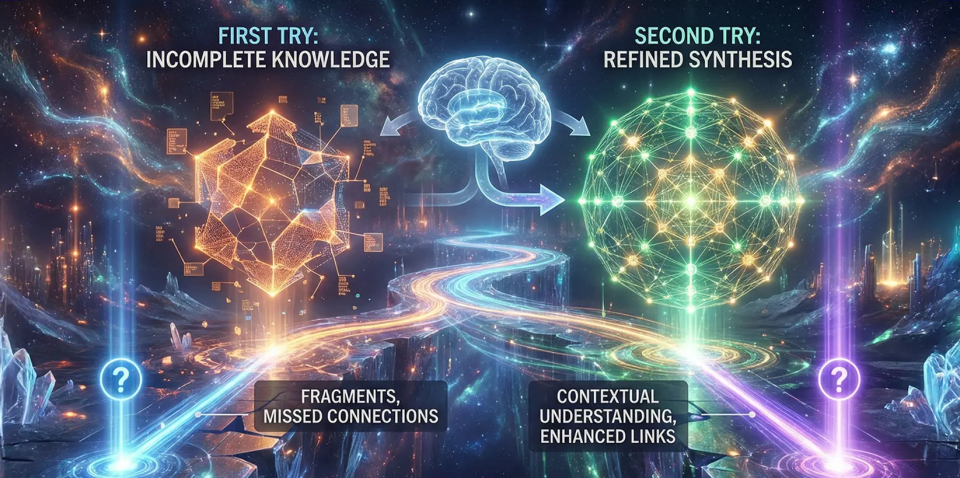
The End of Static Learning: Why Education Needs Context-Aware AI Systems

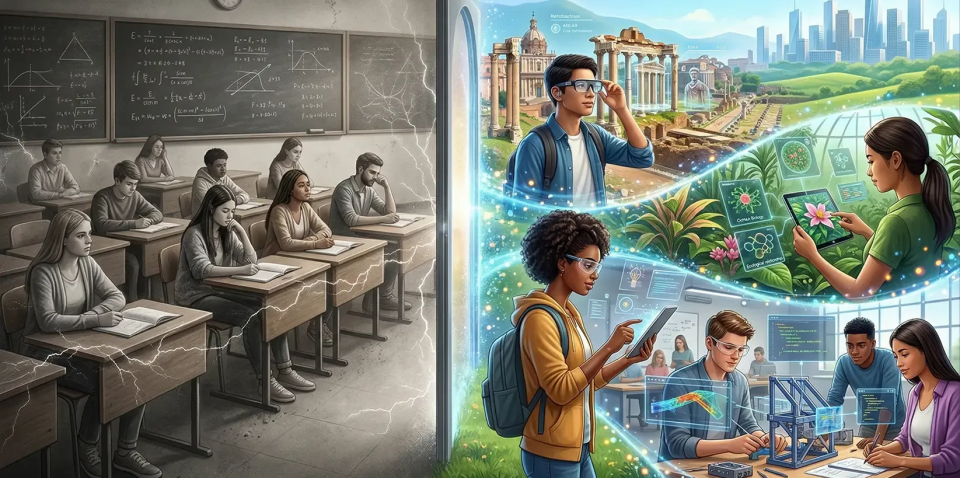
For decades, education has followed a static model of learning.
Students attend lectures, read textbooks, memorize information, and then attempt to apply that knowledge in exams. The structure is mostly fixed: the same syllabus, the same pace, and the same teaching method for everyone.
But the world students are preparing for today is not static anymore.
Information evolves quickly, industries change constantly, and problem-solving requires deeper understanding rather than memorization.
This is why a new concept is emerging in education:
Context-Aware AI Learning Systems.
These systems do not just provide answers.
They understand what the student is trying to learn, why they are learning it, and how it connects to previous knowledge.
To understand why this matters, we first need to look at the limitations of traditional learning systems.
The Problem With Static Learning
Traditional education is designed like a printed map.
A printed map shows roads, cities, and directions, but it cannot adjust if traffic changes or if the traveler takes a wrong turn.
Learning systems today often behave the same way.
A student receives:
- a textbook
- a lecture
- a set of notes
- an assignment
But the system does not adapt if the student:
- struggles with a concept
- learns faster than the class
- wants deeper explanations
- needs real-world examples
Everyone follows the same path regardless of their individual understanding.
This is static learning.
It assumes that information alone is enough for learning.
But in reality, understanding depends on context.
Why Context Matters in Learning
Think about learning like cooking a recipe.
A beginner cook might read a recipe that says:
“Cook on medium heat for 5 minutes.”
But what does medium heat mean?
On one stove it may be different from another.
The size of the pan, the ingredient quantity, and even the type of stove change the outcome.
An experienced cook understands the context.
They adjust heat, timing, and ingredients depending on the situation.
Learning works the same way.
A student does not just need information.
They need help understanding:
- how this concept connects to previous topics
- how it applies in real situations
- where they are making mistakes
- what they should learn next
Static systems cannot do this.
But context-aware AI systems can.
What Is a Context-Aware AI Learning System?
A context-aware AI system understands the learning journey, not just the question.
Instead of responding to isolated prompts, it remembers:
- previous discussions
- the student’s learning path
- related topics
- research history
- knowledge gaps
This creates a continuous learning experience.
For example:
If a student asks about machine learning, a traditional system might simply explain the concept.
A context-aware system might recognize that the student has previously studied statistics and programming, and therefore explain machine learning using examples related to those subjects.
It adapts the explanation based on existing knowledge.
This makes learning more natural and more efficient.
The Limitations of Traditional AI Tools in Education
Many students today already use AI tools like ChatGPT, Gemini, or Claude for studying.
These tools are helpful, but they have a major limitation:
Each conversation often starts from zero.
Imagine talking to a tutor who forgets every previous discussion.
Every time you ask a question, you must explain the entire background again.
This slows down the learning process.
Students lose continuity, and research becomes fragmented.
A context-aware AI system solves this by preserving knowledge across interactions.
The Shift Toward Intelligent Learning Systems
Education is now moving toward systems that behave more like knowledge partners rather than simple tools.
Instead of isolated answers, these systems create connected learning experiences.
Think of the difference between:
A calculator vs a teacher
A calculator gives you the result of a problem.
A teacher helps you understand how and why the result works.
Context-aware AI aims to function closer to the second model.
It does not just answer questions.
It helps students:
- connect ideas
- structure research
- build understanding over time
- explore multiple perspectives
This is where platforms like Webmap’s Modality interaction layer represent a new approach.
One Context, Multiple Intelligence Systems
Modern research and learning often require different types of intelligence.
Some AI systems are better at:
- coding
- summarization
- reasoning
- research
- data interpretation
A context-aware system can orchestrate multiple AI models within the same learning environment.
For example, a student researching climate change might:
- gather data from scientific papers
- summarize the research
- generate visual explanations
- compare different academic perspectives
Instead of switching between multiple tools, the system keeps everything inside one unified context.
This allows students to explore ideas without losing their research flow.
The Role of Memory in AI Learning
One of the most powerful aspects of context-aware systems is memory.
Memory allows AI systems to understand learning progress over time.
Think of it like a notebook that automatically organizes itself.
Every time the student learns something new, the system remembers:
- important concepts
- ongoing research topics
- previous explanations
- unresolved questions
Over time, the AI becomes more helpful because it understands the student’s learning history.
This turns AI from a tool into a long-term learning assistant.
How Context-Aware AI Can Transform Universities
Universities face a major challenge today:
information overload.
Students must navigate:
- research papers
- lecture materials
- academic databases
- assignments
- collaborative projects
A context-aware AI learning system can act as a knowledge navigation layer.
It can help students:
- summarize research papers
- convert lectures into structured notes
- generate step-by-step explanations
- compare academic viewpoints
- build connected knowledge maps
Instead of spending hours searching for information, students can focus on understanding and critical thinking.
A More Personalized Learning Experience
Every student learns differently.
Some prefer:
- visual explanations
- structured steps
- real-world examples
- conversational learning
Context-aware AI systems can adapt explanations to match these preferences.
Think of it like a navigation app instead of a printed map.
If a driver takes a wrong turn, the navigation system recalculates the route instantly.
Learning systems of the future will work the same way.
If a student struggles with a concept, the system can automatically adjust explanations, provide additional examples, or suggest prerequisite topics.
This creates a dynamic learning environment.
The Future of Learning Is Adaptive
Education is entering a new phase where information alone is no longer enough.
Students need systems that can help them:
- navigate complex knowledge
- connect ideas across subjects
- explore deeper understanding
- adapt learning paths in real time
Context-aware AI systems represent a major step in this direction.
They transform learning from a static process into an adaptive experience.
Instead of memorizing information, students can focus on developing:
- problem-solving skills
- critical thinking
- research abilities
- creative exploration
Conclusion
The traditional model of education was built for a world where information was limited.
Today, information is abundant, but understanding is the real challenge.
Static learning systems cannot keep up with this new reality.
What education needs now are intelligent systems that understand context, preserve knowledge, and adapt to the learner.
Context-aware AI represents the foundation of this shift.
It moves education beyond static lessons and isolated answers toward continuous, connected learning experiences.
And as these systems evolve, they may redefine how students interact with knowledge itself transforming education from a fixed path into a dynamic journey of discovery. To explore more visit WebmapNetwork or connect with us at connect@webmap.network.